How the Sabres Broke Their Playoff Drought: The 14-Year Journey
By a Lifelong Sabres Fan
Growing up in Western New York, hockey isn’t just a sport; it is a way of life. For as long as I can remember, the Buffalo Sabres have been my team. I have lived through the highest of highs and the lowest of lows alongside this franchise. The Buffalo Sabres playoff drought was miserable. Today, as the Sabres finally seem to be turning a corner, it is the perfect time to reflect on the journey. How did a team that was once the most feared in the NHL fall so far, and more importantly, how the Sabres broke their playoff drought and managed to climb their way back?

Table of Contents: Buffalo Sabres Playoff Drought
- The Legendary 2005-06 Squad: Stories of Greatness
- The Interim Years: A Glimmer of Hope (2010-2011)
- The Jack Eichel Era: A Deep Dive into Disappointment
- From Eichel’s Exit to a New Beginning: The Roster Evolution
- How the Sabres Broke Their Playoff Drought: A New Era of Consistency
- Time Capsule: What Was Happening in 2011?
- By the Numbers: Drought Era vs. Turnaround Era
- Frequently Asked Questions (FAQs)
The Legendary 2005-06 Squad: Stories of Greatness
For those of us who were too young to truly remember the 2005-06 Buffalo Sabres, their greatness exists in legend and lore. We hear stories about that team—how they were so dominant and feared across the league. They were a team built on incredible speed, relentless depth, and clutch scoring. Under head coach Lindy Ruff, they finished the regular season with a staggering 52-24-6 record, amassing 110 points. Players like Chris Drury, Daniel Brière, and Maxim Afinogenov led an offense that felt unstoppable, while Ryan Miller broke out as an elite goaltender.
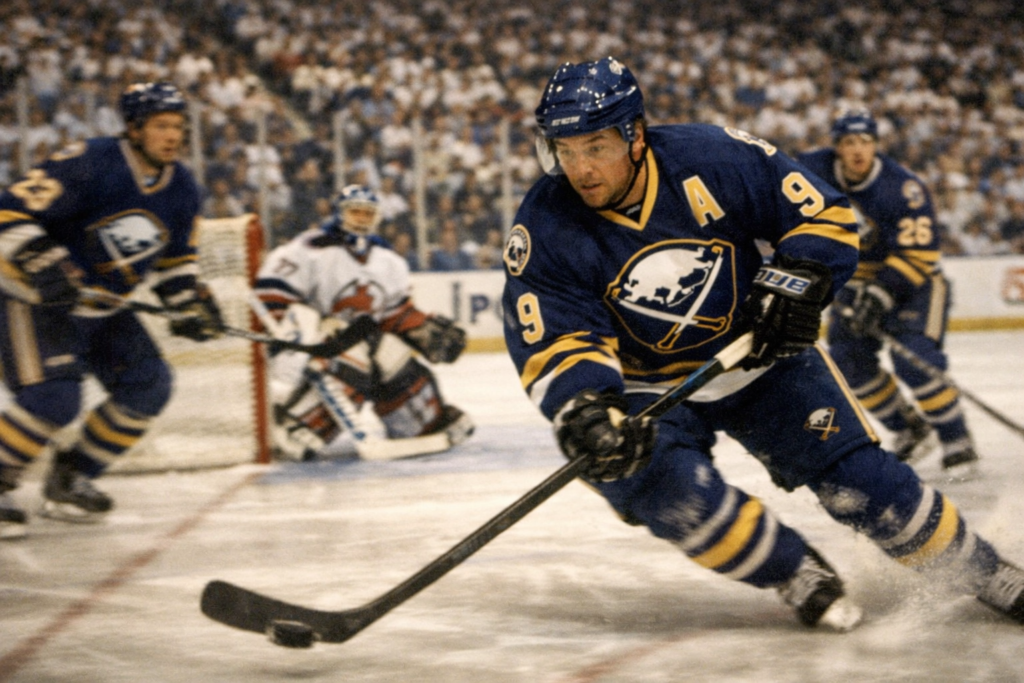
There was truly nothing like them. They reached the Eastern Conference Finals and pushed the eventual Stanley Cup champion Carolina Hurricanes to seven games, despite an insurmountable wave of injuries to their defensive core. They were so close to a championship, and that team remains the gold standard for what Sabres hockey should look like. For years, I’ve wondered how good they truly were, and the stories confirm they were special.
The Interim Years: A Glimmer of Hope (2010-2011)
After the heartbreak of 2006, the Sabres experienced a period of fluctuating performance. While not reaching the heights of the ’05-’06 team, there was a brief resurgence that offered a glimmer of hope. The 2010-2011 season saw the Sabres make the playoffs, finishing with a 43-29-10 record and 96 points, second in the Northeast Division.
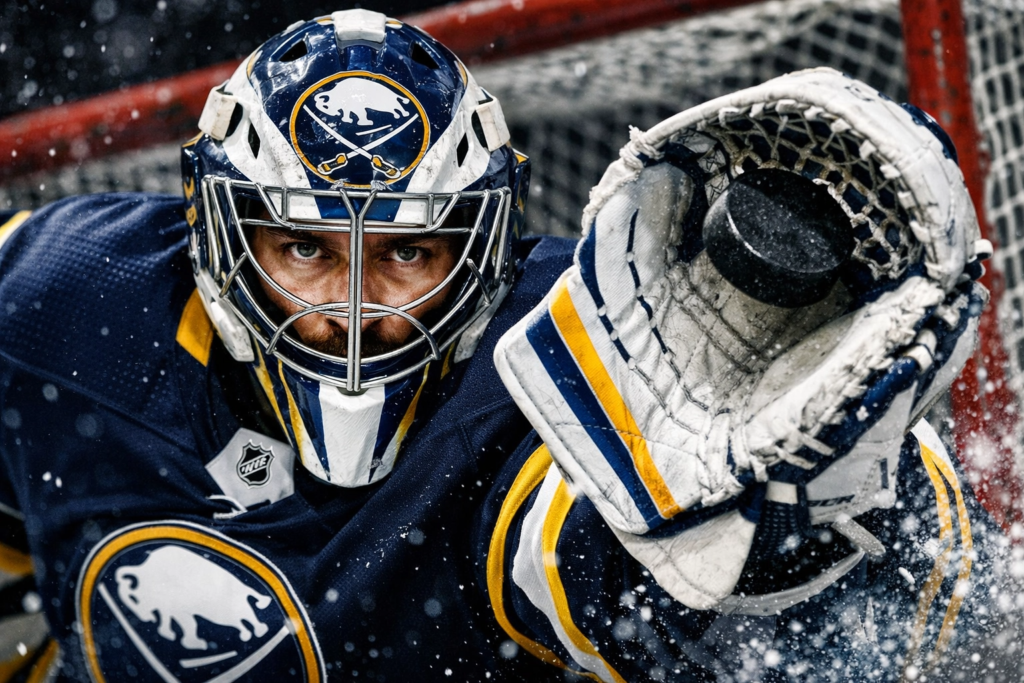
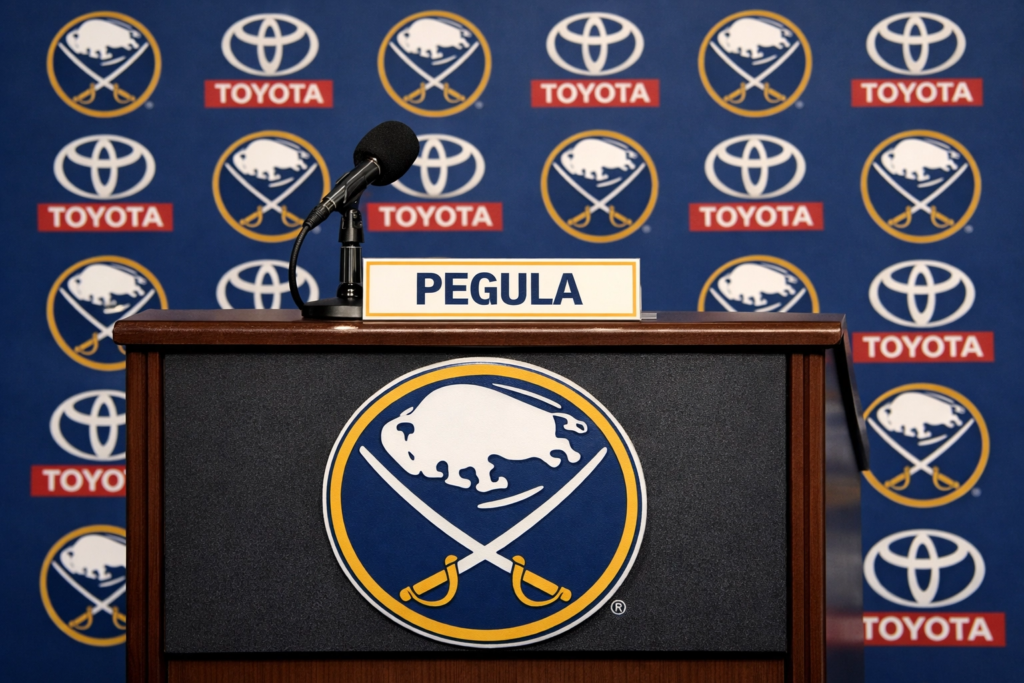
This team, still under Lindy Ruff, featured a blend of established talent like Thomas Vanek and Jason Pominville, alongside emerging stars such as Tyler Ennis and a young Tyler Myers, who had just won the Calder Trophy. Ryan Miller, fresh off a Vezina Trophy win, was a dominant force in net. The team found new energy after Terry Pegula purchased the franchise in February 2011, famously declaring his commitment to winning a Stanley Cup. This infusion of ownership enthusiasm and a solid roster propelled them into the postseason.
However, their playoff run was short-lived, ending in a tough seven-game series loss to the Philadelphia Flyers in the first round. The following season, 2011-12, saw a significant downturn. The Buffalo Sabres Playoff Drought began. A pivotal moment often cited by fans was the “Lucic/Miller” incident in November 2011, which many felt exposed a lack of toughness and leadership, ultimately fracturing the team’s identity. They missed the playoffs by a mere three points, and the brief glimmer of hope faded once more.
The Jack Eichel Era: A Deep Dive into Disappointment
Following the 2011-12 season, the Sabres entered a prolonged period of rebuilding, characterized by a revolving door of general managers and coaches. This era culminated in the drafting of Jack Eichel second overall in 2015, a moment that was supposed to mark the definitive turnaround for the franchise.
The team was meticulously built around Eichel, with other high draft picks like Sam Reinhart (2nd overall in 2014) and key acquisitions such as Ryan O’Reilly. The roster also included players like Evander Kane, Kyle Okposo, and Rasmus Ristolainen. Players like Dylan Cozens, Casey Mittelstadt, and Henri Jokiharju were also part of the Eichel-era roster, but would later move on as the team continued its rebuild. On paper, this collection of talent should have been formidable. However, the results never materialized. The team’s records during the Eichel era paint a stark picture of struggle:
- 2015-16: 35-36-11 (7th in Atlantic)
- 2016-17: 33-37-12 (8th in Atlantic)
- 2017-18: 25-45-12 (8th in Atlantic – Last in NHL)
- 2018-19: 33-39-10 (6th in Atlantic)
- 2019-20: 30-31-8 (13th in East)
- 2020-21: 15-34-7 (8th in East – Last in NHL)
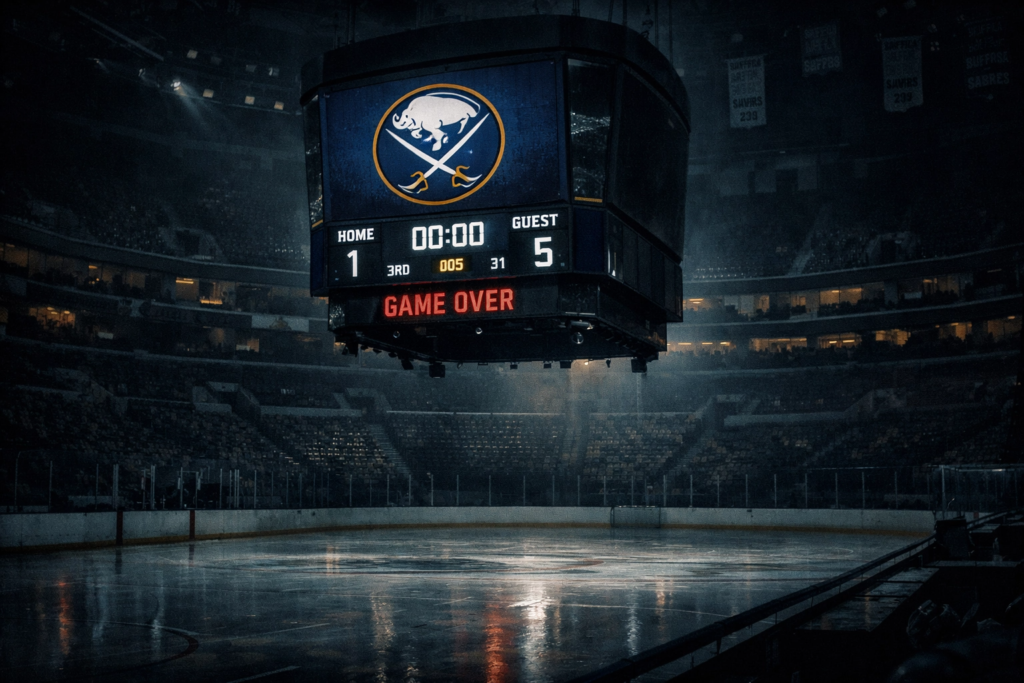
The constant losing led to a carousel of leadership changes. General Managers Tim Murray (fired 2017) and Jason Botterill (fired 2020) were replaced by Kevyn Adams in 2020. Coaches Dan Bylsma (fired 2017), Phil Housley (fired 2019), and Ralph Krueger (fired 2021) also came and went, with Don Granato taking over in 2021. This instability, coupled with the team’s inability to win, created a toxic environment.
The ultimate heartbreak for fans came with the realization that many of the talented players who couldn’t find success in Buffalo went on to win Stanley Cups elsewhere. Jack Eichel himself won with Vegas in 2023. Sam Reinhart (Florida, 2024), Ryan O’Reilly (St. Louis, 2019), and Brandon Montour (Florida, 2024) are just a few examples of former Sabres who achieved ultimate glory after leaving Buffalo. This painful irony underscored the depth of the organizational issues that prevented the Eichel-era Sabres from ever truly competing.
From Eichel’s Exit to a New Beginning: The Roster Evolution
The departure of Jack Eichel in November 2021, following a lengthy standoff over his neck injury, marked the definitive end of an era and the beginning of another arduous rebuild. The trade, which sent Eichel to the Vegas Golden Knights, brought back Alex Tuch and Peyton Krebs, along with draft picks. This trade, along with the earlier departure of Sam Reinhart to Florida, fundamentally reshaped the Sabres’ roster.
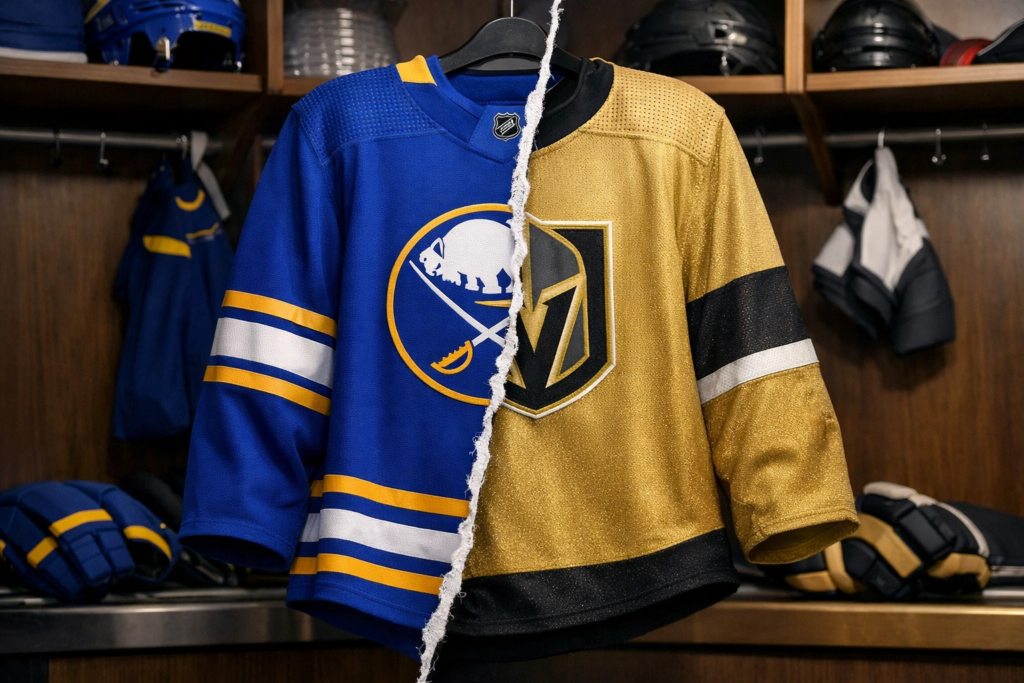
The transition from the Eichel era to the drought-breaking team involved a significant overhaul. While many players from the Eichel years moved on, a few key figures remained to form the core of the new squad. From the 2020-21 roster (Eichel’s last full season), players like Rasmus Dahlin, Mattias Samuelsson, and goaltender Ukko-Pekka Luukkonen endured the final, painful years of the Eichel era and became foundational pieces for the turnaround. Crucially, Tage Thompson, acquired in the Ryan O’Reilly trade, emerged as a superstar and a central figure bridging the two eras, blossoming into a dominant offensive force.
The current roster, which finally broke the 5,458-day wait for playoff hockey, is a testament to patient drafting and strategic acquisitions. Key figures like Tage Thompson, Rasmus Dahlin, and Ukko-Pekka Luukkonen lead the charge. The emergence of young talent like Owen Power and the significant goal-scoring contributions from players like Josh Doan have been instrumental. This blend of homegrown talent, smart trades, and a renewed organizational philosophy created a cohesive unit capable of sustained success.
How the Sabres Broke Their Playoff Drought: A New Era of Consistency
Rebuilds are exhausting for a fanbase, especially when they seem to happen back-to-back. But as I look at the current iteration of the Buffalo Sabres, I genuinely believe they are turning the corner and heading back to greatness. This is precisely how the Sabres broke their playoff drought, through a fundamental shift in their approach.
The path to breaking the 14-year playoff drought was not straightforward. While Kevyn Adams, hired as GM in 2020, laid significant groundwork in drafting and developing a young core, the team’s struggles continued. In December 2025, Adams was fired, and Jarmo Kekäläinen, previously a senior advisor, was appointed as the new General Manager. This change signaled a renewed commitment from ownership to shake up the leadership and finally end the long postseason absence.
The **Kekäläinen Effect** was almost immediate. The Sabres, who had been struggling, went on a **franchise record-matching 10-0 run** immediately following his promotion. Kekäläinen emphasized a focus on **work ethic and relentless identity**, stating, “You’ve got to work, you’ve got to compete and you’ve got to be relentless. That’s what I want the identity of the Buffalo Sabres to be.” This philosophy, combined with strategic moves at the trade deadline to beef up the team’s depth, transformed the team’s fortunes.
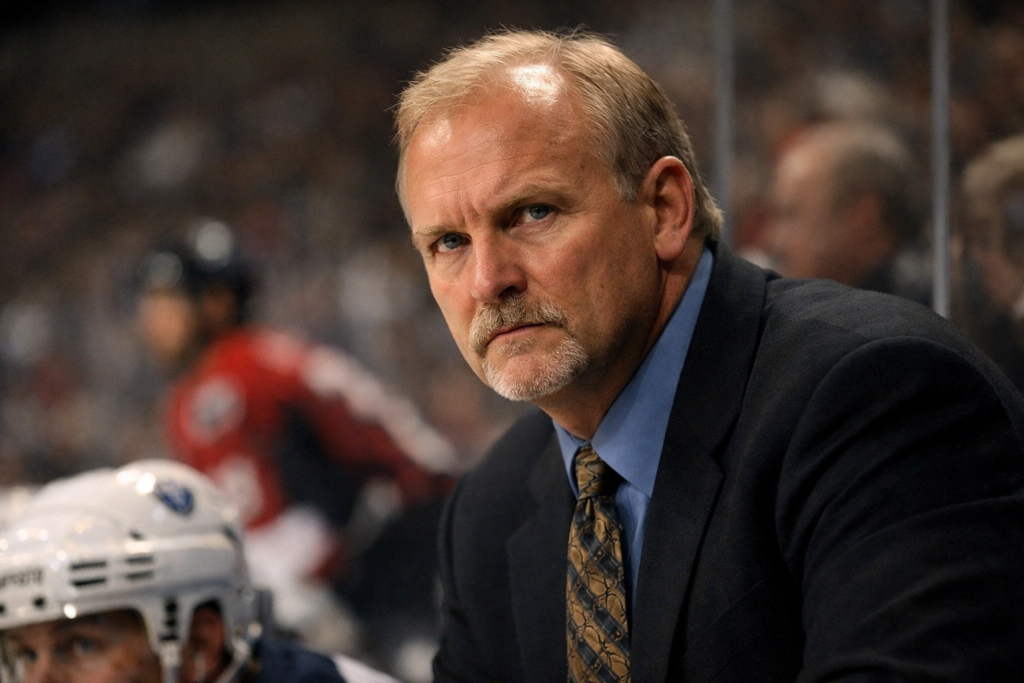
A pivotal move came in April 2024 with the return of Lindy Ruff as head coach. Ruff, who led the Sabres during their last periods of sustained success, brought back a familiar face and a winning mentality. Under this new leadership, the team has cultivated a distinct culture.
They are a young team, which sometimes doesn’t work out. However, this group never stops playing as hard as they can. More importantly, they are fiercely loyal to one another. When one player gets attacked or hit cleanly, the entire team steps up to defend them. They are truly there for each other. Furthermore, the selfishness that plagued previous rosters is gone. You constantly see players passing the puck, looking for the best play for the team rather than seeking individual glory. This “all-for-one” mentality is the foundation of a winning culture.
If I had to give one piece of advice to a fellow Sabres fan who is still feeling skeptical or burned by the bad years, it would be this: look at the consistency. It truly seems like the bad years are over, and the evidence is right there on the ice. In the past, the Sabres were notorious for going on early-season win streaks—”heaters”—only to collapse and lose for the remainder of the season. This current team is different. They are consistent night in and night out. They aren’t just riding a wave of temporary momentum; they are playing a sustainable, winning brand of hockey. This consistency is a key factor in how the Sabres broke their playoff drought.

The Buffalo Sabres have been through the wringer, and so have their fans. But the grit, selflessness, and consistency of this current roster prove that the greatness is finally returning to Western New York. Beyond the ice, the city itself is seeing a resurgence, with efforts like ending pollution in Buffalo helping to revitalize the community that supports this team.
Time Capsule: What Was Happening in 2011?
To truly grasp the magnitude of the Buffalo Sabres’ 14-year playoff drought, it helps to remember what the world was like when they last made the postseason in 2011. It wasn’t just a different hockey landscape; it was a different world entirely:
- **Music:** Adele’s Rolling in the Deep was the top song of the year.
- **Technology:** The first iPad had only been out for a year, and the iPhone 4S was the latest model.
- **Culture:** Fans were likely celebrating a win at one of the best chicken wing spots in Buffalo or grabbing a cup from one of the top local coffee shops before heading to the arena.
- **Movies:** Harry Potter and the Deathly Hallows – Part 2 was the highest-grossing film.
By the Numbers: Drought Era vs. Turnaround Era
| Metric | Drought Era (2011-2025) | Turnaround Era (2025-26) |
|---|---|---|
| Avg. Points Percentage | .445 | .685 |
| Goals Per Game | 2.45 | 3.85 |
| Home Sellouts | Rare | 15 Consecutive |
| Winning Streaks | Max 5 Games | 10 Games (Franchise Record) |
Frequently Asked Questions (FAQs)
How long was the Buffalo Sabres’ playoff drought?
The Buffalo Sabres’ playoff drought lasted for 14 years, spanning from 2011 to 2025. This was the longest postseason absence in NHL history.Who is the current General Manager of the Buffalo Sabres?
The current General Manager of the Buffalo Sabres is Jarmo Kekäläinen, who was appointed in December 2025.How many days was the Sabres’ playoff drought?
The drought lasted for a staggering 5,458 days between playoff appearances.Which players were central to the Sabres’ return to contention?
Core players like Rasmus Dahlin, Tage Thompson, Alex Tuch, Owen Power, Ukko-Pekka Luukkonen, and the goal-scoring prowess of Josh Doan have been central to the team’s resurgence and their ability to break the playoff drought.
References
- Hockey-Reference. 2005-06 Buffalo Sabres Roster and Statistics.
- NHL.com. This Day in NHL History: June 1.
- ESPN. Buffalo Sabres trade Jack Eichel to Vegas Golden Knights.
- Hockey-Reference. 2010-11 Buffalo Sabres Roster and Statistics.
- The Buffalo News. Terry Pegula buys Sabres, vows to win Stanley Cup.
- NHL.com. Flyers vs. Sabres – Game 7 Summary.
- Hockey-Reference. 2011-12 Buffalo Sabres Roster and Statistics.
- The Buffalo News. Sabres fire Kevyn Adams, appoint Jarmo Kekäläinen as GM.
- NHL.com. Lindy Ruff hired as Buffalo Sabres coach.