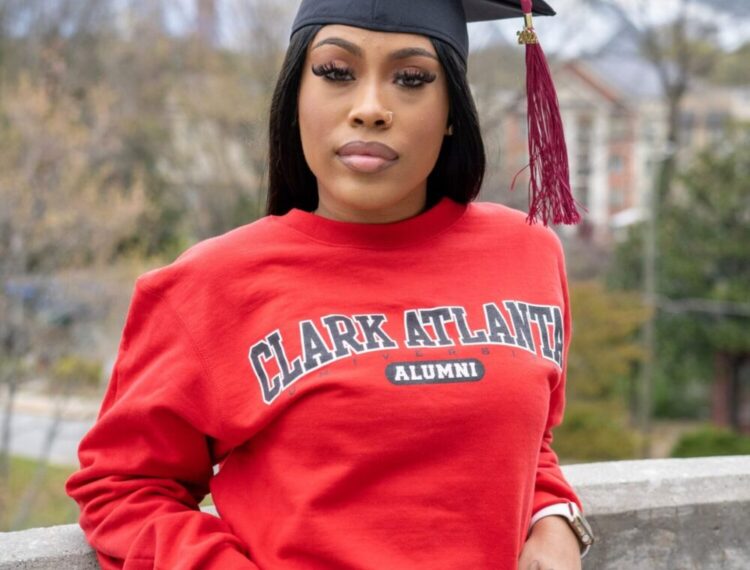
- Support HBCUs: Why they’re important and how they affect Black American economic prosperity
- Support HBCUs by applying and enrolling
- Support HBCUs through donations
- Support HBCUs through their athletic programs
One of the most effective and efficient ways to enhance Black American economic prosperity is to support HBCUs (historically Black college and universities) by investing in the institutions and academic, athletic and professional talent pools–students, alumni, faculty, staff and others with vested interests. Here is a concise yet in-depth guide on how you can practically support HBCUs and thereby bolster revenue, wealth and social capital, with targeted intention, that will have a direct, positive effect on Black Americans. In short, this is how you can help make the Black American populace more powerful.
Support HBCUs: Why they’re important and how they affect Black American economic prosperity
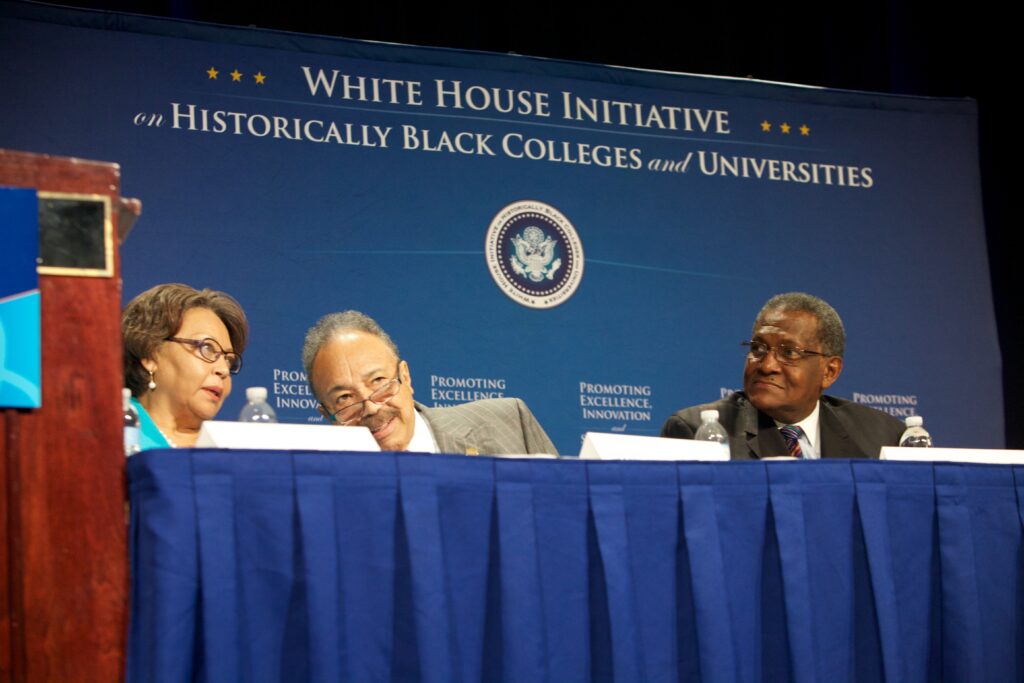
A historically Black college or university (or HBCU) is a federal designation. The U.S. Department of Education, per the Higher Education Act of 1965, defines an HBCU as any historically Black college or university, established before 1964, whose chief mission was to educate and train Black Americans. The year 1964 is significant to the United States of America such that, in this year, the Civil Rights Act of 1964 was passed: it prohibits discrimination on the basis of race, color, religion, sex and national origin. Prior to this, various institutions, including public and private colleges and universities, could deny admission to Black Americans. Further, HBCUs were created by both the public and private sectors to train former American slaves and their descendants. Specifically, the Freedmen’s Bureau, a United States government agency, was a post-Civil War Reconstruction effort to furnish refugees of the American Civil War, one fought over the interest of allowing and expanding involuntary servitude of Black Americans dating back as far as 1526, with clothing, fuel and other necessities like education and vocational training. Not discounting the horror, brutality and inhumanity of chattel slavery, its purpose, as well as the interests of White land owners (and prospective land owners), earlier Arab initiators and other benefactors, was clear: economic prosperity restricted for and regulated by non-Blacks (primarily Europeans and European Americans) and others outside of the African diaspora.
While American chattel slavery was only nominally abolished on January 31, 1865, the adverse outcomes that stymie wealth building of Black Americans still exist today. You will notice that, while the first HBCU, Cheyney University, a public university in Pennsylvania, was founded in 1837, most of the 101 HBCUs that currently exist were founded in 1865 and later. Given the post-Civil War Reconstruction era, Freedmen’s Bureau, public and private sector founding of HBCUs, Civil Rights Act of 1964 and Higher Education Act of 1965, America clearly understood how important it was and is to support HBCUs. Now, I am empowering you to both understand and act.
It is no mystery that institutions of higher education, both globally and nationally, have a direct economic impact on society. And while no private nor public university can restrict access to students solely based on race or ethnicity, most HBCUs have notably majority Black student populations. HBCUs pack a powerful punch for their weight: making up just 3% of America’s colleges and universities, they graduate 20% of all Black and African-American graduates. They also educate 25% of America’s Black science, technology, engineering and mathematics (STEM) graduates.
Starkly contrasting with predominately White institutions, such as Pennsylvania State University, HBCUs usually host and nurture a majority Black student population. For instance, America’s largest HBCU, North Carolina A&T State University, a public university, awarded degrees to Black and African-American students at a rate of 79% in 2020. In Fall 2021, North Carolina A&T had a total enrollment of 13,322 students. The mission of HBCUs can be quite specific. For example, my alma mater (and one that of Reverend Dr. Martin Luther King, Jr.), Morehouse College, in Atlanta, GA, is the only higher education institution with the sole mission of educating Black men. Morehouse College is a private institution. There are two private, single-sex counterparts whose mission is to educate Black women: Bennett College in Greensboro, NC and Spelman College in Atlanta, GA.
Bennett College, Spelman College and Morehouse College, respectively, are ranked by U.S. News & World Report as number 1, 4 and 18 on their social mobility performance. Social mobility is described as such: “Economically disadvantaged students are less likely than others to finish college, even when controlling for other characteristics. But some colleges are more successful than others at advancing social mobility by enrolling and graduating large proportions of disadvantaged students awarded with Pell Grants.”
Consider an institution like Rutgers University, the State University of New Jersey. The flagship New Brunswick campus, while technically not a predominately White institution, is simply not in the business of placing priority on educating Black students. And that’s okay. Here is its latest demographic breakdown: White student enrollment at 32.9%, Asians at 25.9%, Hispanic/Latinos at 15.8% and Black and African-Americans at 9.4%. Black Americans make up 13% of the American population and 15% of New Jersey. Asians make up 6% of the American population and 10% of New Jersey.
If one were to attend Rutgers University (at New Brunswick) or Pennsylvania State University, they would be among relatively few Black students. Penn State University has a White student population of 65% and a Black student population of less than 6%. Further, if one were to donate to the university’s general fund, the chances that those dollars would have a direct, sizable impact on Black Americans is relatively slim. However, if you were to attend or financially support HBCU Lincoln University (of Chester County, Pennsylvania) there would be a 64% chance you’re amongst Black students. If you financially support Lincoln University, there is a 64% probability it reaches and assists Black students.
You can support HBCUs by enrolling at one, encouraging someone else to do so and/or financially supporting an HBCU through donations and supporting their athletic programs, aiding scholarship dollars and more for Black students.
Support HBCUs by applying and enrolling
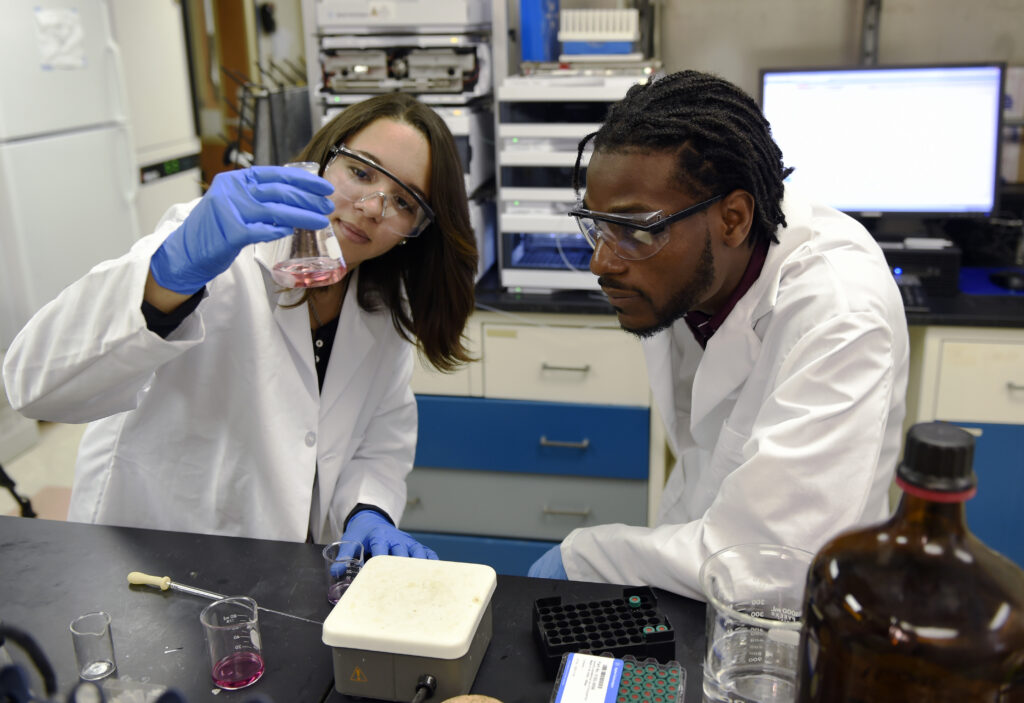
There are currently 101 public and private HBCUs across 19 states, the District of Columbia and the U.S. Virgin Islands. Roughly a 50-50 percent split amongst the private and public sectors, there are 52 public and 49 private HBCUs. They host 2-year associate’s and 4-year baccalaureate programs, graduate and professional programs and also come in the form of standalone law and medical schools. Most HBCUs are located in the American South. However, they span from Pennsylvania to the U.S. Virgin Islands. There is even a private medical school, Charles R. Drew University of Medicine and Science, as far west as Willowbrook, CA.
The college or graduate or professional school application process is no different at an HBCU than a majority serving institution. You can apply by accessing the institution’s website or the Common Black College Application. Here is a comprehensive list, broken out by state, of HBCUs. The Common Black College Application allows you to apply to up to 68 HBCUs at once. The United Negro College Fund is an organization that funds scholarships for 37 private HBCUs. They detail helpful resources on how to pick a college, what some important factors are when doing so and more.
It is always a good idea to contact the college or university and schedule a tour and experience campus life. In the event you enroll and do have to pay tuition, you can be sure your money is largely going to address the interests of Black Americans and other members of the African diaspora who attend as international students.
When you graduate an HBCU, you are forever connected to a bevy of Black professionals. This cannot be said of most other traditional and majority-serving institutions. Further, you can be facilitating generational prosperity by promoting your institution and remaining active with your alumni chapter.
Duke University, in Durham, North Carolina, has a Black student population of 7.3% while Black people make up population is 22% of the state of North Carolina. If someone goes about their day with a Duke University t-shirt on, are they effectively and efficiently promoting the interests and support of Black American students? The logical answer is, well, not really.
Support HBCUs through donations
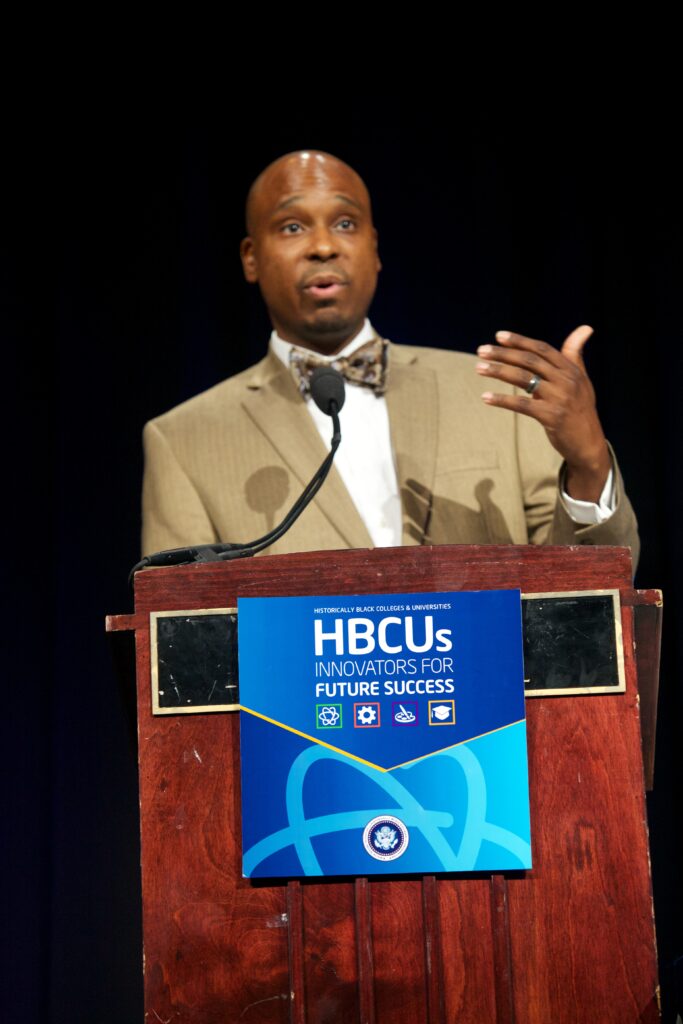
HBCUs are currently (and traditionally) underfunded institutions. This puts a strain on students because many of these schools are tuition-dependent–not supplementing their revenue with corporate donations, athletic program revenue and indirect cost rates derived from research grants like some other schools. When an institution has less scholarship dollars to give, it puts pressure on students and their parents to borrow.
Available scholarship dollars significantly reduce financial strain on students (and their families). Reasonably, the more money that is available tends to mean students have to borrow and use student loans less. Student loan debt is a financially crippling phenomena. The United States has just shy of $2 trillion in collective student loan debt. Black American and African-American college graduates, on average, owe $25,000 more in student loan debt than White students.
In 2020, the institutional endowment of all HBCUs combined was 11% of Harvard University’s over $40 billion endowment. Harvard University’s Black student population is 4%. That’s right–of all the just over 100 public and private HBCUs, they are significantly dwarfed by Harvard University’s endowment, which is the nation’s largest.
Having capital resources gives the college or university the ability for students to have their education paid for through talent scholarships–academic, athletic and musical. This means that there are over 100 avenues through which Black Americans and other members of the African diaspora can receive individual and collective boons to their economic prosperity.
Visit the website of an HBCU that you admire, and donate today.
Support HBCUs through their athletic programs
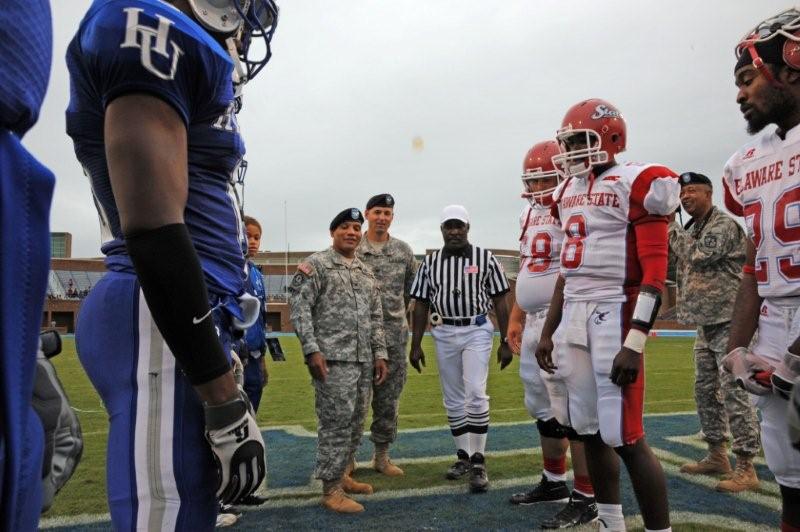
College athletic programs are entertainment entities that generate revenue for the school. Usually, football and basketball are the highest revenue-generating sports across American higher education. Institutions use this money to fund other athletic programs, student scholarships, campus facilities and any other costs the school may have.
Now, brace yourself. I am going to demonstrate to you how predominately White institutions, and those with relatively marginal Black student populations, exploit and capitalize on their Black athletic talent for the benefit of non-Black communities. Based on probabilities, this simply does not happen at the vast majority of HBCUs.
According to The Atlantic’s Jemele Hill, a noted sports journalist, the NCAA reported over $1 billion in revenue in 2017. A good portion of that money comes from the Division-1 tournament of men’s basketball. There are 27 schools that generate over $100 million in revenue from athletic programs each year. None of these schools are HBCUs. In fact, almost all of them have majority White student populations. Hold on, it gets worse. Of the over 60 schools in “Power Five” athletic conferences, Black men comprise 56% of basketball teams and 55% of football team. These schools, together, host Black male undergraduate populations of just 2.4%
Researcher Dr. Shaun R. Harper issued a comprehensive report that broke down the Black and Black male undergraduate student populations of the 50 American public, state flagship universities and compared them to their football and basketball teams. The results are shameful. None of those state flagship universities have majority Black populations nor do they come close. In 2004, at 21 of these schools, more than 20% of Black students on campus were athletes. Specifically, in 2000 Rutgers University’s Black male undergraduate population was 3.3%. Despite this, 10% of the Black male students were student-athletes, and they comprised 82% of the basketball team and 59% of the football team. There is no reason to single Rutgers University out. There are 49 other state flagship universities with similar exploitative features. Other private institutions and regional state institutions likely have profiles resembling those of the state flagship universities. There is just no possible way this can happen at the vast majority of HBCUs.
There is a phrase that pithily describes the near sordid phenomenon at hand here. Dr. Claude Anderson describes this as “Black labor, White wealth.” Worse, at colleges and universities, it amounts to Black labor and wealth for everyone else–non-Black Hispanics/Latinos, Asians and anyone else who is non-Black. Now, do you remember the fundamental principle behind the Civil War? It was a bloody fight to preserve the institution of slavery in which Black American bodies were exploited to generate wealth. The financial net-net of it all has changed little since 1964, 1865 and even 1526.
Have I convinced you on how significant the stakes are for Black Americans? For HBCUs? They are quite the efficient vehicle for, instead, using Black intelligence, athletic prowess and otherwise to fund the interests and futures of Black people. The collective capitalizing of Black bodies and minds, for the advantage of non-Black people, is simply not going to happen at a predominately Black institution.
When you support HBCUs, you are bolstering Black economic prosperity. You can help change this when you support HBCUs by encouraging students to apply and enroll, donating to them and supporting their athletic programs. Take action.