
Having food allergies or living with someone who has food allergies can be life-changing and oftentimes can be stressful. Knowing what to eat, how to serve food, where to eat, what to get in groceries, and what to do if traveling are common challenges for people living with food allergies. Read below for life-changing tips and valuable resources to help you and your family navigate life with food allergies.
1. Know this by Heart: What are the Food Allergy Symptoms
According to the American College of Allergy, Asthma & Immunology, “A food allergy reaction occurs when your immune system overreacts to a food or a substance in a food, identifying it as a danger and triggering a protective response.”
The top 9 food allergens include:
- Milk
- Egg
- Wheat
- Soy
- Sesame
- Peanut
- Tree nut
- Fish
- Shellfish
The food allergy symptoms can range from mild to severe. For people living with food allergies, these are the common allergic reactions according to American College of Allergy, Asthma & Immunology that you should always be aware of:
- Vomiting and/or stomach cramps
- Hives
- Shortness of breath
- Wheezing
- Repetitive cough
- Shock or circulatory collapse
- Tight, hoarse throat
- Trouble swallowing
- Swelling of the tongue, affecting the ability to talk or breathe
- Weak pulse
- Pale or blue coloring of skin
- Dizziness or feeling faint
The most severe reaction is called anaphylaxis, which is a life-threatening allergic reaction that can be fatal if not treated right away with epinephrine. It can happen within a few seconds or minutes after being exposed to an allergen: blood pressure drops suddenly, and the airways narrow, making it difficult to breathe, the pulse may be fast and weak. You may also have a skin rash, get nauseous, and vomit.
It is important to watch out for these symptoms, take your medicine or epinephrine (if needed), and head to the nearest Emergency Room if you’re not sure and are not feeling well.
2. Grocery shopping? Read the labels

It is extremely important to read the labels carefully if you are living with food allergies. Luckily, in the US and Canada, a lot of companies add these allergens to the labels, so it’s easier to check if these products contain any allergens.
Here are several tips for reading the labels:
- Advisory Statements – It is important to read these statements as these may vary from product to product
- Always keep an eye on these warnings: “May contain,” “Produced in a facility that,” or “Manufactured on shared equipment with.” Avoid buying the product if your allergens are listed on these statements due to a higher risk of cross-contamination.
- Check the labels all the time because food manufacturers can change ingredients often.
3. Cooking with food allergies–use substitutes!
Cooking for people living with food allergies can be challenging but there are several food alternatives that are available now on the market. Here are a few lists of items that we use (please note that these are not sponsored and these are what we use):
Egg replacement – Depending on what you will need it for, there are several options that you can choose from:
For baking:
- Vinegar & baking soda (Replace 1 egg with 1 teaspoon baking soda, 1 tablespoon vinegar);
- Unsweetened applesauce (Replace 1 egg with 1/4 cup applesauce);
- Plain or vanilla soy yogurt (Replace 1 egg with 1/4 cup yogurt);
- Silken tofu;
- Ripe banana;
- Ground flaxseed;
- Ener-G egg replacer
For savory dishes, you can use Just Egg, which works well as a scrambled egg. You can also use Ener-G egg replacer as an egg wash for breading.
Dairy – plant-based milk such as flax, rice, oat, and nut milk (if you do not have tree nut allergies)
Wheat– Amaranth, Arrowroot, Buckwheat, Flax, gluten-free flours (rice, soy, corn, potato, and bean flour)
Soy (specifically soy sauce) – coconut aminos
Peanuts (specifically peanut butter) – Sunflower seed butter such as SunButter
4. Eating out? Speak up!

- Check menus online. A lot of big chain restaurants offer nutrition and allergen information on their websites. There are other websites, such as AllergyEats, that list restaurants where you can search easily if they can accommodate your allergies.
- Call the restaurants ahead of time to inquire if they cater to people living with food allergies. A lot of times, they will tell you to speak with their chef once you’re in the restaurant.
- Communicate with the restaurant staff about your food allergies. Ask about cross-contamination, using dedicated fryers, what type of oil they use, etc. Test their knowledge about butter (see if they know it falls under a milk allergy).
- Read menus closely and discuss any questions you may have about the menu.
- Train your kids early to be comfortable in ordering and letting the restaurant staff know about their allergies. They will be their own advocates as they get older in life. We started to train our son, who has multiple allergies, to discuss his allergies when putting his order. He was initially shy, but now he has gotten comfortable.
5. Traveling with food allergies–prepare ahead of time!
Traveling is fun, but it takes a lot of preparation, especially if you are living with food allergies. Here are several tips to help you plan for your trip:

- Review the expiration dates of your medicine ahead of time to ensure that it’s up to date. This gives you extra time to order or buy it if it’s expired or you don’t have enough supply.
- Pack extra medicines just in case you end up using it during your trip
- If you’re traveling overseas, research the requirements of the countries. Some countries require that the medicines be in their original boxes, and some require a letter from your physician.
- Make sure to pack these medicines in your hand-carry and not as a check-in just in case your luggage is lost.
- Wear a medical bracelet that lists your allergies and emergency contact information.
- Make your own ID (or your child’s ID) that you can put in your wallet (or their bag) that lists all the allergies and emergency contact information.
- Look for the closest emergency room or urgent care when you scope out your destination.
- If traveling to theme parks, you can check out their menus ahead of time and even send them an email if you have additional questions. The big ones that we’ve been to that catered to our needs are: Disney World, Universal Orlando, Hershey Park, and Legoland.
6. Keep your medicines up-to-date
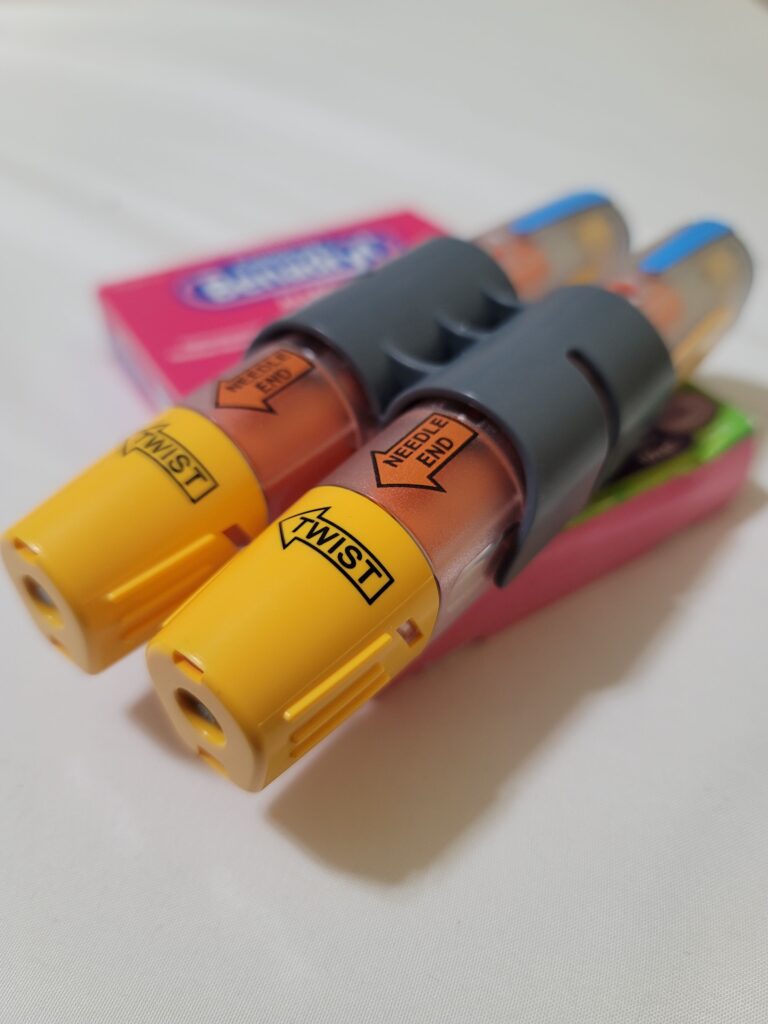
Yes, medicines expire, so always check their expiration dates and make sure to order the medicines ahead of time. These medicines will be the saving grace for people living with food allergies. A few years ago, there was a shortage of EpiPen, so you want to make sure that you have something at your house in case this happens. Finally, it’s always good to maintain a healthy relationship with your allergist or primary care doctor.
7. School and Living Normal
Going to school can be nerve-wracking for people living with food allergies. The good news is, schools are more careful now in handling food allergies. Class parties now require labels on pre-packed goodies, while some schools moved away from providing food at parties. Some schools also have removed peanut butter from their menu and have replaced it with sunflower seed butter.
It is always good to speak with the teacher, create that relationship, and talk to the nurse, even if it’s not an emergency, to discuss food allergies and how they handle them. Make sure to provide the school nurse with medicines and a Food Allergy and Anaphylaxis Emergency Care Plan.
8. Living with People who don’t have Allergies: Set Boundaries
Setting boundaries may sound harsh, but the reality is you will need to let the people living with you know what your allergies are and what they can do to help you not end up in the ER. It is a little challenging initially to modify the way of life for people living food allergies but these simple changes can help them in the long run. Examples include cleaning up the counter or table after eating, avoiding bringing dishes that contain allergens that you are highly allergic to (if possible) for potlucks, and keeping the food in the kitchen and away from your room.
9. Useful Resources for People Living with Food Allergies
There are several resources that will bring valuable information as you go with your daily life:
Latest information on allergies:
https://acaai.org/allergies/allergic-conditions/food/
Restaurant guide for people with food allergies:
Recipes for people living with food allergies:
https://www.allergicliving.com/recipes/
10. Think Positive!
While living with food allergies can be stressful, you need to set a positive mindset as you deal with this. Enjoy life and find happiness in everything. The journey won’t be as easy but you’ll still be able to enjoy life with a few modifications and extra planning. Just be careful, always be prepared with your medicines, find a support system, always speak up, and train your kids to be their own advocates.