- Electronics that can be recycled in New Jersey
- How to recycle electronics in New Jersey
- Why it is important to recycle electronics in New Jersey
Have you ever been in a situation where you are canvassing your living room and come across an old DVD player or VCR player and think to yourself, “There’s no need for me to have this anymore”? According to a United Nations University (UNU) report, there was 53.6 million tons of e-waste in 2019, and the amount of global e-waste is slated to increase by 38% from 2020 to 2030. It is extremely important to properly recycle electronics, and this was written in hopes of being a guide to recycle electronics in New Jersey specifically.

This is a problem that is likely to continue to worsen given the continually climbing volume of electronics in our society. We as a society need to be aware of the implications that incorrectly disposing of electronic devices can have on the environment and how that may affect our society’s longevity and health in the long-term. Throughout the United States, cities and states have begun to take notice and implement recycling programs or legislation around recycling electronics in an attempt to help solve the problem and make our planet a safer one.
Only twenty percent of global e-waste is formally recycled, while the remaining eighty percent is often put into a landfill or incinerated. The trend of new legislation and government awareness of the issue is positive news given many consumers’ lack of clarity around safely recycling electronics, whether it be as small as a smartphone or an entire printer. According to one report, nearly 75 percent of old electronics continues to be stored in households because of the unavailability of convenient recycling options.
The state of New Jersey passed the New Jersey Electronic Waste Management Act, which states that electronics should be disposed of correctly when they are at the end of their lifespan. This made it illegal for electronic devices to be sent to a landfill and required the recycling of electronics in NJ. This article was written to make it easier for New Jersey residents to find information and become more aware on the implications of recycling electronics and how to recycle electronics in NJ.
Electronics that can be recycled in NJ:
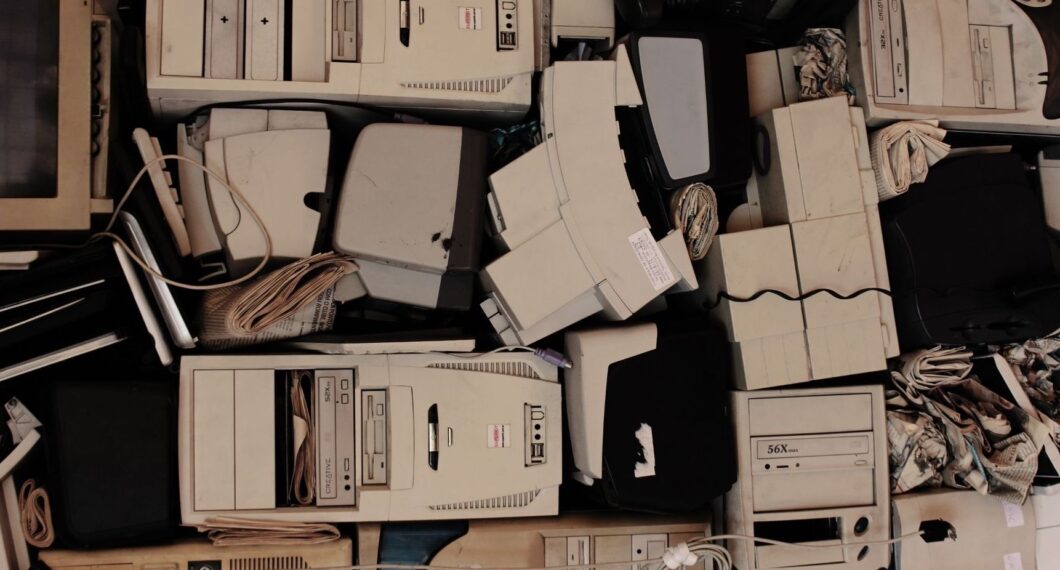
All types of electronics can be recycled in the state of New Jersey. These devices include, but are not limited to:

- Desktop computers
- Monitors
- Cell Phones
- Laptops
- Printers
- Fax Machines
- Televisions
- Game Consoles
- E-Book Readers
- MP3 Players
Other devices, such as a variety of stereo equipment, VCR machines, copiers, and more are also capable of being recycled in New Jersey. SIMS Recycling Solutions, one of the e-waste recyclers in the state of New Jersey, provides a detailed list of all of the recyclable electronic devices on their site.
If your devices are too heavy for you to handle yourself, New Jersey offers plenty of options to recycle those electronics as well.
In addition, there are various stores and charities that will take and recycle electronics in NJ for you. Some of these include, but are not limited to:
These stores and charities have various locations throughout the state and can be locations can be found on their websites.
How to recycle electronics in NJ:
The first thing you need to do in order to recycle electronics in NJ is find your nearest e-waste collection area. You can find a full list of places to recycle electronics in New Jersey on the website of the Department of Environmental Protection. Some municipalities around New Jersey allow curbside pick-up that needs to be arranged by calling and scheduling a pick-up date and time. The list is dense, but arranged alphabetically by county and municipality to make it easier for you to reach information on your area as quickly as possible.
Essex County, New Jersey has an annual “Computer and Electronics Recycling Day,” which the county held on October 16th for 2021.
Recycling computer hardware and electronic devices helps remove lead and other dangerous chemicals from our waste stream, which is important for us and our children,
Essex County Executive Joseph DiVincenzo Jr.
Why it is important to recycle electronics in NJ:
Recycling electronics in general is crucial to the health of our planet – electronic devices contain highly toxic substances like mercury, lead, and more. These toxic chemicals can leak into the ground when the devices are put into a landfill, potentially causing serious environmental issues and affecting local ecosystems to a high degree. This video, by Tom Mills, takes you through the process of recycling electronics and explains throughout the video the importance of recycling electronics as well.
Recycling electronics in New Jersey is particularly important given the state legislation around sending e-waste to landfill. While it is naturally difficult for the government to enforce, individuals and businesses that are caught dumping consumer electronics can face fines or even prosecution.
Moving away from the environmental or legal implications of recycling electronics in New Jersey, recycling your electronic devices can protect your data from being breached as well. By sending a hard drive or a laptop to a landfill, you risk the device falling into the wrong hands and a potential violation of the personal data that lives on said device. By recycling the device, you can ensure the device is destroyed and disposed of in a way that will eliminate all risk of your personal data being stolen.
Lastly, there is potential to recover some very precious gold in e-waste. According to the United Nations, electronic waste contains deposits of metals that can be fifty times richer than the ores mined from the Earth. Disposing of these electronic devices properly can help preserve our planet’s resources and provide a more stable ecosystem for the long-term health of society.
Overall, recycling electronic devices in New Jersey helps to increase the effectiveness of solid waste management efforts as well as protect our environment from the leakage of toxic waste into the Earth’s inner layers. Not to mention not recycling electronics in New Jersey is illegal! 🙂