In an era defined by evolving environmental concerns and a growing demand for reliable power, sustainable energy solutions have emerged as a critical topic. This blog post aims to provide a foundational understanding for those new to the subject, exploring why these energy sources are important, what forms they take, and their inherent advantages and disadvantages. As someone who is also learning and researching this vital area, my goal is to foster awareness and provide a clear picture of what the future of energy may look like, helping you feel informed and prepared for the changes ahead.
Table Of Contents
Why sustainable energy matters
Key Types of Sustainable Energy Solutions
Advantages and Disadvantages of Sustainable Energy Solutions
The Future of Sustainable Energy Solutions
Frequently Asked Questions
References
Why Sustainable Energy Solutions Matter
Sustainable energy solutions refer to power sources that are naturally replenished and have a minimal environmental impact. The shift towards these solutions is driven by several compelling factors:
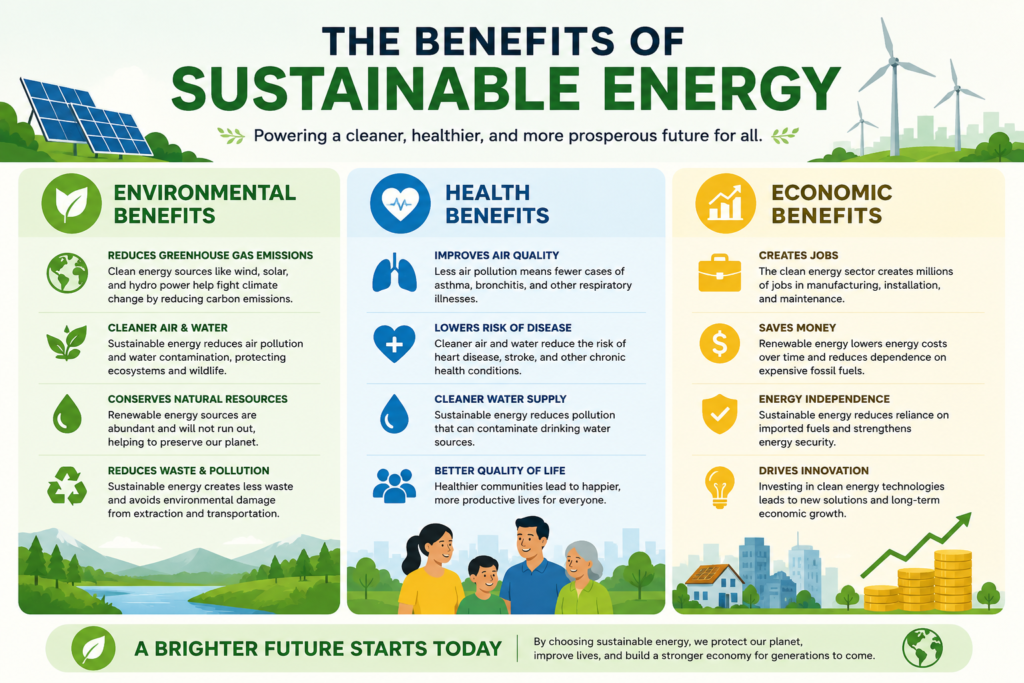
Environmental Impact: Unlike fossil fuels, sustainable energy sources produce little to no greenhouse gas emissions, such as carbon dioxide and methane. This significantly reduces their contribution to global warming and climate change [1].
Health Benefits: By reducing air and water pollution, sustainable energy contributes to improved public health, leading to fewer respiratory and cardiovascular issues associated with traditional energy production [2].
Economic Benefits: The sustainable energy sector is a growing industry, creating numerous jobs in manufacturing, installation, and maintenance. Furthermore, the operational costs of many renewable technologies are often lower than those of conventional power plants, and in many regions, renewable electricity is now cheaper than that generated from coal or gas [3].
Energy Security: Relying on indigenous, inexhaustible resources like sunlight and wind reduces a nation’s dependence on imported fuels, enhancing energy independence and security [4].
Key Types of Sustainable Energy Solutions
While many forms of sustainable energy exist, two of the most prominent and rapidly expanding are solar and wind power.
Solar Power
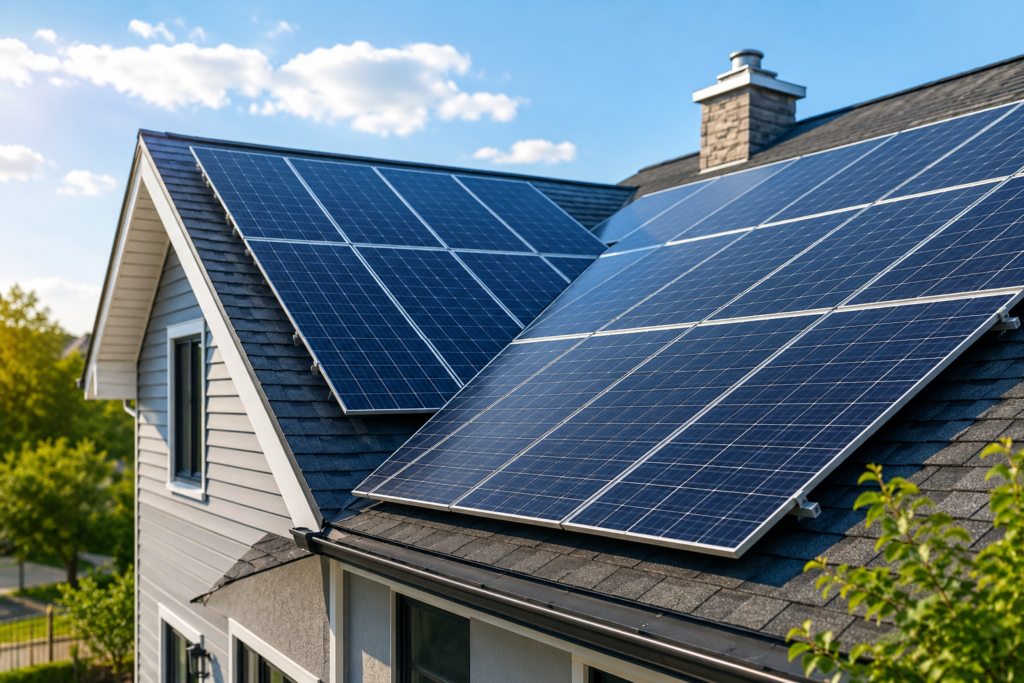
Solar power harnesses the sun’s energy to generate electricity. This is primarily achieved through two methods: Photovoltaic (PV) cells, commonly seen as solar panels on rooftops, directly convert sunlight into electricity, and concentrated solar power (CSP) systems use mirrors to focus sunlight and heat a fluid, which then drives a turbine to produce electricity.
Solar energy has seen remarkable growth, accounting for over 75% of new renewable capacity additions worldwide in recent years [5]. In the United States, utility-scale solar power generation grew by 28% in 2025 compared to 2024, with states like Texas and California leading the way in adoption and innovation [6].
Wind Power
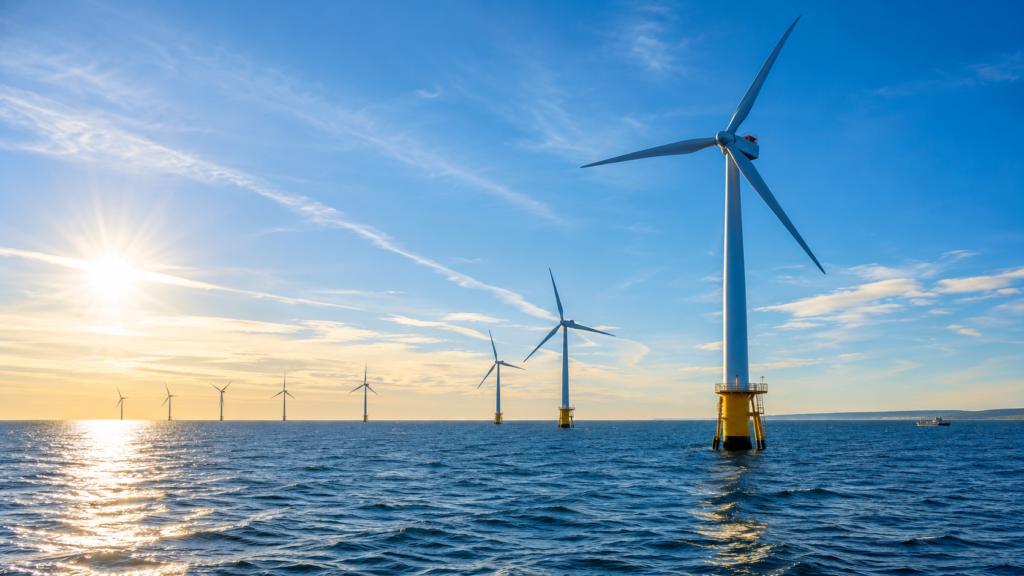
Wind power converts the kinetic energy of wind into electricity using wind turbines. The wind turns the turbine blades, which in turn spin a generator to produce electrical power. Wind farms, often comprising many turbines, can be found both onshore and offshore.
Wind power is the second-largest contributor to new renewable capacity, making up approximately 20% of recent additions [5]. In 2025, wind power generated a record 464,000 GWh of electricity in the U.S., representing a 3% increase from the previous year [7].
Advantages and Disadvantages of Sustainable Energy Solutions
Like any technology, sustainable energy comes with its own set of benefits and challenges. Understanding these can help in forming a balanced perspective.
| Feature | Advantages | Disadvantages |
| Availability | Sustainable energy sources are inexhaustible; the sun will continue to shine, and the wind will continue to blow for billions of years. | Many renewable sources are intermittent, meaning their availability fluctuates. Solar panels don’t generate power at night, and wind turbines require sufficient wind to operate. |
| Cost | Once installed, the operational and maintenance costs are relatively low, and the fuel (sunlight, wind) is free. | The upfront installation and equipment costs for renewable energy systems can be substantial, though these are often offset by long-term savings and government incentives. |
| Environment | Sustainable energy is clean, producing no emissions during operation, and helps protect biodiversity by reducing pollution. | Large-scale renewable energy projects, such as wind farms or solar arrays, can require significant land use. There can also be potential impacts on local wildlife, such as birds and bats with wind turbines. |
| Reliability | Decentralized systems can make the energy grid more resilient and less prone to large-scale failures. | Due to their intermittent nature, sustainable energy sources often require energy storage solutions (like batteries) or conventional backup power to ensure a consistent supply of electricity. |
The Future of Sustainable Energy Solutions
The outlook for sustainable energy solutions is one of rapid growth and innovation. Projections indicate that solar and wind power will continue to dominate new power generation, with onshore wind potentially generating between 13% and 26% of global electricity by 2030 [8].
Technological advancements, particularly in battery storage and grid management systems, are continuously addressing the challenge of intermittency, making renewable energy more reliable and integrated into existing power grids. Furthermore, increasing public awareness and strong policy support, including international agreements and national goals (such as those set by the G7 nations), are accelerating the adoption of sustainable energy solutions worldwide.
As we move forward, sustainable energy is not just an environmental imperative but also an economic opportunity and a pathway to a more secure and resilient energy future. Understanding these fundamental aspects is the first step towards embracing the changes that lie ahead.
Frequently Asked Questions (FAQs)
Q: What are sustainable energy solutions?
A: Sustainable energy refers to energy sources that are naturally replenished and have a minimal environmental impact, such as solar, wind, hydro, geothermal, and biomass. They are crucial for reducing greenhouse gas emissions and combating climate change.
Q: Why is sustainable energy important for the future?
A: Sustainable energy is vital for several reasons: it reduces pollution and greenhouse gases, improves public health, creates new jobs, enhances energy independence, and provides a long-term, inexhaustible power supply for future generations.
Q: What are the main types of sustainable energy?
A: The main types include solar power (from sunlight), wind power (from wind), hydropower (from moving water), geothermal energy (from Earth’s heat), and biomass energy (from organic matter). This article focuses on solar and wind due to their widespread adoption and rapid growth.
Q: Are sustainable energy solutions expensive?
A: While the upfront installation costs for sustainable energy systems can be significant, the operational costs are often very low, as the “fuel” (sunlight or wind) is free. Many governments and organizations offer incentives and subsidies to help offset initial expenses, making them increasingly cost-effective in the long run.
Q: What are the challenges of relying on sustainable energy?
A: The primary challenge is intermittency, meaning sources like solar and wind are not always available (e.g., no sun at night, no wind on calm days). This requires advanced energy storage solutions (like batteries) and smart grid management to ensure a consistent power supply. Land use for large-scale projects and potential impacts on wildlife are also considerations.
References
- United Nations. Renewable energy – powering a safer future.
- Climate.MIT. Renewable Energy.
- EnergySage. The Advantages and Disadvantages of Renewable Energy.
- Hero Future Energies. Sustainable Energy: Overview, Types, Benefits & Challenges.
- IEA. Technology: Solar PV and wind – Global Energy Review 2026.
- EIA. Wind and solar generated a record 17% of U.S. electricity in 2025.
- Climate Central. U.S. Solar and Wind Growth in 2025.
- Nature. Probabilistic projections of global wind and solar power growth