When it comes to everyday life, people can use a bank account regularly to pay for goods and services. Even though we live in a modern world, banking methods still are a critical foundation and are necessary by all means to know how much money you have. Checks and checkbooks are still very much a part of everyday banking. Knowing how to write a check is a necessary banking skill. Paying by check is a safe way to pay for things through mail or because you give permission to only one company or one person to receive a specific amount of money. These quick ways help you understand how to write a check correctly.
The steps to write a check
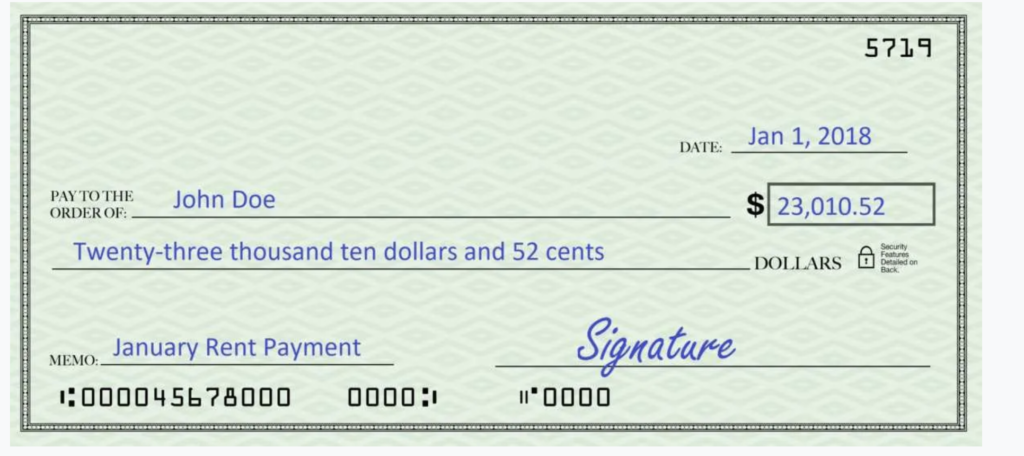
For your information, you can do this in any order you like so long as all the required information is there. But most people move from top to bottom when filling in the required blanks. Start off by writing the current or future date in the top right corner (or the day of the date when making out the check). For example, a written version would look like this, Jan 9th, 2022. It will help you and your recipient to keep an accurate record of it. It is recommend writing the DD/MM/YYYY format to help prevent any confusion.
Next you put down the name of the recipient that you are writing the check out too. You can name a person or a business. For a person, be sure to use their full name (first and last name) and not a nickname. While for a business, use its full name. Do not abbreviate. If you’re writing a check to multiple parties, separate them by an “and” if both parties must be present to cash the check or if only one party must be present to cash the check. Never use other characters, like a slash or dash, as the bank teller may misinterpret its meaning. Keep in mind your handwriting should be neat or else the bank will not be able to process your request due to being illegible. All told, you will need to enter the payment amount in two separate fields.
Part 1 of Value (in numerical form): Write the value to be paid in numbers next to the “$” symbol in word form on the line that is provided. Use numbers and write the full amount in dollars. When it comes to cents, you should be written in fraction form and write small to ensure the entire amount can be written out for the amount on the check. Make sure to write the amount as close to the left-hand side of the check as possible to avoid anyone filling in a new amount.
Part 2 of Value (in word form): You usually only have to write out the dollar value, with the cents can be written numerically. Then, draw a line after the amount to fill up the rest of the space to keep someone adding text. All things considered, if your written and numeric amounts do not match, the written amount will be used.
Example: “Thirty-four thousand and nine and forty-nine”
Make sure to sign in bottom right hand corner of check. Your signature is mandatory in this case, and the recipient will not be able to cash the check without it. The check becomes legal tender once it is signed. Your check will be rejected if you don’t sign.
Things to keep in mind:
Check your balance in your account before you write checks, so you don’t write a bad check.
When you write a check or make a deposit into your checking account, you can use the check register in your checkbook. This section of your checkbook is meant to act as a recorder of all of your financial transactions, including ATM withdrawals, online transactions, and payments. By fully writing it all down, you can see how much money is going in and out of your account. If your checkbook balance matches your bank statement, you have successfully balanced your checkbook. Mainly monitoring your statement will alert you of check fraud down the line.
By hand-recording your transactions either with an online register or a paper one, you know how much money you spent even if has not to shown up or withdrawn out of your bank account. It can take a few days for transactions to show online, and it is easy to forget a transaction if you don’t record it shortly after it occurs.
Generally, always use a pen. If you write a check in pencil, someone can erase it and change the amount or even replace the name in the Pay to the Order of line.
In all honesty, besides the signature, make sure to write neatly in print.
When it comes to the memo line, it’s not essential that you fill out this field, but this part is completely optional but is helpful down the line. It’s okay to leave this section blank, on the other hand, it helps you remember why you wrote the check for organization purposes. So that is up to you entirely.
Consider the following, by writing the account number of the service you’re paying, such as your internet account provider number, lets the company know what account to apply the payment to if the check gets separated from the payment stub.
Also, get into the habit of filing checks to know if you payed and stay up to date while also having proof just incase a mistake comes up on your or the banks end.
If you end up making a mistake, (it happens), draw a single line through the word and rewrite it. Otherwise, invalidate the check by writing “void” across it in large letters. You might be asked for a voided check when setting up direct deposit with a new employer.
It’s a good practice to keep your checks and checkbook in a safe place in case anything were to ever happen.
Overall, it is not too difficult to write a check. Make sure to double-check that you have everything filled out in the appropriate places written out before you hand over or mail the check.
Hope this article helped you learn about checks!

Frequently Asked Questions about Writing a Check
No schema found.How do you properly write a check?
Read the instructions above.
How do you write a bank check?
In no particular write the date, write to who you writing the check out to, write amount of numbers, write out the name of numbers, fill out the memo and then sign your name.
How do you write a check out to a person?
On the line “Pay to the Order of,” write the full name of person or the proper name of business you’re paying by check.