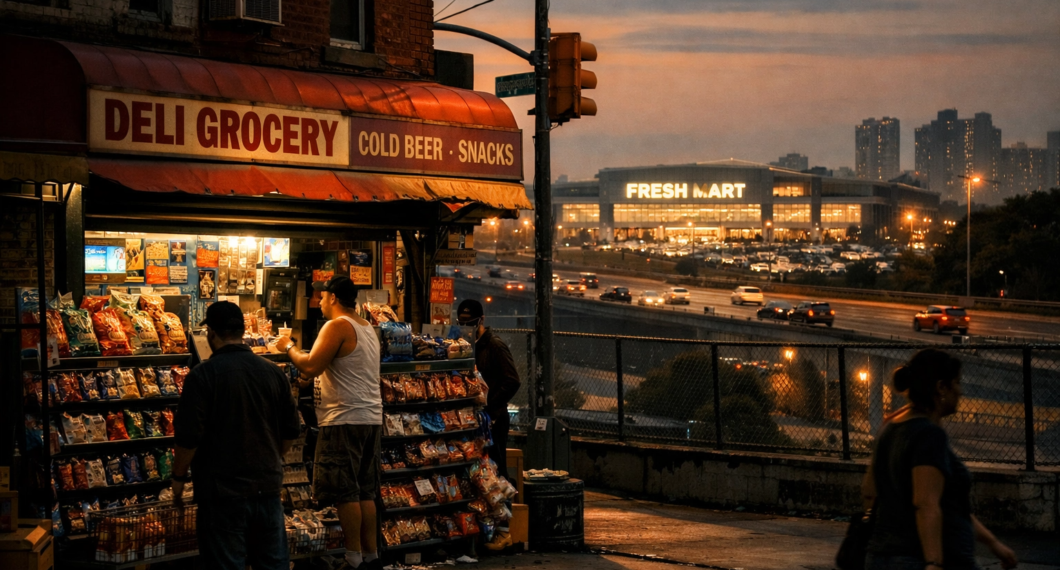
For me, a first-generation college student who’s lived in an urban community, the reality of food access was quite different from what many take for granted. Some parts of my childhood was spent navigating areas where the closest food options were corner stores stocked with sugary snacks, unhealthy fast-food chains, and the occasional Family Dollar offering a limited, often processed, selection. This isn’t just a memory; it’s the lived experience of millions in what are known as urban food deserts. Understanding why do food deserts exist in urban areas is crucial, as it illuminates a systemic issue with profound humanitarian implications.
Table of Contents
- My Personal Experience: The Daily Impact
- The Bitter Roots: Why Food Deserts Persist
- Food Apartheid and Food Swamps: Deeper Dive into Terminology
- Beyond the Statistics: The Human Impact – A Humanitarian Crisis
- Data at a Glance: Disparities in Food Access
- A Call to Action: Nourishing Our Communities
- Frequently Asked Questions (FAQs)
- References
My Personal Experience: The Daily Impact
My parents were incredibly hardworking, and thankfully, we always had reliable transportation. This meant that, we could reach a proper grocery store. However, this privilege didn’t erase the daily challenges. I vividly recall days when my parents were at work, and my sisters and I were left with few options for quick meals. Our choices were often limited to junk food or fast food until our parents returned home to prepare dinner. This experience, while seemingly minor, highlights a crucial point: even with access to transportation, the absence of nearby healthy food options can force families into unhealthy dietary patterns, underscoring the systemic nature of the problem.
The Bitter Roots: Why Food Deserts Persist
From my perspective, the existence of urban food deserts is not an accident but the result of a complex interplay of factors. The most significant contributors, in my opinion, are systemic racism, government neglect, and corporate decisions by grocery store chains. These factors collectively answer the question of why do food deserts exist in urban areas.
Systemic Racism and the Creation of Food Deserts
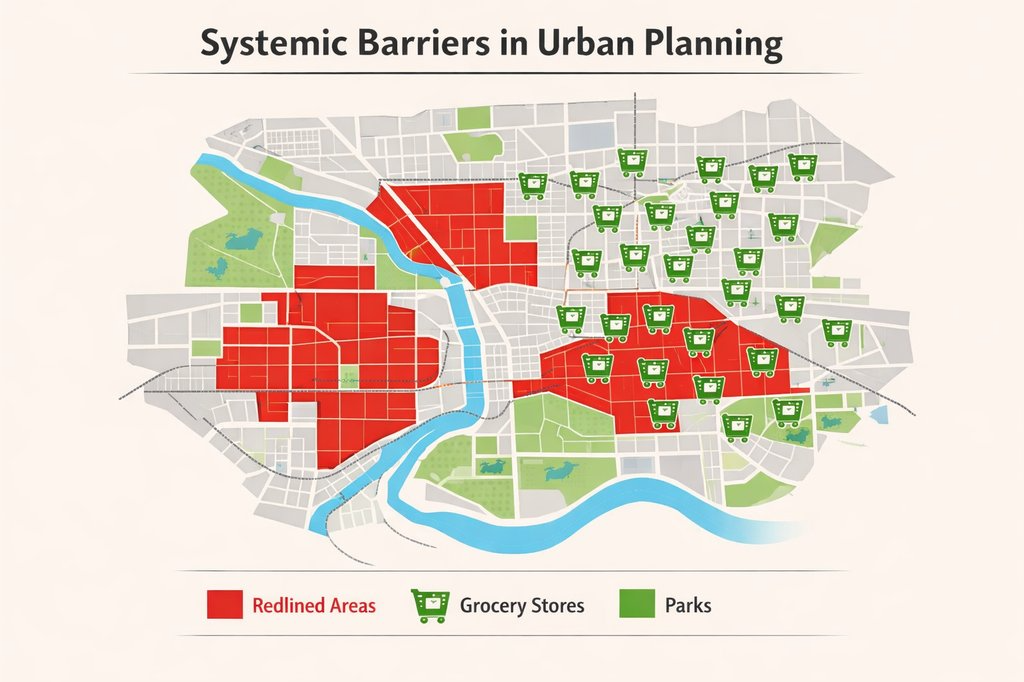
The historical legacy of redlining and discriminatory housing policies has played a profound role in shaping the current landscape of food access [1]. These policies intentionally segregated communities, concentrating poverty and limiting investment in predominantly Black and brown neighborhoods. As a result, these areas often lack essential services, including full-service grocery stores. Research consistently shows that high-poverty neighborhoods, particularly Black neighborhoods, have fewer supermarkets compared to their white counterparts, even at similar poverty levels [2]. This isn’t just about income; it’s about a deeply ingrained system that has historically denied resources to certain communities, directly contributing to why food deserts exist in urban areas. To truly dismantle these barriers, we must first commit to understanding how to stop racial injustice in all its forms.
Government Neglect and Policy Failures

Despite millions of dollars invested by state and federal governments to open grocery stores in food deserts, the problem persists [3]. This suggests that while intentions may be good, the solutions often fail to address the underlying systemic issues or are not sustained long-term. There’s a clear lack of comprehensive, sustained government policy that prioritizes equitable food access as a fundamental right, rather than a charitable endeavor. The focus often remains on temporary fixes rather than dismantling the structures that create and perpetuate food deserts. This governmental oversight is a key reason as to why food deserts exist in urban areas.
Corporate Decisions: Profit Over People
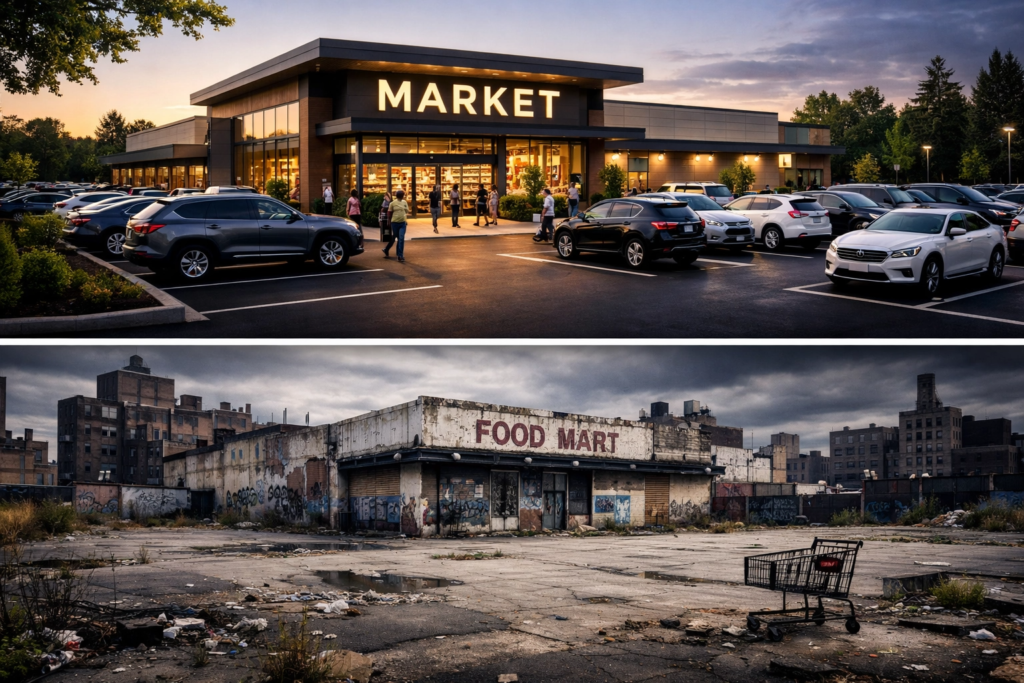
The consolidation of the grocery sector has had a significant impact, weakening competition and contributing to the rise of food deserts [4]. Supermarkets often follow wealthier, predominantly white customers to the suburbs, actively avoiding or even preventing competitors from establishing themselves in urban areas [5]. This neglect is not solely due to low income; it is often a profit-driven decision that prioritizes market demographics over community health and well-being, directly neglecting Black and brown communities regardless of their income level.
The low profit margins often associated with operating in underserved communities, coupled with higher perceived risks, deter major chains from investing in these areas. These corporate strategies are a major part of why do food deserts exist in urban areas.
Food Apartheid and Food Swamps: Deeper Dive into Terminology
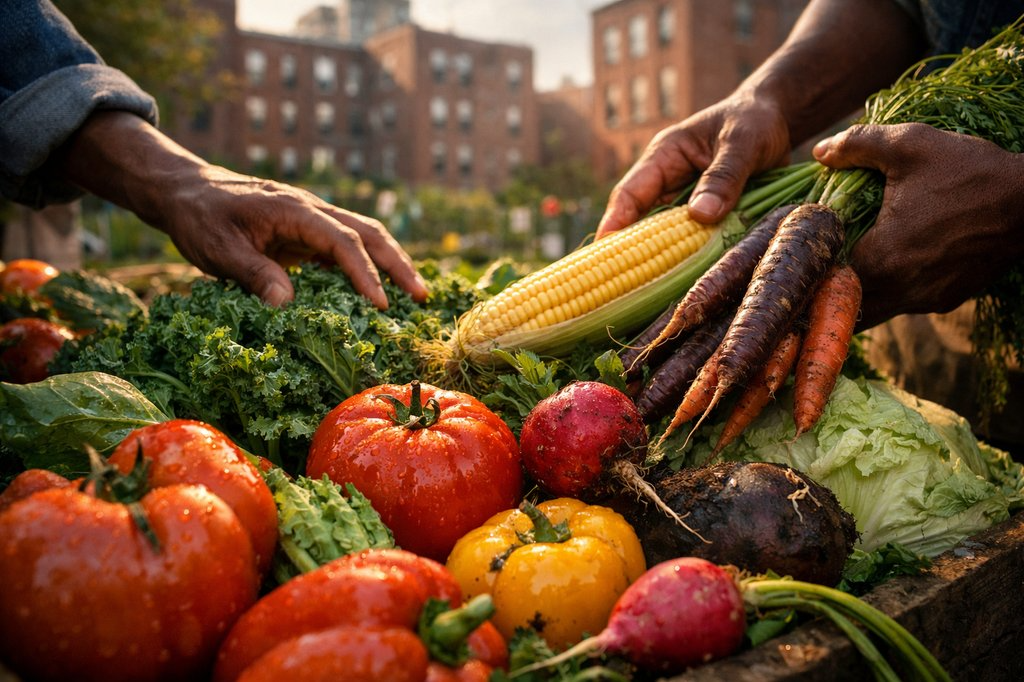
While the term “food desert” is widely used, many food justice advocates prefer the term “food apartheid”. This term more accurately reflects the systemic, intentional nature of food inequality, highlighting that it is not a natural phenomenon but a deliberate outcome of racial and economic injustice [7]. Food apartheid emphasizes the human-created systems of power that determine who has access to healthy food and who does not.
Another related concept is “food swamps.” This refers to areas where there is an abundance of unhealthy food options, such as fast-food restaurants and convenience stores, often coexisting with or exacerbating the lack of healthy choices. In food swamps, even if a healthy option were theoretically available, it would be overshadowed by the sheer volume and accessibility of highly processed, calorie-dense, and nutrient-poor foods. This environment makes it incredibly challenging for residents to make healthy choices, further illustrating why food deserts exist and how they manifest.
Beyond the Statistics: The Human Impact – A Humanitarian Crisis
The impact of food deserts extends far beyond mere inconvenience; it is a direct humanitarian crisis. By limiting access to nutritious food in these urban areas, it directly impacts the health of American citizens, disproportionately affecting and neglecting Black and brown communities. This systemic deprivation contributes to higher rates of diet-related diseases such as obesity, diabetes, and heart disease in affected communities [6]. Addressing these health disparities requires a comprehensive approach that tackles both healthcare access and socio-economic inequality.
The constant reliance on processed, high-sugar, and high-fat foods from convenience stores and fast-food outlets has long-term health consequences, perpetuating a cycle of poor health and economic hardship. It also affects the social fabric of a community, as grocery stores often serve as community hubs, providing employment and fostering local connections.
This is not merely a matter of personal choice but a profound failure of societal structures to ensure basic human needs are met. The systematic denial of fresh, affordable food is a direct violation of the right to health and well-being, creating health disparities that are a stark reminder of ongoing systemic inequalities demanding urgent attention and action.
Data at a Glance: Disparities in Food Access
To further illustrate the gravity of this issue, here’s a snapshot of how food deserts disproportionately affect various communities:
| Demographic Group | Impact in Food Deserts | Key Statistics/Findings |
|---|---|---|
| Low-Income Areas | Fewer supermarkets, higher prices for healthy food. | Wealthy districts have 3x more supermarkets than poor ones [2]. Healthy foods can be 3-37% more expensive in small urban stores [4]. |
| Black Communities | Significantly less access to supermarkets, regardless of income. | White neighborhoods have 4x more supermarkets than predominantly Black ones [2]. Higher rates of diet-related diseases [6]. |
| Brown Communities | Similar disparities in access and health outcomes as Black communities. | Double the diabetes rate for adults over 50 compared to whites in similar demographics [8]. |
| Children & Adolescents | Increased risk of obesity and cardiovascular disease. | Escalating obesity rates and tenfold increase in Type 2 diabetes among adolescents in affected areas [9][10]. |
| Overall U.S. Population | Millions affected by limited food access. | 18.8 million people (6% of U.S. population) live in low-income, low-access areas [11]. |
A Call to Action: Nourishing Our Communities
Understanding that food deserts are a systemic issue, not a personal failing, is the crucial first step. While it’s easy to blame individuals for dietary choices, the blame truly lies with a system that severely limits healthy options. I want readers to feel called to action to combat this systemic injustice, which can take many forms:
- Support Local Markets and Community Gardens: These initiatives often provide fresh, affordable produce directly to communities that need it most. Supporting urban agriculture is one of many new solutions to world hunger that can transform local food systems.
- Spread Awareness: Talk about food deserts with your friends, family, and colleagues. Educate others on the systemic roots of the problem and challenge misconceptions.
- Advocate for Policy Change: Support organizations and policies that aim to improve food access, promote equitable urban planning, and hold corporations accountable for their community impact.
- Give Back to Urban Communities: When opportunities arise, whether through volunteering, mentorship, or direct support, contribute to initiatives that empower and uplift underserved urban areas. Understanding what the most vulnerable need most is essential for providing dignity and effective support within our communities.
Our communities deserve more than just convenience stores and fast food. They deserve access to nutritious, affordable food that supports health, well-being, and thriving local economies. By recognizing the systemic nature of food deserts and taking collective action, we can work towards a future where every plate is full, and every community has the nourishment it deserves.
Frequently Asked Questions (FAQs)
What is a food desert?
A food desert is an urban area where it is difficult to buy affordable or good-quality fresh food. These areas often lack large grocery stores or supermarkets, leaving residents with limited access to nutritious options and relying on convenience stores or fast-food outlets.How does systemic racism contribute to food deserts?
Systemic racism, through historical practices like redlining and discriminatory urban planning, has led to underinvestment and lack of resources in predominantly Black and brown neighborhoods. This has resulted in fewer grocery stores and healthy food options in these communities compared to others.What is the difference between a food desert and food apartheid?
While “food desert” describes a geographic area lacking healthy food access, “food apartheid” is a term preferred by many advocates to highlight the systemic, intentional nature of food inequality. It emphasizes that disparities in food access are a result of deliberate racial and economic injustices, rather than accidental occurrences.What are “food swamps”?
Food swamps are areas characterized by an overabundance of unhealthy food options, such as fast-food restaurants and convenience stores, which often overshadow or exacerbate the lack of healthy choices. This environment makes it difficult for residents to make nutritious food choices, even if some healthy options are theoretically available.Are food deserts only an issue in urban areas?
While often associated with urban environments, food deserts can also exist in rural areas where residents face similar challenges in accessing fresh, affordable food due to distance and lack of transportation.What are the health impacts of living in a food desert?
Living in a food desert is linked to higher rates of diet-related diseases such as obesity, type 2 diabetes, and heart disease, due to a reliance on processed, high-sugar, and high-fat foods that are more readily available.What can individuals do to help combat food deserts?
Individuals can support local markets and community gardens, spread awareness about the issue, advocate for policy changes that promote equitable food access, and contribute to community initiatives that empower underserved urban areas.
References
- Historical redlining and food environments: A study of 102 urban …
- The Intersection of Neighborhood Racial Segregation, Poverty, and …
- The Government Spends Millions To Open Grocery Stores in Food …
- How Corporate Consolidation Broke America’s Grocery System – ILSR
- How Supermarkets Failed U.S. – Brown Political Review
- Communities With Limited Food Access in the United States
- What Are Food Deserts and Why Do They Exist? | New Roots Institute
- Distance to Store, Food Prices, and Obesity in Urban … – PMC
- Food Deserts* – Food Empowerment Project
- Food Deserts* – Food Empowerment Project
- Communities With Limited Food Access in the United States