Seasonal eating is less commonplace in our modern lifestyles than it was 100 years ago. The need for instant access to goods and services resulted in a culture centered around convenience. No matter the season, every fruit or vegetable you could desire is at your fingertips. However, the cost of convenience is at the expense of your health, wallet, environment, and food quality. Luckily, the benefits of seasonal eating year-round can help restore what was once lost.
Table of Contents
What is Seasonal Eating?
Seasonal eating is purchasing and consuming produce that is in its peak season. For example, eating crunchy cabbage in the winter and sweet strawberries in summer when they are naturally ready. Seasonal eating looks different for everyone. Depending on your region, what produce is available, and how long may vary due to your climate.
Why Eating Seasonally is Better For You
Seasonal eating is one of the simplest ways to start being more mindful of your food choices. It can be tempting to fall into the habit of eating your favorite produce year-round because of the convenience of supermarkets. However, incorporating seasonal fruits, vegetables, and even meat into your diet allows you to reap the many benefits it provides you and your community.

Better Eating Experience
There is no doubt that your eating experience is drastically better when you follow the natural seasons over eating out of convenience. For one, the changing seasons allow you to get creative in the kitchen and revamp old recipes. It adds variety to your meals because something new is in season every 3-4 months.
Secondly, produce consumed closer to peak ripeness has a much better quality of taste than its out-of-season counterparts because nutrient content is richer during those first few days after harvest. From the moment fruits and vegetables are picked, they begin to lose valuable nutrients, so the further distance produce has to travel to meet its demand, the less fresh and flavorful it will taste. Since out-of-season produce has a longer distance to travel compared to locally sourced products, it is harvested early and then artificially ripened with a chemical called ethylene. The process uses preservatives to ensure that the food does not spoil during transportation, making it look fresh, but after one bite, you will notice the lack of flavor and waxy texture. So, if you want the tastiest and healthiest ingredients in your meals, consider following a seasonal diet.
“… food is not simply organic fuel to keep body and soul together, it is a perishable art that must be savoured at the peak of perfection.”
― E.A. Bucchianeri
Environmentally Friendly
Once produce is grown and harvested, it has to travel for several days to reach the store, where it will be sold. During that long distance, the amount of carbon emissions released is more significant than if transported locally. Studies have found that fresh produce travels roughly 1,500 miles. By cutting down food miles and sourcing locally, we can reduce our carbon footprint and the amount of non-renewable energy sources used during distribution.
We are quickly exhausting all of Earth’s resources. The fast-paced lives we are accustomed to are the reason why there are unsustainable consumption habits among Americans. We must embrace new sustainability efforts to support the environment. If we each make minor and gradual adjustments to our current lifestyles, like eating seasonally, there is potential for change.
Strengths Local Economy
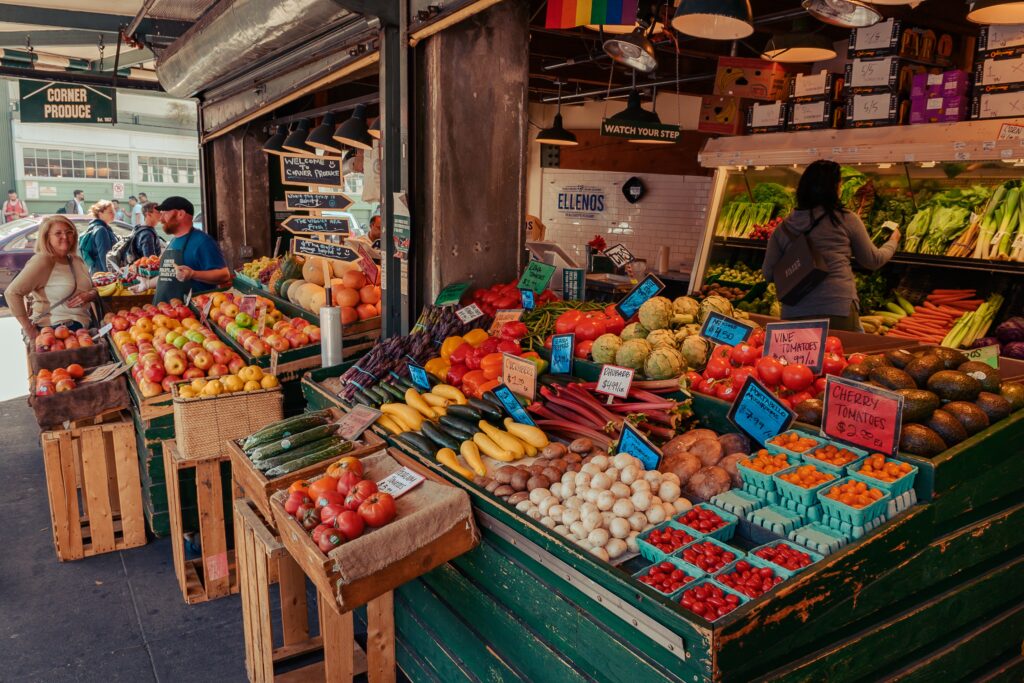
When we eat based on seasonality, oftentimes, we eat locally. By opting to buy from local farmers, you are supporting local businesses. Not only will you get more bang for your buck at the farmer’s markets, but there will also be more seasonal options to choose from compared to a grocery store. Reinvesting the money back into the community can help generate economic prosperity in that region.
Affordable
Have you ever wondered why the same heirloom tomatoes cost more in the winter than in spring? When certain produce is not in their natural growing season, there is typically more demand than supply. To meet demand, there are additional costs to transport, and store produces long distances, causing prices to skyrocket. The good news is that produce purchased in season typically costs less than the same product in the off-season. Every local farmer in the region is harvesting similar crops, resulting in surplus availability. You are guaranteed to save money during your next trip to the grocery store when you add seasonal produce to your cart. If you have cravings, consider stocking up and freezing or canning your produce to store it for when they are priced higher out of season.
What’s in Season?
You may be wondering where to begin now that you know the wholesome benefits of eating seasonally. By following this beginner’s guide, you will know what to look for next time you shop at your local farmer’s market or grocery store. Another great way to stay connected to the natural growing cycles of produce is to start your own garden.
Spring
After a long bitter winter, spring is the time for rebirth. As the weather gets warmer and days get longer, plants begin to sprout, and animals come out of hibernation. Here are some seasonal fruits and vegetables to look for during March, April, and May.
Fruits
- Cherries
- Mangoes
- Apricots
Vegetables
- Kale
- Lettuce
- Leeks
- Broccoli

Summer
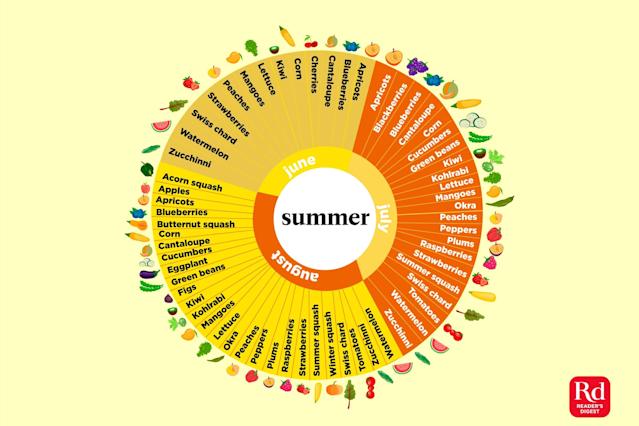
Summer is the height of the growing season. You should expect an array of fresh produce to choose from during the warmest months of the year. June, July, and August are the best times to enjoy the sweetest fruits. Here are some seasonal fruits and vegetables to look for in the summer.
Fruits
- Blueberries
- Strawberries
- Raspberries
- Watermelon
Vegetables
- Cucumbers
- Green Beans
- Corn
- Zucchini
Fall
As the frost sets in during the months of September, October, and November, root vegetables and other harvest crops are readily available. Here are some seasonal fruits and vegetables to look for in the fall.
Fruits
- Persimmons
- Grapes
- Pears
Vegetables
- Pumpkins
- Sweet Potatoes
- Butternut Squash
- Beets

TATIANA AYAZO/RD.COM
Winter
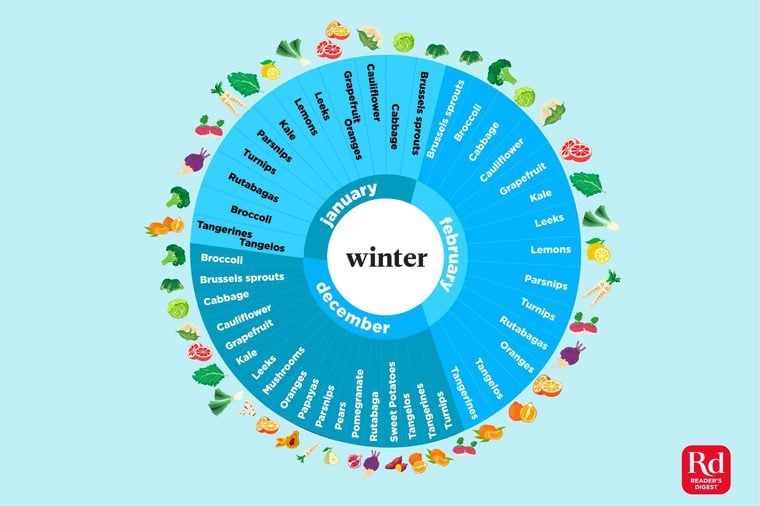
Once the bitter cold hits during the months of December, January, and February, hardy produce will thrive in lower temperatures. Here are some seasonal citrus fruits and vegetables to look for in the winter.
Fruits
- Oranges
- Grapefruits
- Tangerines
- Lemons
Vegetables
- Brussel Sprouts
- Cabbage
- Mushrooms
TATIANA AYAZO/RD.COM
Didn’t see your favorite fruit or veggie on the list? Click this link for additional resources.