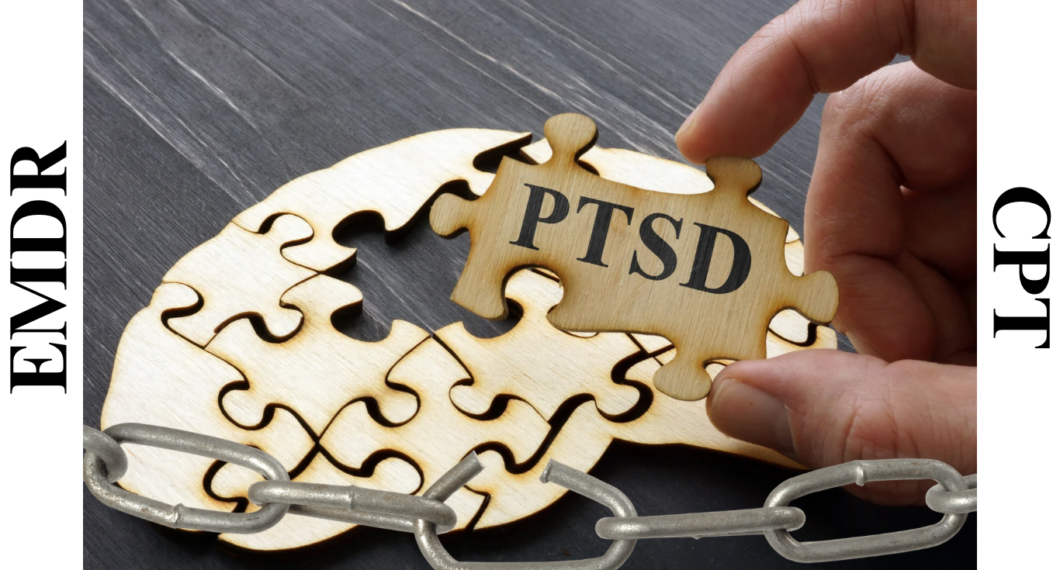
There is so much information out there about online therapy for PTSD and where to get it but… what therapy is right for you? Did you know that therapies have contraindications? It’s true. Some therapies are literally not for you. Wouldn’t it be better to have an idea of what online therapy for PTSD is not for you… or even better… which one is? That way you can look for a specific online therapy for PTSD and have more confidence your symptoms will improve.
Top Tier Evidence Based Therapies
3 Reasons Why EMDR is the Right Online Therapy for PTSD for You
3 Reasons Why CPT is the Right Online Therapy for PTSD for You
Veterans Affairs Administration EMDR Video
Top Tier Evidence Based Therapies for PTSD
We are going to start with two online therapy for PTSD options, the popular EMDR (Eye Movement Desensitization and Reprocessing) and Cognitive Processing Therapy or CPT. By the end of our discussion you will be armed with the knowledge you’ll need to make the best choice for you right now. You ready? Great! First, what does it mean to be a top tier “evidence based treatment?”
What is an Evidence Based Treatment?
What does it mean to be a top tier Evidence Based Treatment (EBT) for PTSD? It means that the World Health Organization, Veteran’s Affairs Administration, Department of Defense and numerous other organizations have looked at the research and agreed that these therapies are among the top choices for PTSD treatment. EMDR and CPT are suggested and/or strongly recommended for the treatment of PTSD. Don’t believe me? Check out these links:
- Veteran’s Affairs Administration
- VA/DOD Practice Guidelines (image on left from this link)
- American Psychological Organization.
- World Health Organization
What about online therapy for PTSD? Is EMDR or CPT an effective online therapy for PTSD?
How Effective is Online Therapy for PTSD?
Online therapy for PTSD is very effective. The COVID experience forced therapists to dive headlong into telehealth and virtual therapy. Therapists had opportunity to learn how great online therapy could be for their clients. Research published by the National Institute of Health website concludes, “CPT delivered by telehealth is an efficient and effective treatment modality for PTSD”
The EMDR international association or EMDRIA believes that online EMDR is effective. EMDRIA is the organization responsible for ensuring the quality of EMDR and certifying EMDR providers. They cite an article from the same journal that concludes, “EMDR delivered via the internet can be an effective treatment for clients experiencing mental health issues”.
So now that we know that CPT and EMDR are effective both on and offline, which online therapy for PTSD is for you?
3 Reasons why EMDR is the Best Online Therapy for PTSD for You
Eye Movement Desensitization and Reprocessing is a memory based trauma therapy that helps change how your bad memories are stored. It desensitizes the memory, meaning that it reduces how bad the memories feel when you think about them. When the memory is desensitized it no longer is triggered by people, places or things in the present.
Sometimes you will feel relief after just a few sessions because it is one major traumatic memory that led to your distress. Other times there may be multiple memories and multiple issues that complicate your distress and EMDR may take longer to desensitize these memories. Three reasons you should choose EMDR over other online therapy for PTSD are: There is no homework, no exposure exercises and there is an opportunity to learn new resources and ways to reduce distress .

Three Reasons to Choose EMDR
No Homework
When you leave the EMDR session there is no homework. When you are ready to leave your EMDR therapy session and your online therapy for PTSD for the day, your clinician will remind you that the work you did may continue between sessions. It is expected that your mind will continue to process the memory from your session without you doing anything.
Your mind is doing the homework for you. New insights, thoughts, images, sensations, dreams and maybe even other forgotten memories may come up. You are not doing anything but being asked to notice what comes up. The clinician may ask you to keep track of what you notice so you can discuss it at the beginning of the next session… but writing is not required.
No Exposure Exercise
EMDR has no true exposure exercise. While EMDR usually starts by focusing on aspects of the trauma memory you are working on, you are not required to go over the memory repeatedly as you might in other PTSD therapies. EMDR asks you to use the memory as a starting point before allowing your brain to free associate. Let your mind go bounce around wherever it wants to go. Sometimes your mind will stick with the memory, other times you may bounce to another negative memory or a positive, adaptive memory. Still, at other times you may find yourself wondering what’s for lunch!
Only occasionally will you therapist ask you to go check-in with your trauma memory. Very often, when you go check-in with the memory after bouncing around, you will notice that your experience of the memory has changed. Regardless of what the change is, if there is a change or not, the clinician will start you free-associating again. Your mind will bounce from your trauma memory, with whatever changes that you may or may not have noticed, making new connections. EMDR does not have you constantly focus on your trauma… it asks you to let your mind go wherever and do whatever it wants.
Resource Development
Remember when I said that there is no homework for EMDR and that the mind does the homework for you? Well, with this online therapy for PTSD, we want to make sure you are ready to handle whatever you mind may drum up. With EMDR you will learn various skills to help shift from being upset to being… less upset. You and your EMDR therapist will even spend time finding and strengthening skills and qualities you already have.
These skills and resources are so important to EMDR that there is a whole phase of therapy focused just on ensuring you have the skills and resources to work through your trauma memories. When you end your online therapy for PTSD for the day you will also be asked to remember these skills and encouraged to practice them between sessions.
Veterans Affairs Administration EMDR Video
3 Reasons CPT is the Best Online Therapy for PTSD for You
Cognitive Processing Therapy is a form of cognitive behavioral therapy that is specific to trauma work. This online therapy for PTSD provides you with education on trauma and how it comes to be triggered in the present. You are then asked to do a series of activities to help you learn to recognize and then challenge some negative thoughts or “stuck points” that make it difficult for you to recover from your trauma. You are also asked to write a few paragraphs on how the trauma affected you in various ways and then later, a few paragraphs detailing the traumatic experience. It is a very effective therapy for PTSD.
You will be asked to rate your PTSD symptoms each time you come to your weekly sessions. Doing so can help you see the progress you are making. This is a progressive 12 or so sessions of planned therapy and activities to help you recover from your PTSD.
Three Reasons to Choose CPT
CPT has Homework
Sometimes called “take home activities” to avoid the trigger word of “homework,” CPT is one online therapy for PTSD that involves activities you need to do between sessions. In fact, if you are unwilling to do these activities many CPT therapists will discuss your readiness for this therapy and postpone your participation until you can commit to doing the homework.
Some people flourish with homework and find that it keeps them working on their therapy during the week. If you are someone who doesn’t mind putting pen to paper and putting your therapy skills to work in that way, CPT may be right for you. Many people find that CPT is better for them than talk therapy because it makes them feel like they are doing something and they can see progress as they get the work done.
CPT Includes Skill Building
There are specific skills you learn during CPT that you can use throughout your life in all different situations. CPT will teach you how to identify and challenge stuck points, helping you come up with more balanced thoughts and interpretations of events. CPT will also have you to write-out (and not avoid) your trauma while using your CPT skills to help think about these memories in new ways. Many people will print out these skill worksheets and put them in a binder that they can return to whenever they need a little self-coaching.
CPT is Progressive
CPT is a planned 12 or so session evidence based therapy that moves from one topic or activity to another each week. Many people report they feel like they are doing something with CPT therapy. They can see their progress through the weeks. It may seem very much like 12 classes as you learn material then practice it for homework each week. If you are tired of “just talk therapy” that seems to be the same thing each and every session, CPT might be right for you.
Veterans Affairs Administration CPT Video
Which Option is Best for You?
| Eye Movement Desensitization and Reprocessing (EMDR) | Cognitive Processing Therapy (CPT) | |
| Exposure | X | |
| Homework | X | |
| Resources/Anxiety Skills | X | |
| Cognitive Therapy Skills | X | |
| Progressive | X | X |