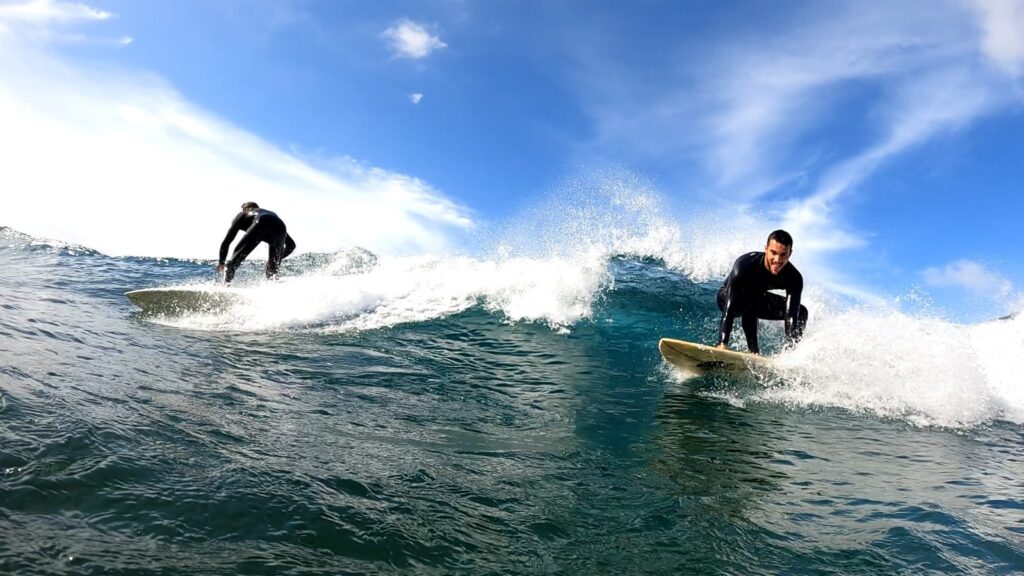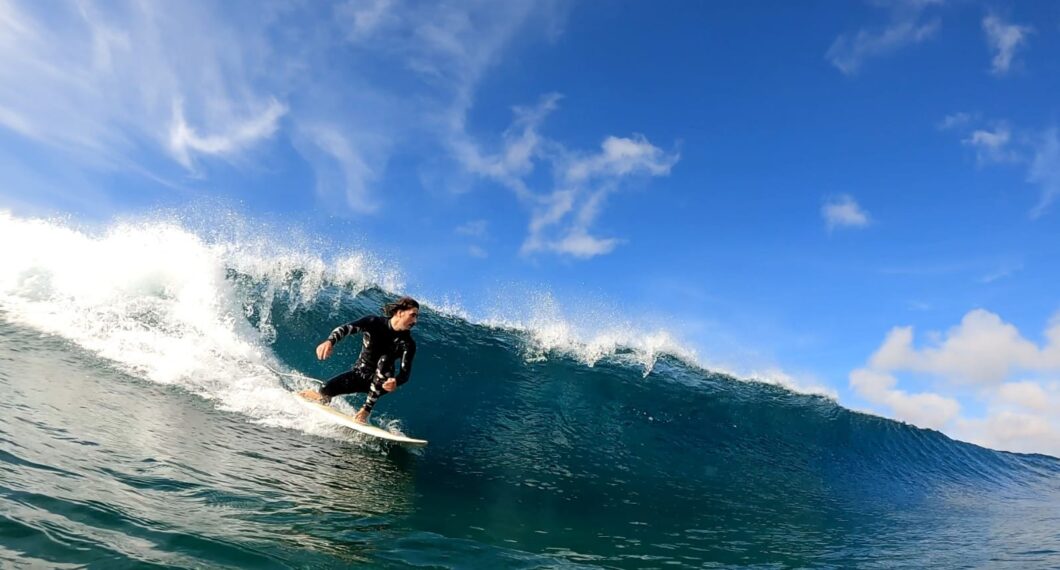
Surfing is a sport practiced worldwide and has become very popular in the last few years. It is a sport that allows you to be in direct contact with nature, develops your balance and flexibility among other benefits.
First things to you should know to learn how to surf are finding the board that best suits your weight and ability, and an adequate surfing spot for your level.
It is also important to wear the appropriate clothes, a swimsuit you feel comfortable with or a neoprene that allows you to do all the necessary movements and protects you from the cold.
As an overview of the surfboard parts, we can differentiate between: the front part (Nose), the back part (Tail), the central part (Deck), the fins (stabilize the board’s trajectory and allows the surfer to control the direction) and the leash (the cord that attaches the surfboard to your ankle).
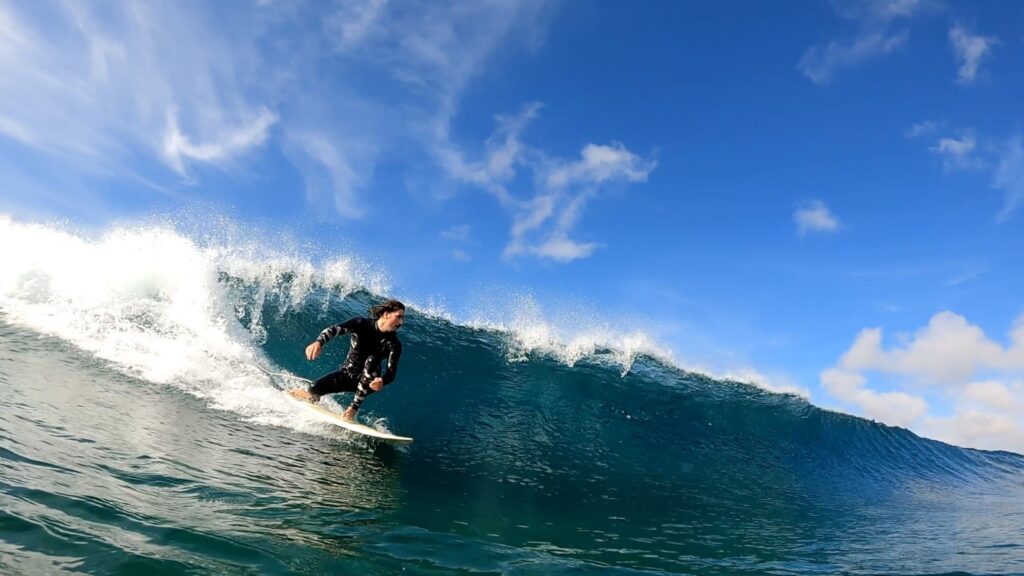
How should I position myself on the surfboard? How to paddling
The first and most important thing if you want to learn how to surf is knowing which foot we should place forward. You might be a Goofyfoot (the one who surfs right foot forward) or a Regularfoot (the one who surfs left foot forward). Once we know that, we must put the leash on the ankle of the foot that we carry behind the board.
Now we know what foot we should surf forward with and what board is adequate for us, so we need to know how to lie on the board. We must lie down keeping our weight in the center of the board, so that once we are in the water we do not go to the sides or fall off the board.
To start paddling we have to keep in mind that we must keep our head upright, resting our chest on the board and our shoulders straight without twisting our body when moving our arms. To paddle we will try not to put our arms too far back or too deep in the water, it is a short and continuous movement that should allow us to move quickly without much effort and without becoming unbalanced.
How to stand up (Takeoff)
Probably, the hardest part of trying to learn how to surf is to stand up. To know when it is the correct moment to stand up on our board we must ensure that we do not need to paddle more and that the wave has enough strength to push us and let us surf it properly.
There are some steps we can follow to be able to stand up on the board:
- Stop paddling and place our hands on the board at the same level as our chest
- Keep the leg on which we wear the leash stretched and bend the other, resting our heel on the knee of the leg we keep stretched
- Move the leg that we had bent forward, bringing the knee to our chest to rest the foot directly on the front of the board (without resting the knee on the board as an intermediate step)
- Once standing, maintain a bent-knee position and keep your weight centered over the board
- Use your arms to adjust and balance yourself
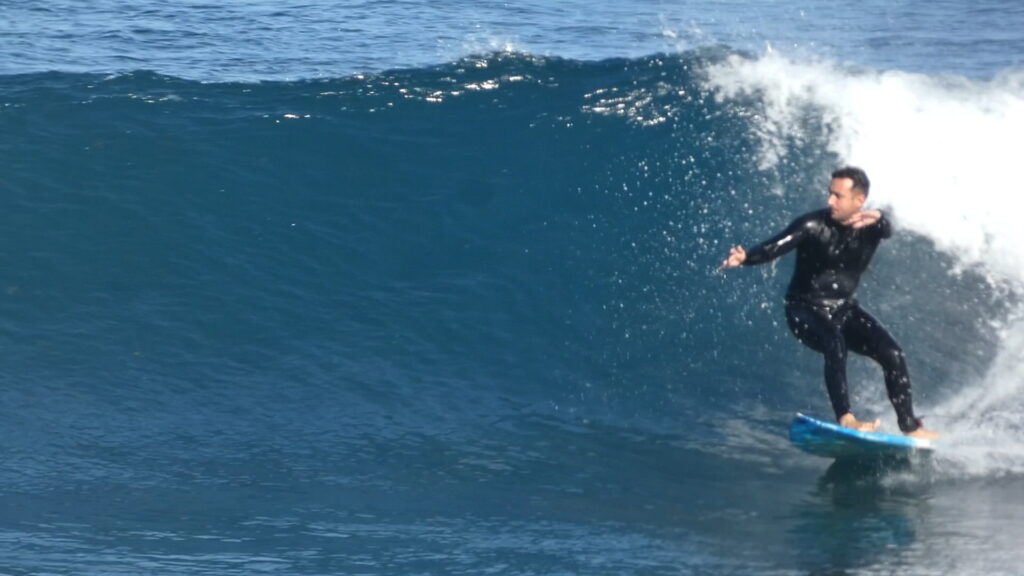
Learn how to surf
How do we start to learn how to surf? How do we know where to take the waves? How do we know it is a good wave to surf?
For first time surfers it is recommended to start in the whitewash (the waves are already broken) so you can easily learn and practice how to stand up and keep balance.
If you want to learn how to surf it also requires learning how to read and catch waves, which takes practice and spending time in the water. But as an overview, waves usually come in sets and the common one is three wave set (but you can find ones of less or more waves). Those waves are larger and more powerful than the others and are the ones that all surfers wait to catch.
To position yourself to take the waves, you should find the spot where the waves are breaking and position yourself in the lineup or in the Peak (beyond where the waves are breaking) and wait there for a set.
Some basic knowledge about waves
Waves are what make surfing possible, so understanding how they work is crucial. Here is a quick breakdown:
- Parts of a Wave: A wave has a face (the smooth front part that breaks), a crest (the top of the wave), and a whitewater (the foamy turbulent part that crashes).
- Wave Size: For beginners trying to learn how to surf, smaller waves are best. Aim for waves that are knee-high to chest-high on you. Anything bigger can be difficult and dangerous to manage.
- Catching a Wave: Paddle out past the breaking waves (where the whitewater crashes) until you reach the calmer area of the water. When you see a wave coming, turn your board towards the shore and start paddling. The goal is to match the speed of the wave so you can “pop up” and ride it.
Preferences and rules
In surfing, as in many other sports, there are rules and preferences you have to know and respect when you are surfing with other people. These rules are even more important to know for people that is trying to learn how to surf.
- Choose the proper spot for your level
- The surfer closest to the Peak has the right of way: It is possible that you are surfing surrounded by other surfers and they want to catch the same wave as you, so the surfer with the longest potential ride has priority
- Paddle avoiding other surfer’s lines: always be aware of where you are positioned, avoiding getting in the path of other surfers or where the waves break.
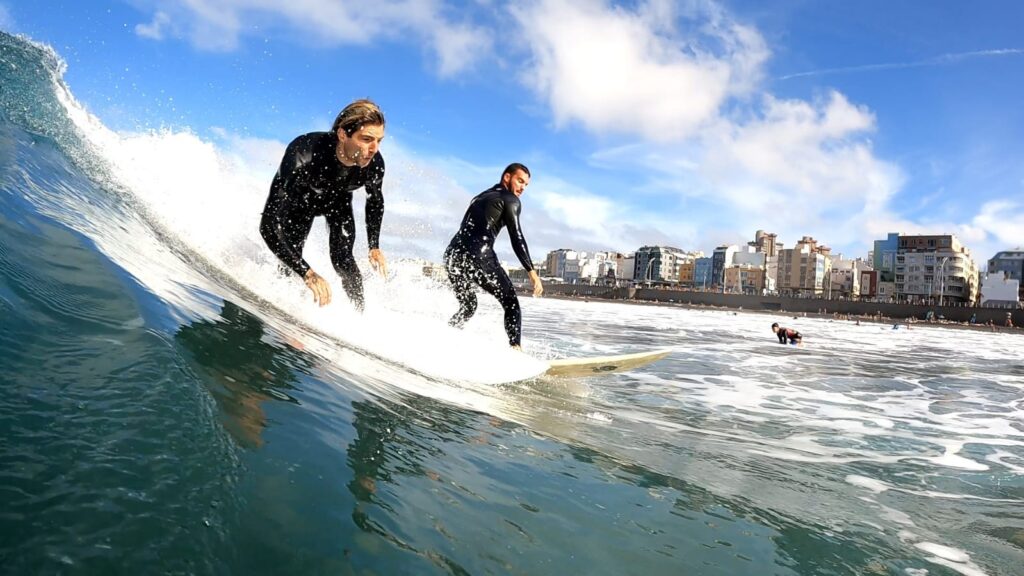
- Be careful with your board: when you finish surfing a wave or you fall, try not to throw your board because you could injure other surfers or even yourself.
- Respect the locals: some local surfers may think they have priority when catching the waves and can be aggressive
- Communication: while there are more people in the water, it is important to communicate with the rest of the surfers to know what they are going to do, if they are going to catch the same wave as you, if they catch it in the same direction… Some people that are trying to learn how to surf may think that this is not important, but I think that all surfers can say that communication can be key to avoiding accidents.
- Know the beach where you are going to surf: On each beach the water currents are different and can play tricks on you if you don’t know the area well enough.
Some tips you should know
Before you hit the water, here are a few things to remember:
- Safety first: always surf with a buddy, especially when you are just starting out. The ocean can be unpredictable, so it is important to have someone there to help if you need it (mainly when you are trying to learn how to surf).
- Ocean awareness: the ocean is a powerful and ever-changing environment. How to be a smart surfer?:
- Check the conditions: always check the surf report before heading out. This will give you information about the wave size, wind direction, and tide conditions.
- Rip currents: rip currents are strong currents that can pull you out to sea. Learn how to identify rip currents (usually channels of choppy water moving away from the shore) and avoid them. If you do get caught in a rip current, don’t fight it. Stay calm, swim parallel to the shore until you’re out of the current, and then swim back to shore.
- You fall: it is normal to fall off the board, especially at first, but if you start spinning around underwater and get disoriented without being able to get out, grab your leash and take your hand to the part that attaches to the board. This way you will know where the surface is to get out.
From my own experience, when you have a bad fall you really appreciate knowing this tip, because being underwater without knowing how to get out is very stressful and scary.
When you are a beginner and you are trying to learn how to surf, falls are not usually so strong, but once you surf more and better, falls can be stronger and more dangerous if you are not careful.
- Respect the ocean: the ocean is home to all sorts of creatures, so be mindful of your surroundings. Never litter on the beach and avoid disturbing any wildlife
- Be Patient and Persistent: remember, surfing is a lifelong journey. Keep practicing, and you’ll be amazed at how quickly you progress. Starting to learn how to surf can be frustrating at the beginning, but you will really enjoy it at the end, do not give up!