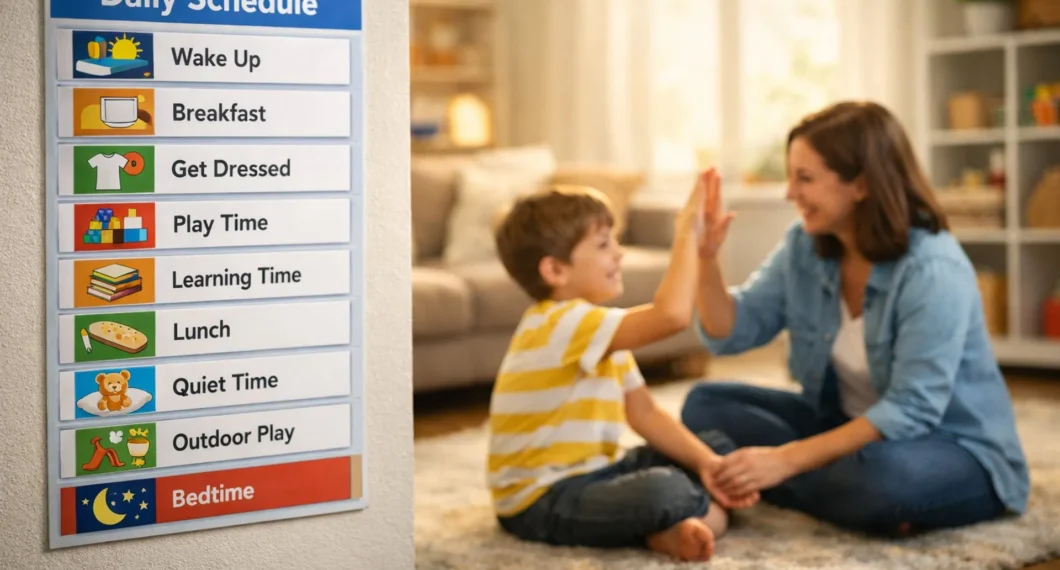
When our son was diagnosed with autism at almost three years old, my partner and I felt the familiar wave of overwhelm that washes over so many parents. We wanted to help him thrive and become more independent, but the sheer volume of advice—and the unique way his mind worked—made it hard to know where to start. Over the past five years, we’ve learned that the secret to a peaceful, productive home isn’t just “having a routine.” It’s about how to create home routine for autistic children that actually works for their unique needs, focusing on micro-steps, visual aids, and the flexibility to grow.
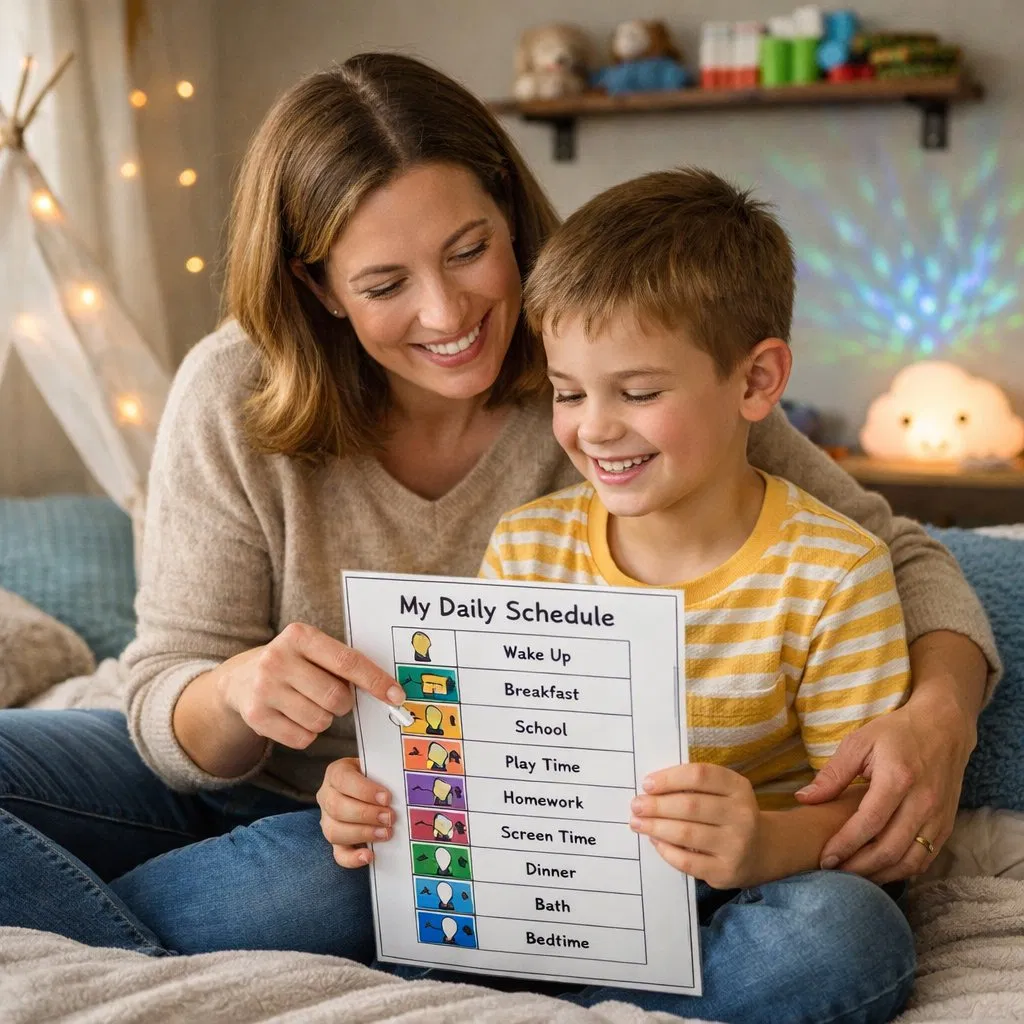
Table of Contents
- The Science of Predictability: Why Routines Work
- The Power of the “Micro-Step” Routine
- Case Study: The Morning Routine Breakdown
- Essential Tools for Your Home Routine
- Routines Are Scaffolds, Not Cages
- The Soccer Experiment: Pushing Boundaries
- Troubleshooting: What to Do When the Routine Fails
- How to Create Home Routine for Autistic Children: Where to Start This Week
- Frequently Asked Questions (FAQs)
The Science of Predictability: Why Routines Work
For children on the autism spectrum, the world can often feel like a sensory-heavy, unpredictable place. Research into ABA therapy strategies and neurodevelopment shows that predictability is a primary tool for sensory regulation. When a child knows exactly what is coming next, their brain can allocate less energy to “scanning for threats” and more energy to learning and engagement.
Studies have shown that consistent daily routines can significantly lower cortisol levels (the stress hormone) in autistic children [1]. By providing transitional cues and a structured environment, we aren’t just managing behavior; we are actively supporting their neurological well-being and alleviating the anxiety that stems from uncertainty. For parents looking to support their child’s emotional health further, this expert guide on how to help students with anxiety offers powerful strategies that are just as effective for managing stress at home as they are in the classroom.
The Power of the “Micro-Step” Routine
For a neurotypical eight-year-old, a morning routine might be as simple as saying, “Hey, it’s time to wake up and get ready for school.” They generally know that this implies getting out of bed, changing clothes, and brushing their teeth. For our son, that broad command was too abstract. We quickly realized that to foster independence and alleviate his anxiety, we had to break tasks down into very small, individual steps. We call this the “micro-step” approach.
By focusing on the smallest possible actions, you remove the cognitive load that often leads to meltdowns or “stalling” during transitions. This is a form of positive reinforcement: every small step completed is a “win” that builds momentum for the next task. If you are looking for more ways to engage your child’s learning through different mediums, exploring preschool audiobooks can be a fantastic way to spark a love of reading while providing a structured, calming activity.

Case Study: The Morning Routine Breakdown
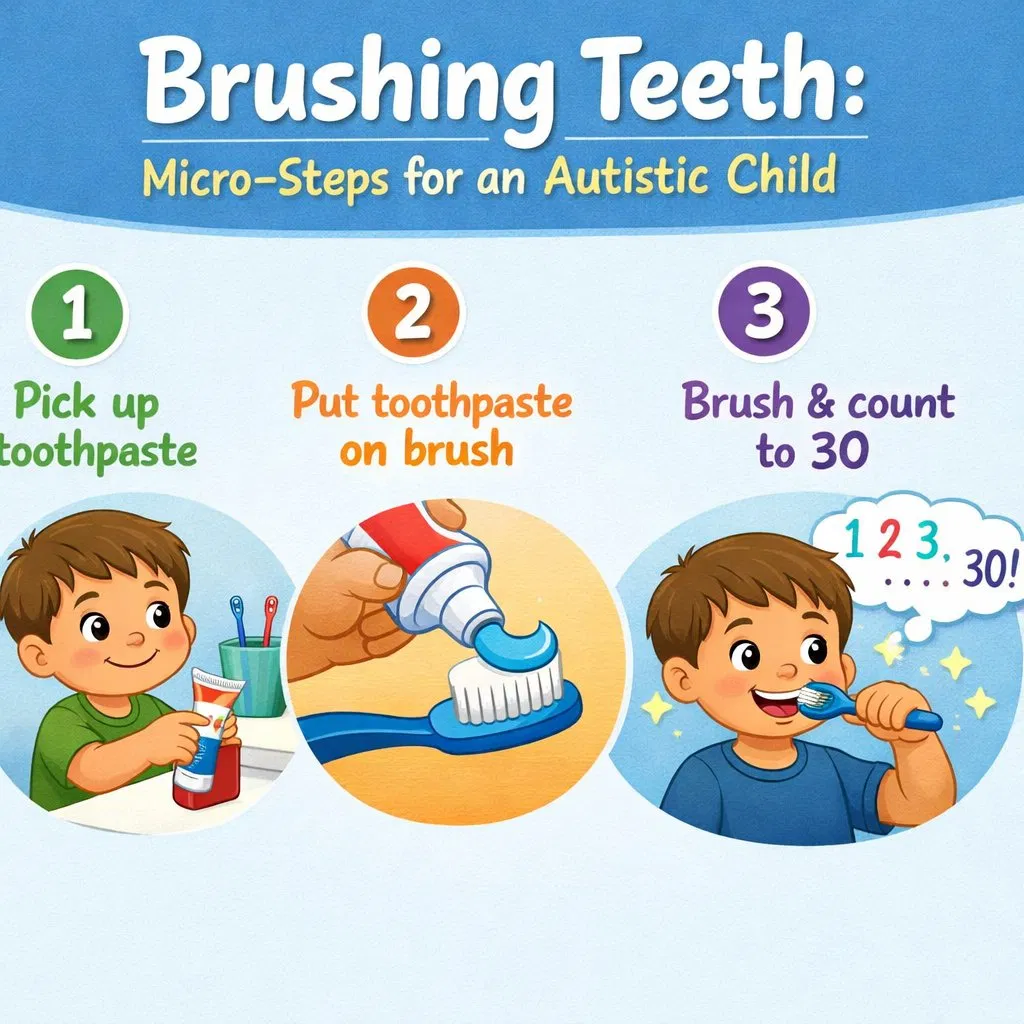
Instead of a single “get ready” command, we dissected the morning into its smallest components. We didn’t just stop at “brush teeth”; we broke it down further into a sequence he could master:
- Pick up the toothpaste.
- Put the toothpaste on the brush.
- Brush and count to 30.
To make this concrete, we paired these micro-steps with a visual schedule. Research consistently demonstrates that many individuals with autism process and retain information better when it is presented visually [2]. Our visual schedule wasn’t just a list of words; we used specific pictures of his clothes, his shoes, and his toothbrush. When he could physically see what he was supposed to be doing, it solidified the expectations and acted as an anchor by providing a clear roadmap for his focus.
Essential Tools for Your Home Routine
To successfully implement how to create home routine for autistic children, you don’t need expensive equipment, but a few specific tools can make a massive difference in consistency and success:
| Tool | Purpose | DIY Alternative |
|---|---|---|
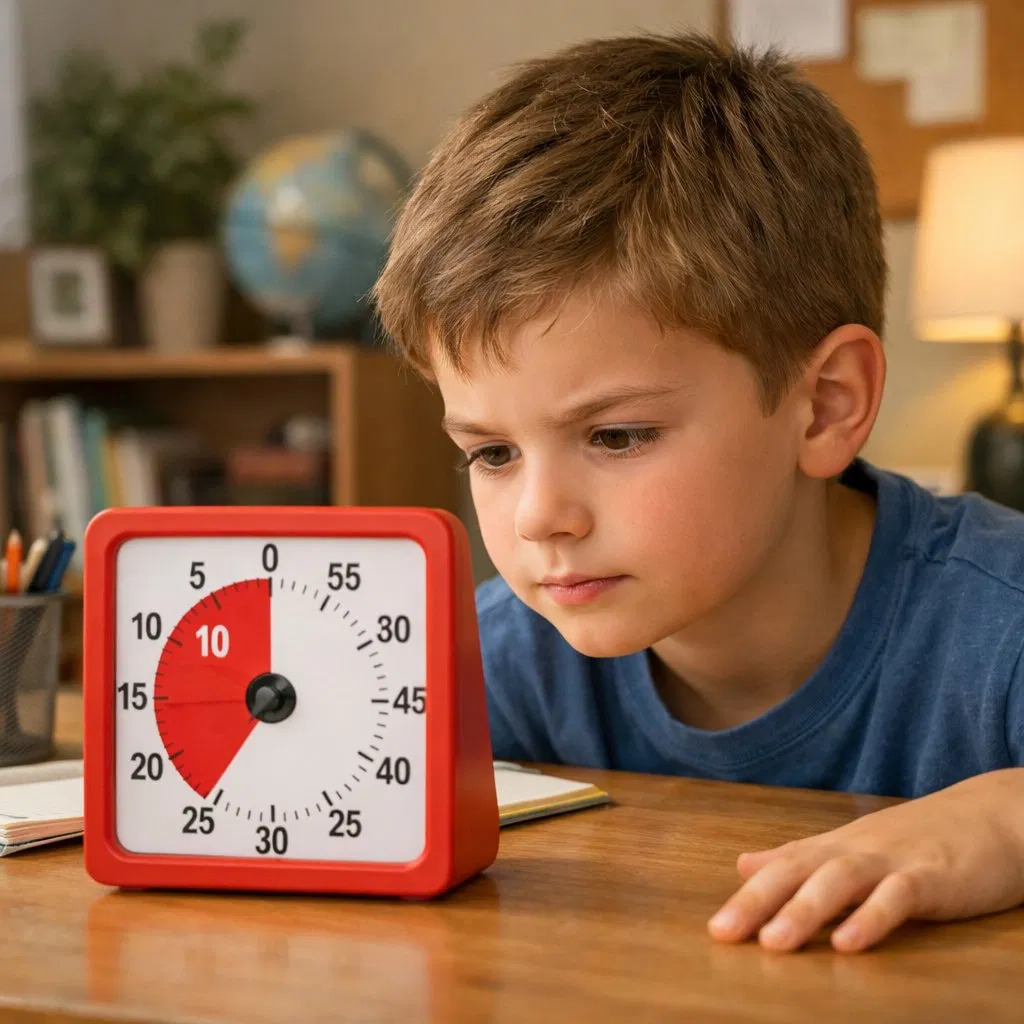
| Visual Timers | Provides a concrete representation of “how much time is left.” | A sand timer or a countdown app on a tablet. |
| Velcro Boards | Allows children to physically move a task from “To Do” to “Done.” | Post-it notes or a whiteboard with magnets. |
| Laminated Cards | Durability for daily handling and “messy” routines like bathing. | Clear packing tape over cardstock. |
| First/Then Boards | Simple visual to show a required task followed by a preferred activity. | A piece of paper folded in half with “First” and “Then” written on it. |
Routines Are Scaffolds, Not Cages
There is a common misconception that autistic children must follow a rigid routine at all times to function. While routines are incredibly important for teaching new skills and creating a sense of safety, I hold a slightly unconventional opinion: routines should not be permanent cages.
We have found that routines are best used as a scaffold for teaching new things and building independence. Once a skill is mastered, the rigid routine can—and sometimes should—be relaxed. As parents, we actively encourage each other to push our son’s boundaries. We constantly expose him to new things so he doesn’t become overly dependent on a single, inflexible way of living. The goal of a routine isn’t to create a robot; it’s to create a foundation of security from which a child can explore the world. For those navigating the complexities of shared parenting, mastering co-parenting offers proven tips to ensure consistency and support across different households. Research highlights that maintaining cross-environment consistency is a protective factor that reduces stress and promotes smoother transitions for children with autism [4].
The Soccer Experiment: Pushing Boundaries
A perfect example of this was when we signed him up for a local soccer league. This was entirely outside his usual routine and comfort zone. We didn’t just drop him on the field; we prepared him using the tools that work for him—advance warning, clear explanations, and visuals of what soccer looks like. But beyond that preparation, we “threw him into it.”
We showed up with the other kids, introduced him to his one-on-one buddy, and expected him to participate. Because it was a brand new environment, he did get a little overexcited and overstimulated, which we expected. However, the outcome was surprisingly positive. He participated, he experienced something new, and it was a wonderful opportunity to include him in an activity typical for kids his age. This balance of structure and “real-world” exposure is vital for long-term growth [3].
Troubleshooting: What to Do When the Routine Fails
Even the best-planned routines will have “off” days. When your child resists or the routine falls apart, consider these troubleshooting steps:
- Check for Sensory Overload: Is there a new noise, a different fabric in their clothes, or a change in lighting that is making the routine harder?
- Simplify the Steps: If they are struggling with a mastered routine, they might be tired or overwhelmed. Temporarily break the steps down even further.
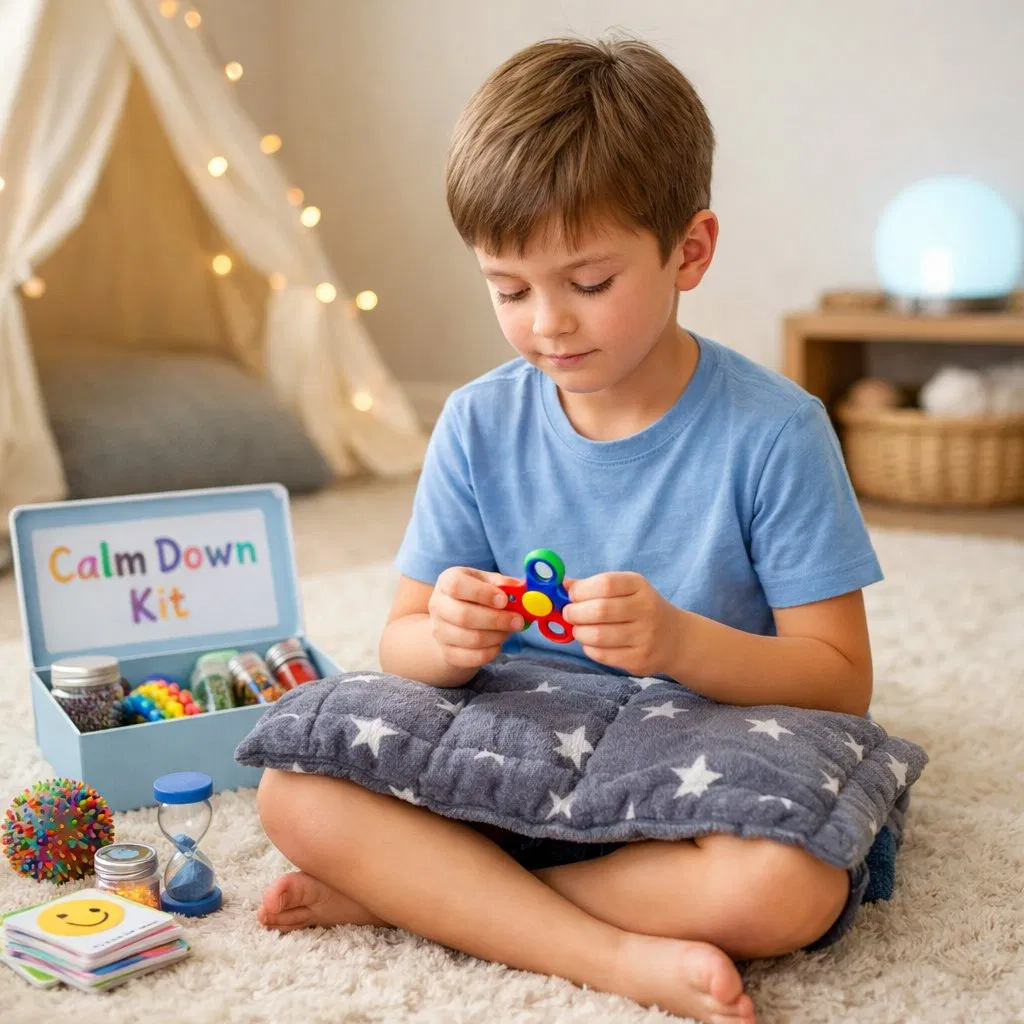
- Use a “Reset” Activity: Sometimes a 5-minute sensory break (like a weighted blanket or quiet corner) is needed before trying the routine again.
- Validate the Feeling: Acknowledge that transitions are hard. “I see you’re having a hard time leaving the iPad. Let’s look at our visual schedule together.”

How to Create Home Routine for Autistic Children: Where to Start This Week
If you have just received a diagnosis and the idea of how to create home routine for autistic children feels completely overwhelming, my advice is simple: Start small. Do not try to overhaul your entire day. Pick one specific, manageable time frame—morning or night routines are usually the easiest to wrap your head around.
- Identify the Micro-Steps: Write down every single physical action required to complete that routine.
- Create Simple Visuals: Stick figures on post-it notes work just as well as printed photographs.
- Practice and Adjust: Implement the routine and see where the friction points are.
Remember, you know your child best. These routines don’t have to be permanent. As your child masters the steps and gains independence, you might find you can remove the visual schedule entirely. The goal is progress, not perfection.
Frequently Asked Questions (FAQs)
Why are routines important for autistic children?
Routines provide predictability and a sense of safety, which helps alleviate anxiety. For many autistic children, the world can feel chaotic; a routine acts as a roadmap that tells them exactly what to expect next.
How do I make a visual schedule for my child?
You can use photographs of your child performing the tasks, icons from the internet, or even simple hand-drawn sketches. The key is that the image clearly represents the action required. Arrange them in order from top to bottom or left to right.
What if my child becomes too dependent on the routine?
This is a common concern. To prevent over-dependence, intentionally introduce small, manageable changes once a routine is mastered. Use “first/then” language and visual warnings to prepare them for these shifts, helping them build flexibility over time.
Can I use routines to teach new skills?
Absolutely. Breaking a new skill (like tying shoes or making a sandwich) into a “micro-routine” is one of the most effective ways to teach independence. Once the sequence is learned, it becomes part of their natural habit.
References:
[1] Evidence-based practices to reduce challenging behaviors of young children with autism. Journal of Early Intervention. https://journals.sagepub.com/doi/abs/10.1177/1096250615598816
[2] The use of visual schedules to increase academic-related on-task behaviors of individuals with autism: A literature review. International Journal of Developmental Disabilities. https://www.tandfonline.com/doi/abs/10.1080/20473869.2024.2402124
[3] Balancing fidelity and flexibility: Usual care for young children with an increased likelihood of having autism spectrum disorder within an early intervention system. Journal of Autism and Developmental Disorders. https://link.springer.com/article/10.1007/s10803-021-04882-4
[4] Co-parenting quality, parenting stress, and feeding challenges in families with a child diagnosed with autism spectrum disorder. Journal of Autism and Developmental Disorders. https://link.springer.com/article/10.1007/s10803-016-2988-x