Table of Contents
- How Social Media Affects Social Skills
- How Social Media Affects Safety
- How Social Media Affects the Way Messages are Delivered
- What You Can Do If Concerned
Almost 78% of the entire world population uses social media. As of January 2023, there exists nearly 5 Billion total social media users across all platforms.
Learning exactly how does social media affect communication allows us to understand the impact of what social media does to our health, safety, social skills, etc. Once more people start to see the negative impact this is having on our ability to interact with others, we can enhance our own lives and the lives of those around us who spend large amounts of their day glued to social platforms by limiting our social media usage.
Image Source: Canva
How Does Social Media Affect Social Skills
Face-to-Face Interaction
Although every age group present on social media is seeing a decline in face-to-face communication, this issue is sadly affecting children and young teens at a higher level, seeing as they are present on most platforms and use it to talk to friends. What is alarming is that over the last decade, face-to-face communication has gone from the most favored type of communication among teens to now below that of all forms of communication possible using devices, like social media, texting, and video chatting. TIME reports that in 2012, Common Sense surveyed around 1,000 teenagers and found that “in person” communication was favored. However, just six years later, less than one-third favored face-to-face. Later, it was concluded that 54% of teens struggle to put their phones away while with friends, and about the same amount of teens said they are distracted by social media when others are around them. In addition to struggling to put phones away in face-to-face situation, teens are also losing their ability to comfortably interact with those around them.
The Way We Act
Social media today acts as a public forum for hate speech and bullying. For as many good-hearted interactions and connections the rise of social platforms has accounted for, we can easily find just as many negative ones. Politics, nine times out of ten, is at the heart of incivility on social media. One look at Political Twitter will surely have you questioning your faith in humanity. Agility PR shows polls on the causes on incivility and the consequences from Weber Shandwick and Powell Tate. Their polls concluded that 63% of Americans believe social media’s impact on civility has been more negative than positive. Among Americans who believed civility was to decline in the coming years, 57% picked social media/the internet as the #1 reason why out of 19 possible choices. Following this was the White House, Politics in general, and the news media. Now that politics is a major cause of the loss of civility on social media, it is not very surprising that social media causes people to act in irrational ways. Unfortunately, another study conducted by Shandwick and Tate shows almost everyone agrees this incivility will lead to cyberbullying (89%), Harassment (88%), Violent Behavior (88%), Hate Crimes (88%), and other threats to safety and interaction. To sum it up, over half of the surveyed Americans felt that social media was a major reason for the lack of human civility, and this can lead to crimes and violence if not dealt with quickly. This survey is just 3 years old, the numbers surely would have increased to match today.

How Does Social Media Affect Safety
Unlimited Communication with Anyone
The reality is that social media allows people of any age group, from any country, to communicate. This reality is quite terrifying considering the increasing amount of predators social media platforms are housing. There is always the possibility that your child could be talking to and taking advice from someone who is lying about their age, asking for explicit pictures, encouraging harmful acts, or worse. Social media allows children and predators to exchange messages, pictures, videos, sensitive contact information, etc. that can be used by predators to blackmail young people who do not know any better. Screen & Reveal presents that there are at least 500,000 predators online daily, more commonly targeting the 12-15 age group. It also mentions only 15% of parents are made aware. The bottom line is that there’s a scary amount of people out there willing to obtain sexually explicit pictures from your children, and more likely than not, you won’t even know.

Overstimulation and Information Overload
Content on social media is flowing nonstop, 24/7. Whether you are actively searching out the content or the content is coming to you first, we are hit with waves of information on a plethora of topics, like news, fashion, celebrities, food, the economy, politics, and tons more. There is absolutely so much information hitting us at once that it would be ridiculous to suggest that our communication is not affected by overstimulation and/or information overload. Technological powerhouse, Microsoft, conducted a 2015 study by surveying over 2,000 Canadians and studying the brain activity of 112 others using electroencephalograms, which ultimately concluded human brains now have a shorter attention span than that of a goldfish, according to TIME. Microsoft’s study found that being exposed to multiple streams of information at a time on social media allows us to multitask better than ever and decide which information we do and do not like to hear about, however, the average attention span since the year 2000 has dropped from 12 to 8 seconds. Also, the report concluded we now experience more difficulty filtering out “irrelevant stimuli” as we are more distracted by large streams of media. The constant checking of social media, as expected, is having negative effects on teenagers as well. JAMA Pediatrics highlighted a very recent study by neuroscientists at the University of North Carolina where 169 6th and 7th graders “showed a distinct neurodevelopmental trajectory within regions of the brain comprising the affective salience, motivational, and cognitive control networks in response to anticipating social rewards and punishments compared with those who engaged in nonhabitual checking behaviors”. The New York Times’s article on this study tells us that this means young people who frequently check social media are more sensitive about the social rewards from their peers, which “could potentially have long-term consequences well into adulthood, sort of setting the stage for brain development over time”, according to Eva H. Telzer, an associate professor of psychology and neuroscience at the University of North Carolina, who authored the study.
Spread of Misinformation and COVID-19
With thousands of schools and workplaces around the world closing starting in early 2020, social media usage among every age group, particularly 18-24 year-old increased starting from just the first wave, increasing through the second wave of COVID and beyond that with the effects still being felt today. Seemingly overnight, popular social platforms like Facebook and Twitter that house news and similar topics were swamped by information on the new and scary COVID-19. No matter which age group you fall under or which platforms you browsed, you likely saw tons and tons of information on this virus being spread almost as badly as the virus itself. Facebook, Twitter, Instagram, and other platforms had to quickly crack down on the misinformation spread by placing infographics from the World Health Organization (WHO) on posts where COVID-19 misinformation had been detected, however, the damage had already been done before this. Information which went against the studies of the WHO on the origins of COVID-19, the effectiveness of masks and the vaccines, etc. were spread like wildfire both by people accidentally and by those who failed to believe the impact of the virus. (Check this study from the NCBI, which found the spread of WHO infographics do reduce misconceptions relating to COVID-19.) Due to the lack of trust in medical experts and spread of incorrect information from social media, this can result in the higher spread of factually incorrect medical information regarding other viruses which may have similar effects to COVID-19 as well as the virus itself which is still killing thousands of people around the world. Social Media, in just a couple of years, has changed the way we interpret medical information crucial for our health and survival, causing vast amounts of people to share misinformation regarding COVID-19 and other viruses, which can easily lead to the deaths of many if they come into contact with one wrong post in their feed.
How Does Social Media Affect the Way Messages are Delivered
Get News Anytime, Anywhere
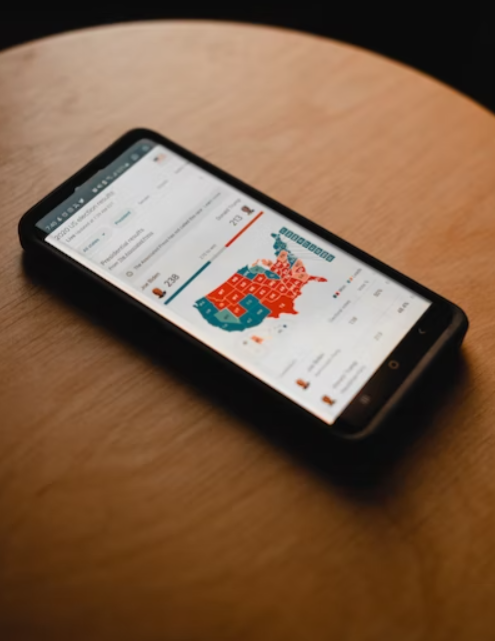
If you want to find out what is going on around the world or around your local community, you can easily find the news in seconds on social platforms like Facebook and Twitter. While it is true more people, both young and old, are as informed as ever, social media’s ability to bring news to you anytime is causing issues like information overload and overstimulation, incivility, the inability to discern between what’s true and not, etc. Social media is now a leading source people go to for news, overtaking television, radio, news from the source’s sites, etc. The Pew Research Center published an article from a study conducted in 2020 which concluded that those who rely primarily on social media for news (18%) are less informed on popular topics from that time, including the 2020 Presidential Election, the COV-19 Pandemic, and political news in general, says Pew Research Center. Unfortunately, the number of people who are turning to social media for news is increasing. In 2016, 44% of adults were said to have “sometimes or often” go to social media for news, while in 2020, the number grew to 55%. The report brings up a good point that when people turn to social media for news, they are missing a lot of information that comes from the news source itself, since social media posts on news often only provide bits of the news instead of the whole story. Since more people, especially younger people, are turning to social media for news, the likelihood of them being misinformed on high-impact world events is becoming a major concern.
Communication Between Businesses and Their Consumers
Social media has proven very successful in the growth of businesses. Once a business joins a social platform, it can get a better idea of its audience based on the data from impressions, clicks, etc. Before social media became so mainstream, many businesses had to rely on advertising largely through print media, radio, and television, which left most business less able to target their products to the audience they most want to reach. Instead, they largely had to hope people tuned in to their TV commercials or saw the ad in the newspaper since they could not as easily have planned out which audiences were best to target and which were bringing in the money. Plus, it was more difficult for them to use tactics which help form a personal connection with the target audience. Businesses to can utilize paid ads on most platforms, which greatly aid them in bringing awareness to their brand and getting people to buy products. Business that promote their products and services on social media often spend lots of effort and money on creating personas for their brand and the ads that target the audience the persona tries to attract. While these tactics largely played a role in the success of the business world on social media, not all business-to-consumer communication is as innocent as it may seem. One major issue is the threat large businesses impose on our privacy and security. When a business personalizes ads you see on social media, they collect tons of data from you that you may not even realized you consented to when you accepted the social platform’s terms and conditions. It does not stop there though, while your favorite brands are collecting data to bring you back to them, the social platforms housing this are doing the same exact thing. Security.org shares that the biggest companies in the world that own social media platforms, like Google and Facebook, largely make profits off collecting data on our usernames, emails, phone numbers, shared documents, pictures, and videos, comments, payment information, and even more. They also tell us that these companies can see all of our activity (like searches, where we clicked, what we watched, etc.) and unique information (like location, device used, demographic data, etc.). Social media does make it so much easier for us to connect with our favorite businesses and make purchases from them, but be aware that these brands we trust are collecting a bunch of sensitive information from us and are selling it to other companies. It is unfortunate that so many people, especially Americans, are not aware of the severity of this.
Changes in Speed, Quality, & More
When discussing how social media affects communication, you don’t have to think too hard about the answers on the surface. Information on world events, the lives of celebrities, business, and just about anything imaginable can both be sought out by us easier and can be directly brought from them to us. The amount of time it takes for a message to get from one person to another has drastically increased over the past 2 decades too, along with the quality of information each message contains. You can send large files containing pictures, video, audio, text, and more in mere seconds. This has really benefitted us, as social media has allowed people to connect and make new friends, collaborate on huge projects in a variety of job fields, and it has helped business all over the world boom. So what is the problem? While everything I just stated on the benefits social media has had is true, one issue is that as more information comes available to us with social media, a good bit of it becomes lost. Information overload is a major contributor to this, since humans can also hold so much material in the long-term memory before it gets forgotten. This combined with the fact that social platforms are bombarding us with information and ads, could, in the future, have effects on our minds’ ability to remember and process information since the speed of which we get information, the quality of it, and the amount of it we see is just going up.
What You Can Do If Concerned
While it is true social media improves the speed and quality of our messages, you now see it is not all peachy keen. While it is not realistic that all 5 billion social media users will quit all at once, you can do your part to revert the world back to a face-to-face communication model by following some of these recommendations to prevent issues relating to online safety, information overload, overstimulation, the spread of misinformation, and more.
Limit Your Social Media Use
Ultimately, it would be impossible to get everybody all at once to stop using social media altogether. Social media can be addicting, but the best way to distance yourself and others from the growing number of issues it is having on the way we communicate is to limit the amount of time you spend using it. There are plenty of tools and methods that can be used out there to help you limit your social media usage. Here are some:
- Refrain from keeping your phone or computer around you at all times
- Download apps which place limits on how long you can spend on each social app
- Put aside more time for hobbies away from social media
- Disable social media apps in your device’s settings
- Attempt a social media detox – stay off social media for a select period of time

Encourage and Attend In-Person Events
It is understandable that with how addicting social media truly is, it can be difficult to figure out what to do with yourself while you are trying to stay off it a while. Limiting social media usage can be a breathe of fresh air as it opens the door to new opportunities in your social life. After living through the pain that was the COVID-19 pandemic, there is no better time than now to get together with a group of friends and attend an in-person event, away from your phone and computer. We learned that social media can risk the health, safety, social skills, etc. of various age groups who use it, so put the phone down and find yourself a new hobby which is much more beneficial for you and can even find you new friends!
Share this Knowledge with Others
If you are aware of the effects social media may be having on you and you are content with it, you can still do your part by sharing this knowledge with someone you know who could gain something from understanding how social media is affecting communication. Social media likely will never go away, but what is important is that we get as many of the 5 billions worldwide social media users as possible to understand now how social media affects their interactions with others so that the negative effects it has on our social skills, mental health, ability to distinguish between which information is legit and not, etc. does not become a much larger issue for both the current generation using social media now and those in the future who will be wrapped up in this digital web of communication.