Have you ever looked at a page of piano sheet music and felt like you were staring at a secret code? All those lines, squiggles, and symbols might seem confusing, but trust me, you can crack this code!
I’ve played classical piano and violin for almost 2 decades with experiences in symphonic orchestra where being literate in proper musical notation was vital. In my experiences teaching myself other instruments such as guitar and electric bass, being able to read the music became easier even with different “tools”.
Piano sheet music is fundamental to learning all kinds of musical notation across different instruments from the viola to the clarinet. Learning to read sheet music isn’t just about playing the piano; it’s like unlocking a whole new world of music. Being able to read sheet music allows a whole world of musical possibilities to explore whether it’s Mozart or Black Sabbath. You’re not just playing notes; you’re reading a story the composer wrote just for you. Let’s start this adventure together and soon you’ll be able to read this expressive language too!
- Cognitive Benefits of Sheet Music Literacy
- Basic Sheet Music Notation
- Relating Notation to the Piano Keyboard
- Memorizing Sheet Music
Cognitive Benefits of Sheet Music Literacy
You might think learning to read sheet music is just about playing the piano, but it’s so much more! Did you know that reading music can actually make your brain stronger? It’s like a workout for your mind! When you read sheet music, you’re using different parts of your brain at the same time. You’re looking at symbols, understanding rhythms, and connecting them to the keys on the piano. This helps improve your memory, focus, and even your problem-solving skills.
Neuroscience journal Frontiers in Neuroscience actually details that musical training affects cognitive development. Think of it like learning a new language. You’re creating new pathways in your brain, making it more flexible and powerful. And the best part? It’s fun! You’re not just studying; you’re making music.
Basic Sheet Music Notation
Let’s dive into the basics. Think of sheet music as a map that guides you on your musical journey across the piano keys. To read sheet music, you need to understand a few notable things about this map.
Staff
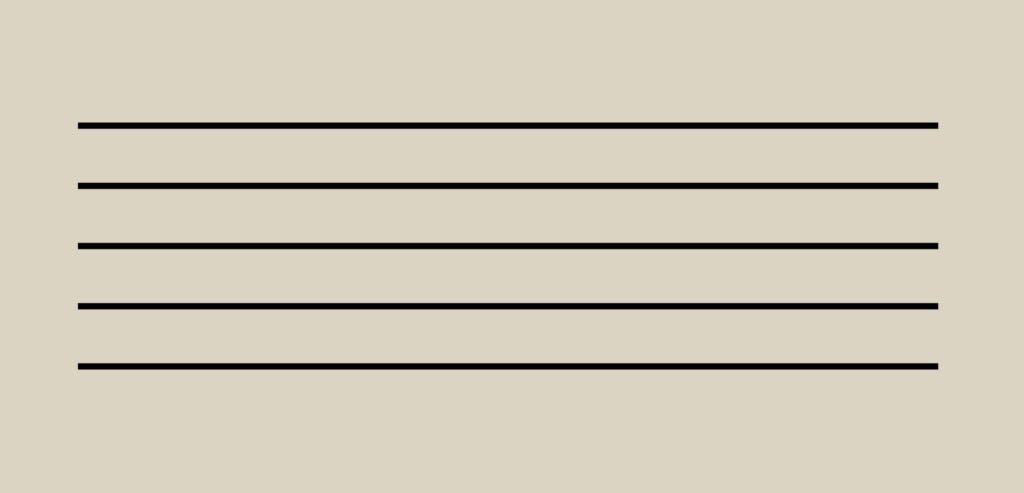
The staff is a set of five horizontal lines and four spaces that represent a variety of pitches. These lines and the spaces between them are where the notes are placed. Each line and space represents a different pitch (how high or low a note sounds) like a musical ladder. The higher you go on the ladder, the higher the note sounds.
Over the course of a musical composition, the staff is broken up by vertical lines to make rectangular “measures” that hold a certain number of notes.
Clefs
At the beginning of the staff, you’ll see a complicated looking symbol called a clef. It indicates the defining pitch for that staff as you continue to read sheet music. For piano, you’ll usually see two clefs: the treble clef and the bass clef.

Treble Clef: This looks like a fancy “G” and is for the higher notes, usually played with your right hand.

Bass Clef: This looks like a backwards “C” and is for the lower notes, usually played with your left hand.
Together, the treble and bass clefs make up the grand staff, which gives you the full range of notes on the piano. While reading sheet music, you have to multi-task and read notation for both right (treble clef) and left (bass clef) hands.
Notes
Now, what are the indicators of pitches to play on the staff? This is where notes come in as markings to show which piano keys to play by their placements on lines and spaces. A note on a higher line or space means a higher pitch, and a note on a lower line or space means a lower pitch. You’ll also see notes with different shapes. Some are filled in, some are just outlines, and some have little stems. These shapes tell you how long to hold the note.
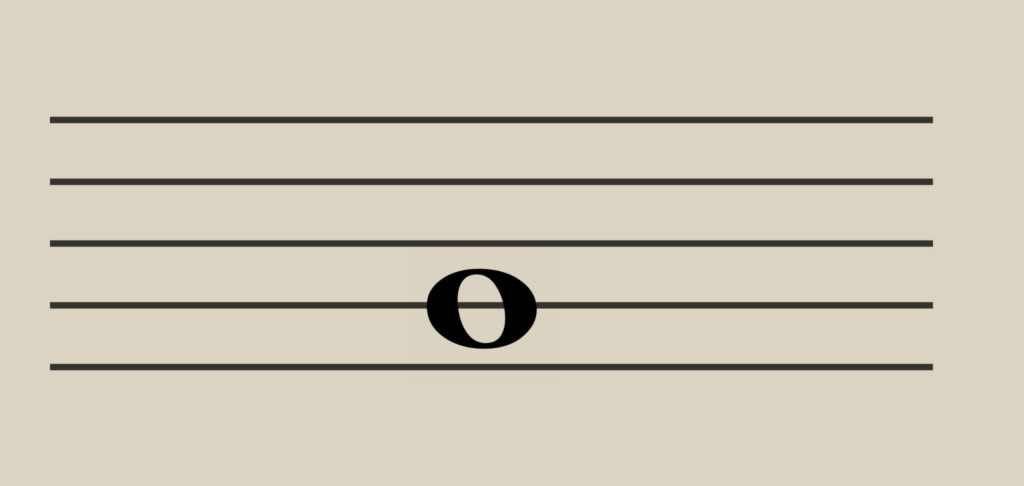
Whole Note: Looks like an empty oval. Hold it for four beats.

Half Note: Looks like an empty oval with a stem. Hold it for two beats.
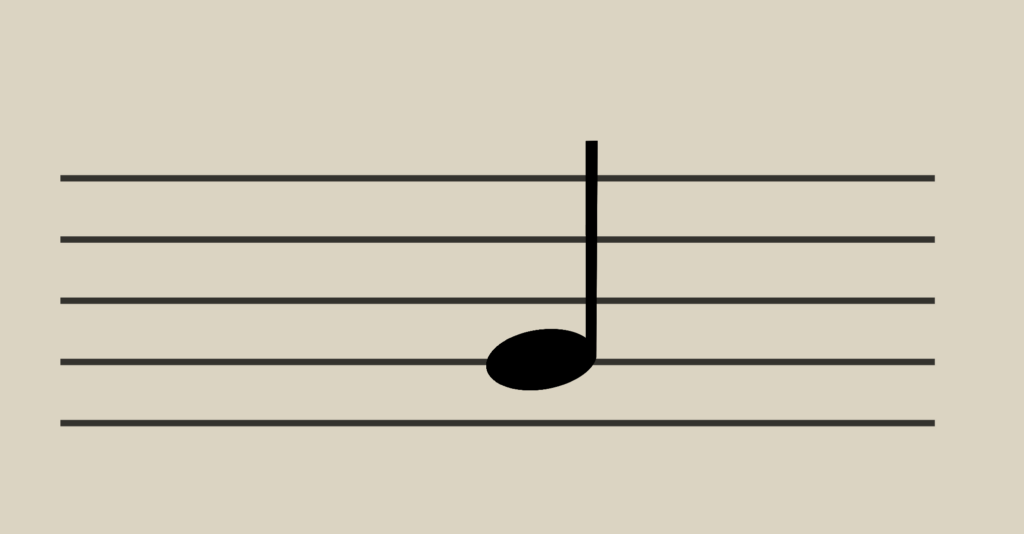
Quarter Note: Looks like a filled-in oval with a stem. Hold it for one beat.

Quarter Rest: Looks similar to a lightning bolt. Nothing is played for one beat.
Musical Symbols
Sheet music also has many other symbols that tell you how to play certain notes.
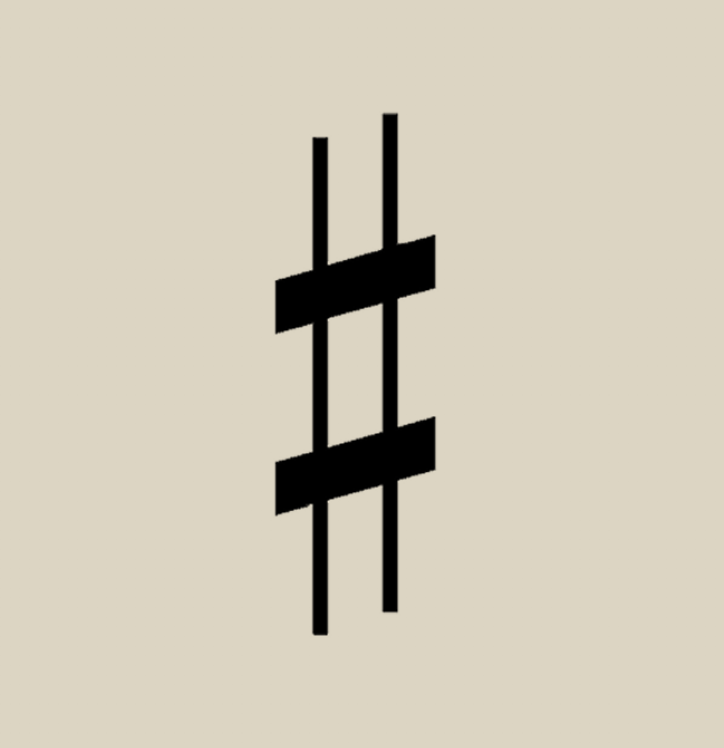
Sharps (#): These raise a note by a half step.

Flats (b): These lower a note by a half step.

Naturals (♮): These cancel out sharps or flats.
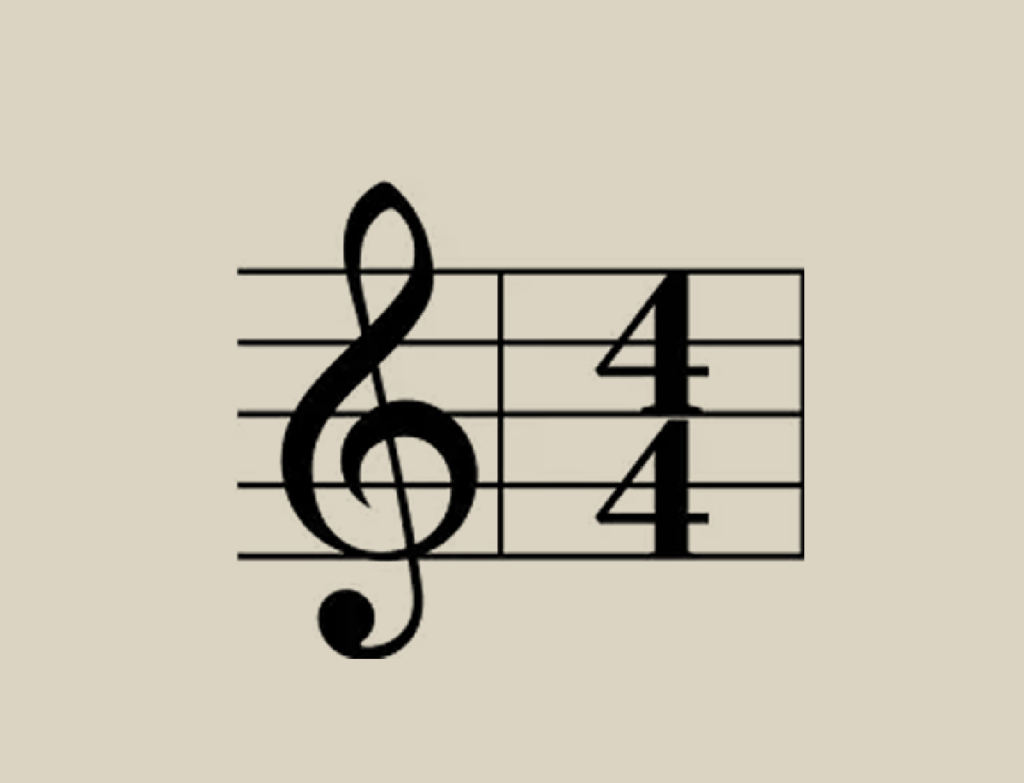
Time Signature: This tells you how many beats are in each measure (the sections between the vertical lines on the staff).

Dynamics: These are letters that tell you how loud or soft to play (like “p” for piano, meaning soft, and “f” for forte, meaning loud).
Relating Notation to the Piano Keyboard
Now that you know how to count notes on sheet music, it’s also important to be able to relay that information onto the piano. The typical piano keyboard is made up of 88 keys organized into repeating patterns of white and black keys.
The black keys are grouped in alternating sets of two and three. The note “C” is consistently located immediately to the left of the two black key groups. From “C,” the remaining white keys ascend alphabetically (D, E, F, G, A, B) before repeating the cycle.
Treble and bass clefs translate the notations on sheet music differently and it is vital to know the differences.
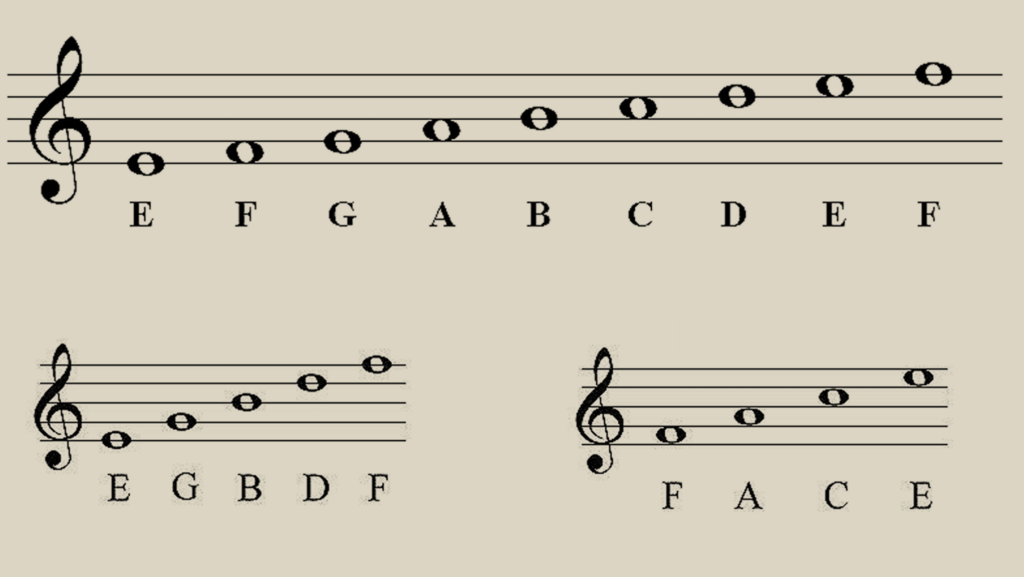
- Treble clef notes: spaced notes tend to follow (F,A,C,E) with the corresponding lined notes as (E,G,B,D)
An easy phrase to remember the notes for the right hand (treble clef) is “FACE” for spaced notes and “Every Good Boy Does Fine” for the lined notes.
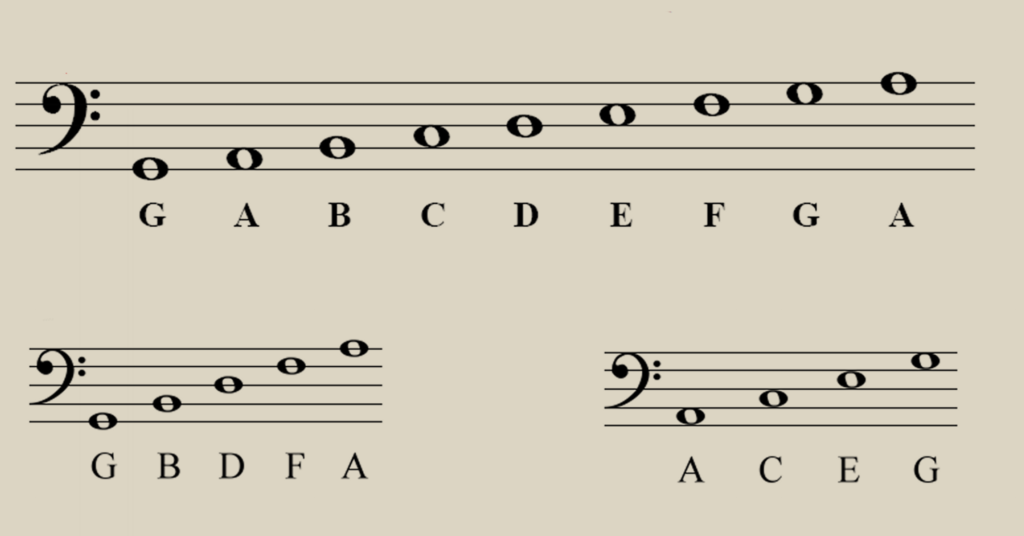
- Bass clef notes: spaced notes follow (A,C,E,G) with the corresponding lined notes as (G,B,D,F)
While, for the left hand (bass clef), the phrases “All Cows Eat Grass” for spaced notes and “Good Boys Do Fine Always”.
Memorizing Piano Sheet Music
Okay, so you can read the notes, but how do you remember them all? Memorizing piano sheet music can seem like a huge task, but it’s totally doable! Here are a few tips to help you:
- Start Small: Don’t try to memorize a whole piece at once. Break it down into small sections.
- Practice Slowly: Play the music slowly and carefully, paying attention to each note.
- Repeat, Repeat, Repeat: Play the same section over and over until you know it by heart.
- Visualize: Close your eyes and imagine the notes on the staff and the keys on the piano.
- Listen: Listen to recordings of the piece. This will help you get the sound in your head.
- Muscle Memory: Play the piece without looking at the sheet music. This helps build muscle memory.
- Understand the patterns: Look for repeating patterns, and chord progressions. These help you remember the music.
Remember, memorizing takes time and patience. Online music school, Liberty Park Music, details that repetition is key to memorization! Don’t get discouraged if it doesn’t happen overnight.
Learning to read sheet music is like unlocking a secret door to a whole new world of music. It might seem challenging at first, but with practice and patience, you’ll be reading and playing like a pro in no time. You’ll be amazed at how much you can achieve. So, grab your sheet music, sit down at the piano, and start exploring this amazing musical language. You’ve got this!