
- The Timelines of Nigerian Culture Music
- Nigerian Culture Music: The Pioneers
- The Success of Nigerian Culture Music Internationally
Before dissecting Nigerian Culture Music, we must ask ourselves, “What is Culture”? The Merriam-Webster Dictionary defines culture as “the customary beliefs, social forms, and material traits of a racial, religious, or social group.” Nigeria boasts over 50 languages and over 250 dialects and ethnic groups, making it one of the most diverse in the world. But what do these various ethnic groups have in common? The ability to pass across a message with music.
The Timelines of Nigerian Culture Music
Nigerian culture music has seen tremendous growth over the last decades, earning the honorific title of “Africa’s biggest music industry.” However, the success of Nigerian culture music took several decades of infinite tries and errors before the labors of our veterans yielded fruit.
Post World War 2
With the introduction of electric instruments from the US and Europe after World War II, Nigerian music began to incorporate several tools and methods. Rock ‘n’ roll, soul, and funk all gained enormous popularity in Nigeria, and musicians like IK Dairo included aspects of these genres into jùju music. The Igbo people’s distinctive highlife style had been steadily gaining popularity in the meantime and quickly gained a national following. However, there seemed to be some cultural division as musicians from this sang primarily in their indigenous languages.
Image Source: Unsplash
The Resistance Era
Moving to the 1980s, the Nigerian political system was rather tumultuous, with a string of coup D’états, cultural wars, and a multitude of government embezzling. As a result, there was a significant shift from producing culturally significant music in the previous decades to making resistance music. Musicians such as Fela Kuti used their music to speak on the larger political issues and national crises Nigeria was suffering at the time. Despite this, Nigerian music was slowly but progressively growing. This growth also brought about the introduction of sub-genres such as Nigerian hip-hop music and Reggae. It also introduced powerhouse artists such as Charly Boy, Ras Kimono, Christy Essien-Igbokwe, and Majek Fashek.
The 1990s saw the forming of groups such as Plantashun Boyz and The Remedies that attained some level of national success. The music industry grew bigger than it did in previous decades. This era also saw a large prominence of lackluster Music Videos, which would eventually be corrected in the late 2000s and 2010s.
The Era of Modern Nigerian Music
The 2000s was the era of revolutionary change for Nigerian culture music and the promising start of modern Nigerian music. This era also saw the versatility of Nigerian music as artists were now exploring several sub-genres such as Afro-Pop, Naija Rap, R&B, and Naija Gospel. A few impactful albums from this time are P-Square’s Game Over, D’Banj’s The Entertainer, Tuface’s Grass 2 Grace, Styl Plus’ Expressions, Wande Coal’s M2M, and 9ice’s Gongo Aso. However, despite the industry’s growing success, there were still a few issues limiting its full potential. Issues such as a lack of commercial framework where performing artists could earn decently, sexism, and government interference hindered Nigerian culture music severely from progressing to new heights.
The New-Age
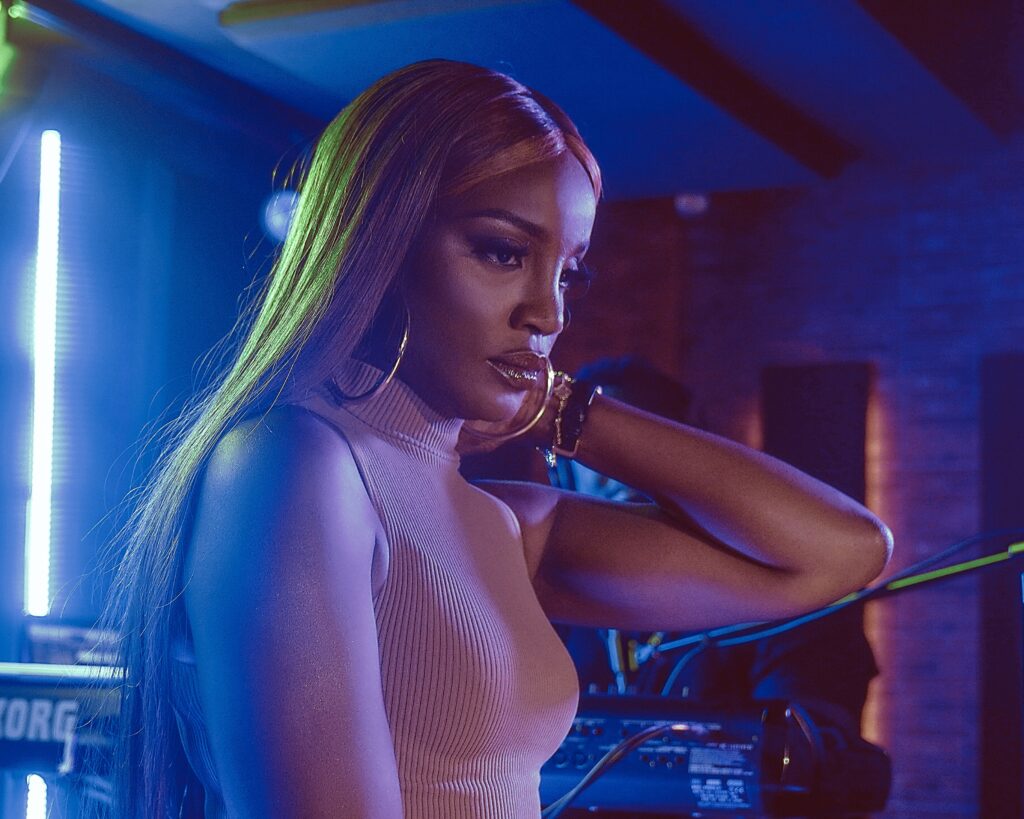
Image Source: Unsplash
The current era of Nigerian culture music (post the 2010s) has seen astronomical success in international territories. Artists such as Wizkid, Davido, Burna Boy, Seyi Shay, Yemi Alade, and Tiwa Savage have led the pack in dominating not only the African continent but also the global markets. This era also greatly improved music production, output, visuals, and promotion. During this era, more music TV stations, such as HipTV and Soundcity, started to open up, giving musicians a bigger platform to showcase their music videos. Youtube also played a considerable role in distributing music to international markets.
Nigerian Culture Music: The Pioneers
Fela Kuti
Can we mention the pioneers of Nigerian Culture music without mentioning Fela? His music style was a complicated yet perfect combination of jazz, funk, highlife, and traditional African chants and rhythms that he essentially invented. Kuti was a significant figure who used his music to express his views on national and political issues and activism during the 80s. This eventually got him arrested for 20 months in 1984 by Muhammed Buhari. Fela is referenced by artists locally and internationally for his contribution to not just music and Nigerian culture but also his voice which kickstarted a resistance against the wrongdoings of Nigerian political figures.
King Sunny Ade
King Sunny Ade is a multi-instrumentalist, singer, and composer who is often regarded as the father of Nigerian culture music. He has been hailed as one of the most influential artists of all time and is recognized as one of the first African pop performers to achieve worldwide recognition. He was signed to Island Records in 1982 and enjoyed popularity on a global scale after releasing the albums Juju Music (1982) and Synchro System (1983). He was also the first Nigerian artist to be nominated for a Grammy.
Don Jazzy
Although he’s majorly credited as Africa’s biggest music producer, he’s on this list for discovering over a dozen musical acts that have gone on to become global superstars. Artists such as Rema, D’Banj, Wande Coal, Ayra Starr, Reekado Banks, and even Tiwa Savage who’s on this list. As the founder and CEO of MoHits Records and Mavin Records, Don Jazzy has contributed immensely to making Nigerian culture music one of the world’s competing music markets.
Tiwa Savage
Being the only female on this list, Tiwa Savage’s career has been nothing short of impressive. Her longevity has placed her as “the Beyonce of Africa.” She’s on this pioneer’s list for two reasons: constantly promoting Nigerian culture through music and fashion and paving the way for multiple female artists in a male-dominated industry.
Tuface Idibia
From his days with Plantashun Boyz in the 90s to being Africa’s most prominent artist in the 2000s, Tuface was one of the first Nigerian artists that pushed Nigerian Culture Music to the forefront of the world. His mega-smash African Queen dominated the continent, catapulting him to superstar status. As a result of his unprecedented success, he received several international accolades, such as the MTV European Music Award EMA for the Best African Act category in 2005 and a BET Award for Best International Act in 2011.
Clarence Peters
Although Clarence is not directly involved with music or its creation or production, as the founder and CEO of Capital Dream Pictures; a production business focused on the visual arts, cinematography, and video, he is often credited for taking Nigerian visuals to the next level. Before his emergence, Nigerian music videos were often laughable and low in quality. Still, after years of honing his skills in South Africa, he returned with a mission to make Nigerian music videos of international standard.
The Success of Nigerian Culture Music Internationally

Through the different eras of Nigerian culture music, international success was never guaranteed until the New Age. Reaching global markets was a rare feat that has now become the norm for the industry. Nigerian musicians have now topped charts in international territories, constantly gaining respectable accolades such as the Grammys and embarking on mega-successful tours. Songs such as Essence by WizKid and Tems, Love Nwantiti by CKay, and Peru by Fireboy have become global smashes within the last two years, catapulting these artists into international competing music markets. This article gives you an in-depth idea of the history of Nigerian music and its progress over the years.