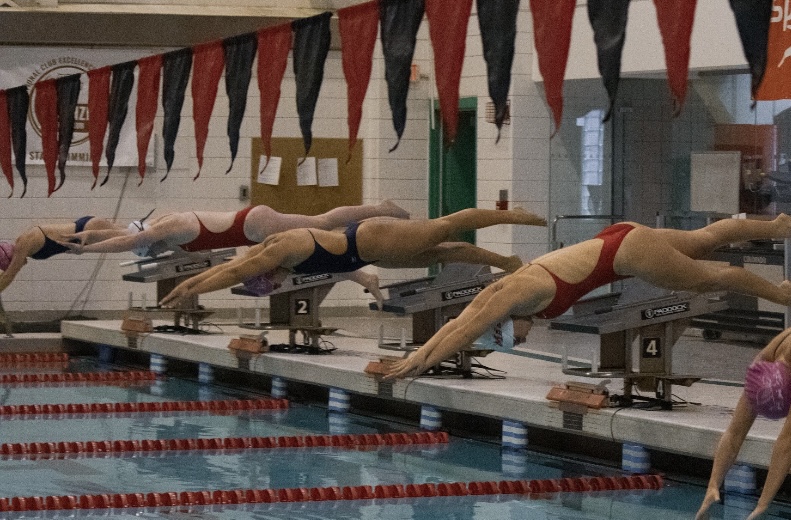
Ever stood on those starting blocks, heart pounding, wondering how to turn that nervous energy into pure speed? You’re not alone! A great swimming start can make or break a race, but it doesn’t have to be a mystery. Let’s break down how to make your start not just good, but amazing, and how to keep those pre-race jitters at bay.
- The Entry: Slipping Through Water Like a Rocket
- Power Behind the Push: Exploding off the Starting Blocks
- Conquering the Mental Aspects: Turning Nerves into Fuel
- Why Personalized Drills Matter
- Conclusion
The Entry: Slipping Through Water Like a Rocket
Imagine you’re a rocket, ready to launch. To do that, you need a smooth entry into the water. We’re not talking about a big splash here! Think sleek and streamlined.
- The Angle Matters: When you dive, aim for a shallow angle directed out not down, this will keep you diving too deep and hitting the bottom or the direct opposite and belly flopping. Think about sliding into the water, not crashing. This will help to reduce drag, which is like the water saying, “Nope, you’re not going anywhere fast!”
- Your Body’s Shape: Tighten up! Keep your body in a straight line, arms extended, head tucked between your arms. This is your “superhero” streamline position. Imagine you’re trying to make yourself as thin as possible, your arms should be tightly squeezing your ears, hands flat on top of eachother, and legs and toes extended straight behind you.
- Practice Makes Progress: Try this drill: push off the wall in that streamline position and see how far you can glide. Focus on keeping your body tight and straight. Do this over and over, and you’ll get the hang of it. Then once you mastered this you can try it from the side of the pool and slowly begin to make your way up to the blocks.
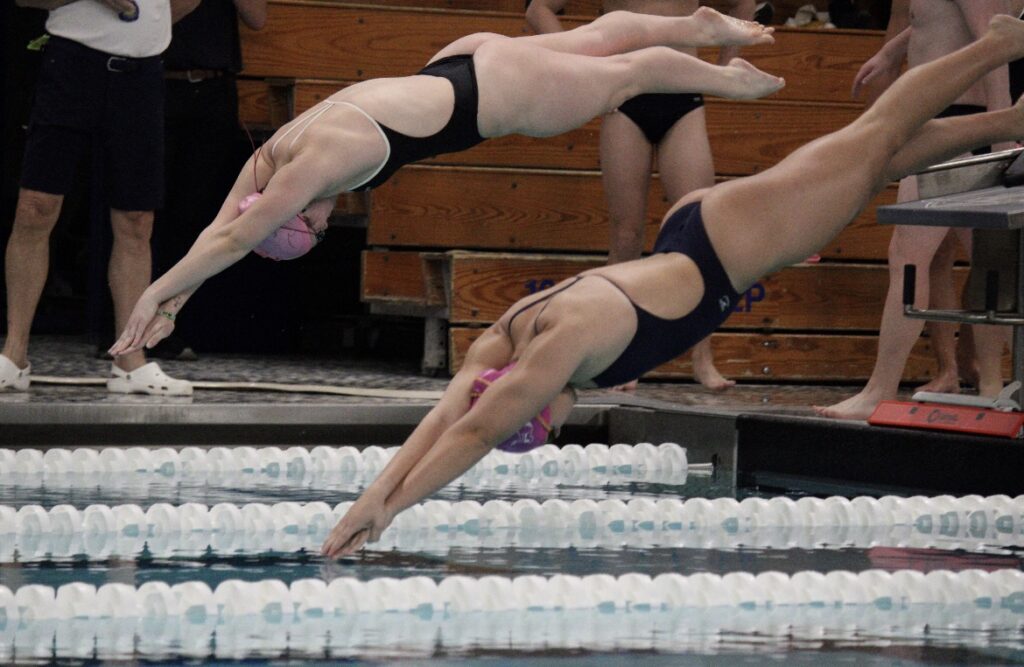
The Power Behind the Push: Exploding Off the Starting Blocks
Now, let’s talk about the real power source: your legs! A strong push off the blocks is like the engine of your start. My highschool coach used to tell me that your legs are the power and your arms and head direct you where you want to go… forward!
- The Stance: Get into a powerful stance on the blocks. Your feet should be shoulder-width apart, and your knees slightly bent. One foot should be at the front/top of the blocks with your toes gripping around it. Then, your back foot should be situated on the back of the block or on the fin at an angle. Think about a coiled spring ready to release.
- The Push: When you hear the beep, push off with all your might! You want to use your arms to grip the block then rip them forward when you hear the beep. Using your arms and legs to drive you forward. Imagine you’re trying to jump as far as you can, but horizontally and in a streamline.
- Underwater Kicks: Once you’re in the water, keep kicking! Dolphin kicks are your best friend here. They’ll keep you moving fast and help you maintain that streamlined position. My coaches would always tell me that you’re faster underwater than above, so really maximize on your underwater kicks and if possible make it to the 15 meter line every time just like Caeleb Dressel!
- Drill Time: Practice your push by doing jump squats on land behind the blocks. Then, try short, powerful pushes off the wall in the pool. This will help you build the muscle memory you need. One of my favorite add ons to this drill is to add a pull buoy between your legs to make it more challenging. This drill specifically emphasizes how much power is needed to get off the blocks quickly. An added bonus to this drill is it will make your legs stronger after lots of practice!
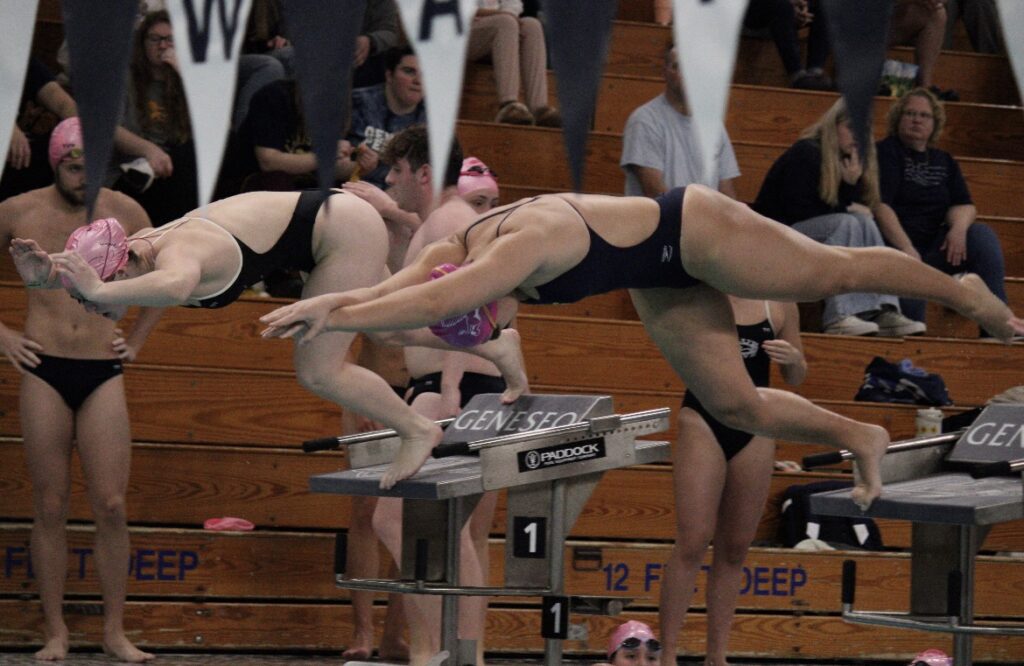
Conquering the Mental Aspects: Turning Nerves into Fuel
Those pre-race jitters? They’re totally normal! But you can learn to control them and even use them to your advantage?
- Breathe and Relax: Before your race, take some deep breaths. Inhale slowly, exhale slowly. This will help calm your nerves.
- Visualize Success: Imagine yourself doing a perfect start. See yourself diving smoothly, pushing off powerfully, and gliding through the water. This mental rehearsal can make a big difference. I like to visualize every part of my race from the start to the turn and every breath and stroke in between. I will close my eyes and start a timer on my phone, I will then visualize my race exactly how I want it to go, when I think I’m done I’ll stop the timer. I have been within 3 seconds of my goal time, but the best swimmers that practice visualization a lot can get to be hundreds of a second off of the time they want to go.
- Positive Self-Talk: Tell yourself, “I’ve got this!” Believe in your coaches, your training and your abilities. You’ve practiced, and you’re ready.
- Find Your Focus: Block out distractions. Focus on your breathing, your stance, and your plan. Don’t let anything throw you off your game. When I race I like to stand behind the blocks in a “power stance”. I put my cap and goggles on, pick my pump up music and blast it through my headphones. Then I put my hands on my hips and stare out at the pool and picture my race ahead. It may seem silly at first but it helps me to focus and make me feel extra powerful.
- Remember to have fun! Swimming is supposed to be enjoyable!
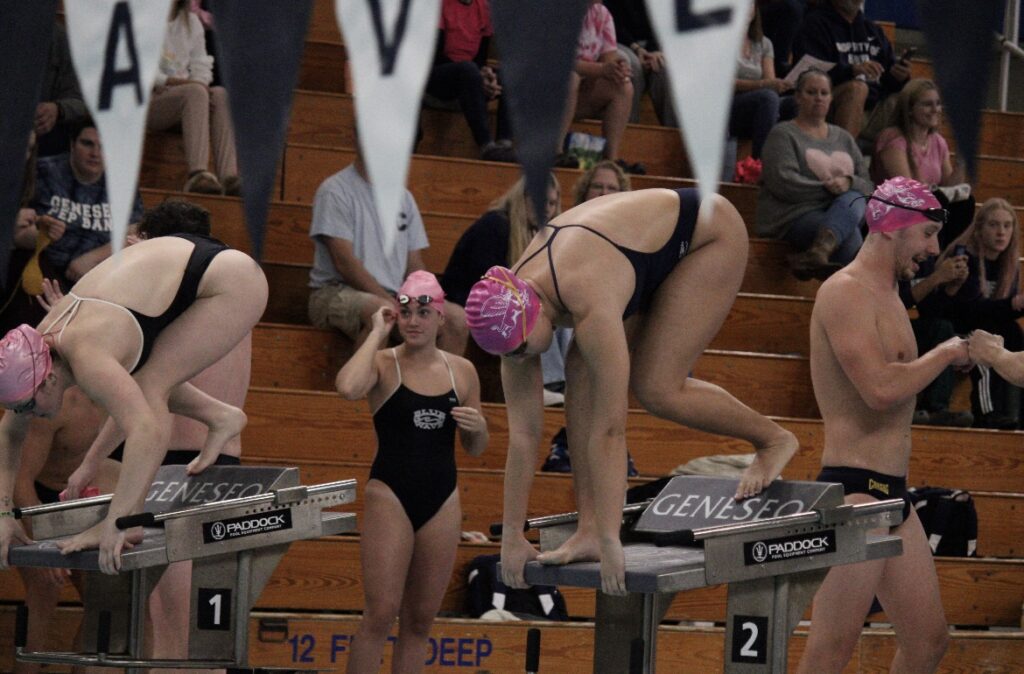
Why Personalized Drills Matter
We’re all built differently. Some of us are taller, some are shorter, and we all have different strengths. That’s why personalized drills are so important.
- Find Your Sweet Spot: Experiment with different start positions and techniques to find what works best for you. For example, I have really long legs so my back foot has to go further back on the fin, so I can get the power I need to push off. The setting I keep the block on is not the same setting any swimmer can have an effective start on. It is important that you mess around with your start so you can discover things like this. It is also important to note that all blocks are not the same so practicing at every pool before you compete is very important.
- Listen to Your Body: Pay attention to how your body feels. If something doesn’t feel right, adjust it and find a way to positively change it. Learning how to do a start can be difficult so staying resilient is especially important if you’re having trouble with steps like entry. Tiny adjustments may be all you need to succeed.
- Ask for Feedback: Don’t be afraid to ask your coach or a more experienced swimmer for advice. They can help you identify areas where you can improve. As a fellow swimmer we are always open to helping another swimmer succeed!
Conclusion
A fast swimming start isn’t just about raw power; it’s about technique, mental focus, and finding what works for you. By practicing these drills and techniques, you can turn those pre-race jitters into pure adrenaline and explode off the blocks like a champion. Remember, it’s about making small improvements over time. So, get out there, practice, and have fun! You’ve got this!