Sure, there’s plenty of scary news headlines every where you look, but if you look for it, there’s also plenty of good news about the environment. Progress is being made on many levels — from huge corporate efforts to governmental legislation and local, community action. Learning and spreading news about all of these efforts can provide hope and inspiration to you and the next generation.
Each month, I’ll report three news stories that focus on good news about the environment and the people who are finding solutions to pollution, carbon emissions and climate change. My aim is to spread hope through good news, and maybe inspire you and the next generation to join the efforts toward solving this global problem.
This month’s post outlines 3 good reasons to breathe easier:
- Capturing carbon emissions before they enter — and harm — our environment
- Bioengineering microbes to eat plastic waste
- Recycling plastic bags into bricks
1. Capturing carbon emissions before it reaches the atmosphere
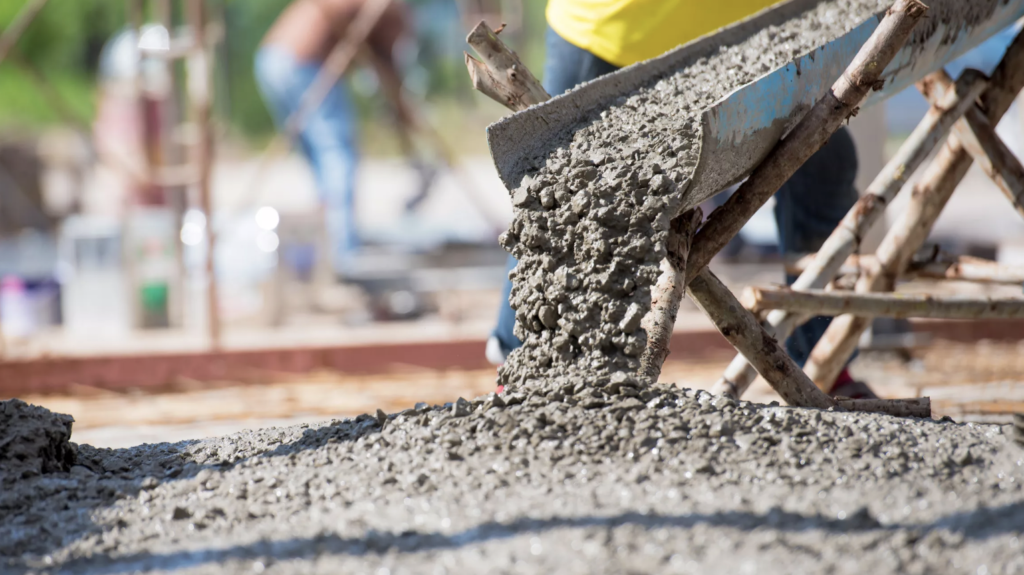
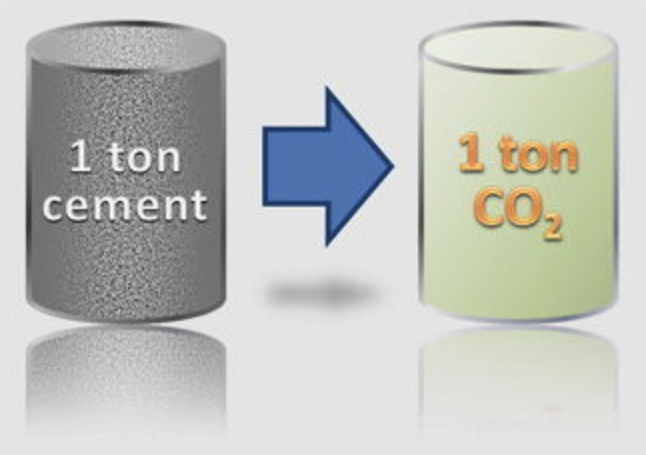
Did you know that if concrete were a country, it would be the third largest producer of carbon emissions? That’s right, concrete is responsible for 8% of the world’s carbon emissions– third only behind China and the U.S. Think about this; for each ton of cement produced, one ton of carbon is emitted into the atmosphere. The carbon dioxide is created during a heating process in the making of concrete and also from when the concrete is being transported.
Read more about carbon emissions caused by cement in this BBC news article: https://www.bbc.com/news/science-environment-46455844
But there’s been progress. A Washington Post article reports that two companies now want to suck the carbon from the air produced when making concrete and store it back into concrete. In a test, these two companies Heirloom Carbon Technologies and CarbonCure demonstrated this could be done by injecting CO2 into a freshly poured batch of concrete, a first for the industry, they said. Finding a permanent storing solution for carbon is a major breakthrough. The process involves taking the carbon out of limestone– an ingredient of sort of concrete- and then as carbon-filled air passes over these treated limestone minerals the limestone absorbs the carbon like a sponge.
The captured carbon is then trucked locally to a concrete manufacturing facility and injected into recycled water used to make fresh concrete.According to CarbonCure, the company that developed this technology, the carbon injected water actually makes the fresh concrete stronger.
While principles at both of these companies acknowledge that scaling this technology in order to capture a significant amount of carbon will take decades. However, new policies like the one NJ Governor Phil Murphy just signed giving a financial incentive to manufacturers for delivering low-carbon concrete for state-funded construction projects will help. As will the federal Inflation Reduction Act passed last year that boosted tax breaks for companies that produce technology that directly captures carbon from the air.
It seems there’s nothing the scientific world cannot solve if given ample time, resources, and support. This is a technology I will be following as it scales up and becomes more efficient in the near future.
2. Tiny plastic eating microbes making a dent in our big plastic mess
The Department of Energy is funding a $9 million project led by the University of Delaware’s Mark Blenner, Associate Professor of Chemical and Biomolecular Engineering, that hopes to help solve our plastic trash problem. The project aims to genetically alter and replicate microbes that can “eat” — or biodegrade — a particular type of biodegradable-resistant plastic called “polyolefins.” The project hopes to put a dent in the world’s enormous plastic waste problem that causes over 12 million tons of plastic to end up in our oceans every year.
More than 380 tons of plastic are produced in the world, but less than 10% of that is actually reused or recycled. This project aims to develop microbes that can biodegrade polyolefin plastics, the kind of plastic found in plastic bags, food storage bags and plastic wraps. Interestingly, the kind of chemical that can help with these hard-to-degrade plastics is found in the gut of the yellow mealworm. These worms digestive system seems to be well-suited for this work.
The practice of genetically engineering microbes to deal with the world’s plastic pollution is not so new. Take a look at this video from 2016 which tells about a group of Japanese scientists who discovered, decoded and mass-produced a group of microbes that could degrade difficult-to-break-down plastics known as PETs (Polyethylene terephthalate).
As the video explains, the plastic type that the Japanese scientists engineered is just one type of plastic — PETs. There are many other types of plastics like PEs (polyethylene) and PPs (polypropylene) that are still abundantly found in our environment. Thankfully, these plastics are the types that Professor Mark Blenner’s research hopes to address.
Follow the UD Center for Plastics Innovation for up-to-date information on this quickly changing and fascinating science by bookmarking the page found here.
3. Recycling plastic bags into bricks strong enough to build with
Plastic bags are difficult and costly to recycle and most end up in landfills where they take around 300 years to degrade. Worse, they break down into tiny toxic particles that contaminate the soil and waterways and enter the food chain when animals accidentally ingest them. They are everywhere. Many countries and states have moved to ban them in recent years and hopefully, they will slowly phase out of existence. The problem is that so many of them are already here, and many countries are still using them.
The good news for our environment is that companies like TileGreen, a start-up in Egypt, have found a way to clean up the mess of plastic bags in our environment and recycle them into permanent-use outdoor bricks and pavers that are normally made out of cement. The company, founded in 2021 has recycled millions of plastic bags so far and has a goal of 10 billion plastic bags by 2025. The good news for the environment is that not only cleans it up, but replaces a huge contributor to greenhouse gasses – cement. TileGreen recycling plastic waste into colorful pavers is yet another big reason to breathe easier about the future of environment. To read more about TileGreen and to see images of the finished product, click here.