In a world saturated with synthetic chemicals and high-stress environments, the question of how to live holistically and non-toxic has never been more critical. While many wellness trends suggest expensive products and complicated protocols, true health often lies in the simple, ancestral principles of mind-body integration and environmental awareness. This guide is not just another list of “clean” products; it is a philosophy of self-empowerment, rooted in a lifetime of organic living and the belief that you are your own best health advocate.
Whether you are struggling with persistent skin issues, chronic fatigue, or simply the overwhelming “noise” of modern life, understanding how to live holistically and non-toxic provides a road-map back to your natural state of vitality. If you’re just starting out, learning how to start a wellness journey with proven habits is a great way to build momentum. By reducing your toxic load and reconnecting with your body’s innate wisdom, you can create a life of lasting health without the need for a massive financial investment.
Table of Contents
- The Organic Baseline: A Lifelong Perspective on Wellness
- The Myth of Expensive Wellness: Challenging the High-Cost Barrier
- Self-Empowerment Guide: How to Research Like a Pro
- Case Study: Clearing Acne with Simplicity (The African Black Soap Story)
- The Hidden Toxins in Your Daily Routine
- Three Non-Negotiable Swaps for a Non-Toxic Home
- Habit Stacking: Making Non-Toxic Living Stick
- Moving Beyond “Living from the Neck Up”: The Power of Meditation
- 2-Minute Holistic Grounding Exercise
- FAQs: Everything You Need to Know About Holistic Living
The Organic Baseline: A Lifelong Perspective on Wellness
For many, the transition to a non-toxic lifestyle comes as a reaction to a health crisis. My perspective is different. I was raised in an “organic-first” environment, where eating whole foods and connecting with nature weren’t “trends”—they were the foundation of daily life. This upbringing provided me with a unique baseline for what a healthy human experience looks like.
Over the years, I’ve watched as media and standard dietary advice have drifted further away from these roots. I’ve seen how “living from the neck up”—constantly planning, worrying, and disconnected from physical sensations—manifests as chronic illness and unhappiness. My expertise isn’t just from books; it’s from a lifetime of observing the profound difference between a body fueled by nature and one burdened by the “chaos” of modern toxins.
The Myth of Expensive Wellness: Challenging the High-Cost Barrier
One of the biggest misconceptions about how to live holistically and non-toxic is that it requires a high income. I firmly believe that the “wellness barrier”—where holistic doctors charge hundreds of dollars for a single consultation—is often unnecessary and exclusionary.
“While some practitioners are worth their weight in gold, much of the power to heal lies in your own hands and your willingness to sit down and do the research.”
We live in an age where information on herbs, essential oils, and nutritional science is more accessible than ever. You don’t always need a prescription or a high-priced supplement to address common health issues. You need curiosity, patience, and a commitment to self-education.
Expert Guide: How to Research Like a Pro
To outrank the “experts,” you must become one. Here is how I vet information without spending a dime:
- Use the “Ingredient First” Rule: When looking at a product, ignore the marketing. Use databases like the EWG (Environmental Working Group) Skin Deep database or the Think Dirty app to check every single ingredient.
- Cross-Reference Ancestral Wisdom: If a remedy has been used for thousands of years (like African Black Soap or Magnesium), look for modern studies that confirm its traditional use.
- Search for “Information Gain”: Don’t just read the top 3 Google results. Look for forum discussions (like Reddit’s r/moderatelygranolamoms) where real people share their unfiltered experiences.
Case Study: Clearing Acne with Simplicity
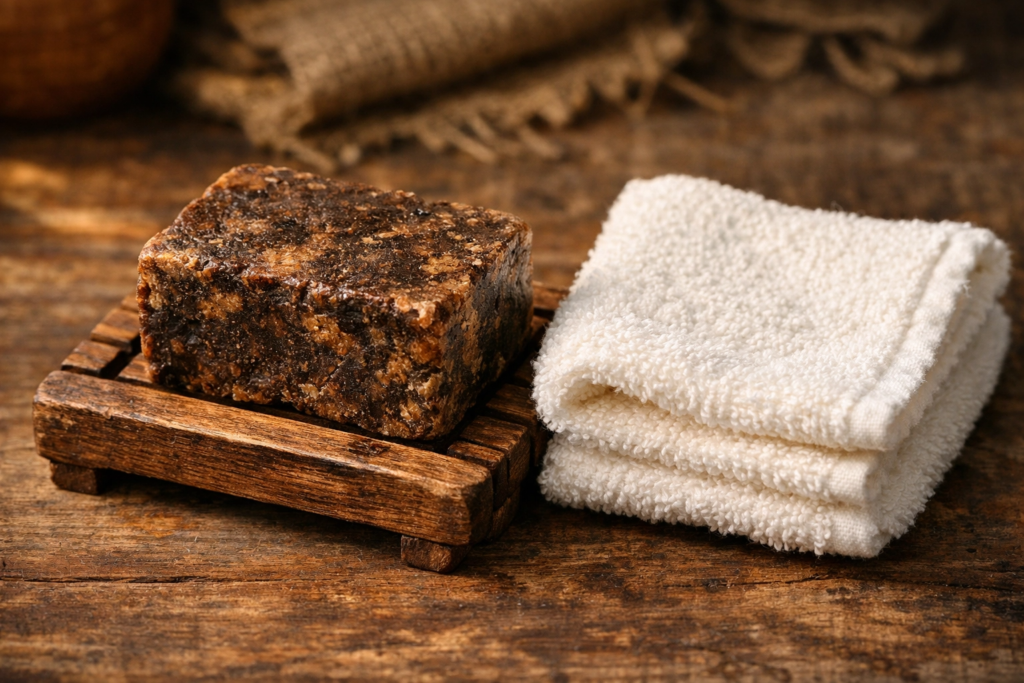
For years, I followed the “standard” advice for persistent acne: expensive dermatologist-prescribed synthetics, harsh chemicals, and multi-step regimens. My skin remained inflamed and reactive. The breakthrough happened when I stopped fighting my skin and started nourishing it. I switched to a simple, natural bar of African Black Soap. Within weeks, the inflammation subsided, and my skin’s barrier began to heal. I recommended this to a friend facing the same struggle, and the results were identical. This proves that a “non-toxic” solution isn’t just cleaner—it’s often more effective because it works with your body’s biology, not against it. For more on navigating the complexities of the beauty market, check out this deep dive into non-toxic skincare in a toxic industry.
The Hidden Toxins in Your Daily Routine
To truly understand how to embrace holistic living, you must recognize the “invisible” load you carry. Most people focus on food, but toxins enter our system through our skin and lungs every second.
- Phthalates & Parabens: Found in “fragrance” and preservatives in almost all standard lotions and shampoos. These are known endocrine disruptors.
- VOCs (Volatile Organic Compounds): Released by artificial candles and synthetic air fresheners, polluting your indoor air quality more than the air outside.
- Microplastics: Leached from plastic cooking utensils and storage containers, especially when heated.
Three Non-Negotiable Swaps for a Non-Toxic Home
If you want the most significant impact on your health without breaking the bank, start with these three “non-negotiables”:
- From Plastic to Glass/Metal: Replace your plastic silverware, plates, and cooking utensils. Plastic is a porous material that leaches chemicals into your food. Glass and stainless steel are inert and will last a lifetime.
- From Sponges to Cloth Rags: Most kitchen sponges are made of plastic and treated with synthetic antimicrobials. Use 100% cotton or linen rags for washing dishes and your body. They are cleaner, more sustainable, and toxin-free.
- From Candles to Natural Aromatics: Stop burning paraffin wax candles that release toxic fumes. Use an essential oil diffuser or high-quality incense to shift the energy of your home safely.
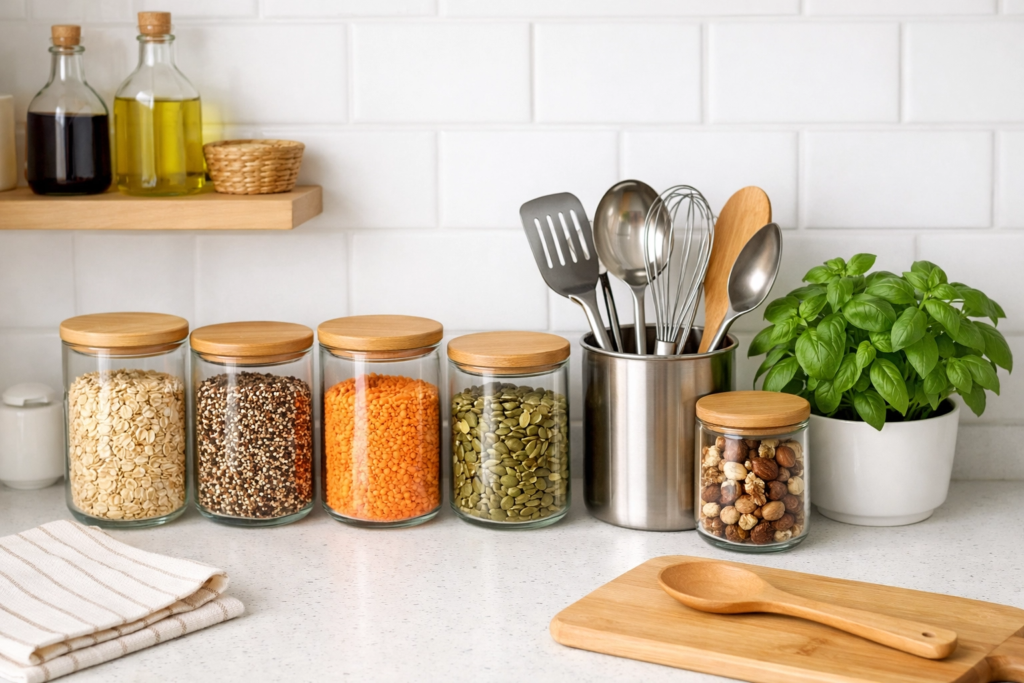
Glass jars are non-porous, so they don’t absorb odors or leach chemicals the way some plastics can, helping keep spices and snacks fresher and tasting the same. They’re also more airtight and durable, which helps protect food from moisture and pests!
Habit Stacking: Making Non-Toxic Living Stick
Transitioning can feel overwhelming, which is why I recommend Habit Stacking. This is the practice of attaching a new “non-toxic” habit to an existing one. For example:
- The “Replacement Rule”: When your current plastic bottle of dish soap runs out, don’t buy another. That is your trigger to buy a natural bar soap and a cloth rag.
- The “Morning Tea Trigger”: While your morning tea is steeping, spend that 3 minutes meditating instead of scrolling on your phone.
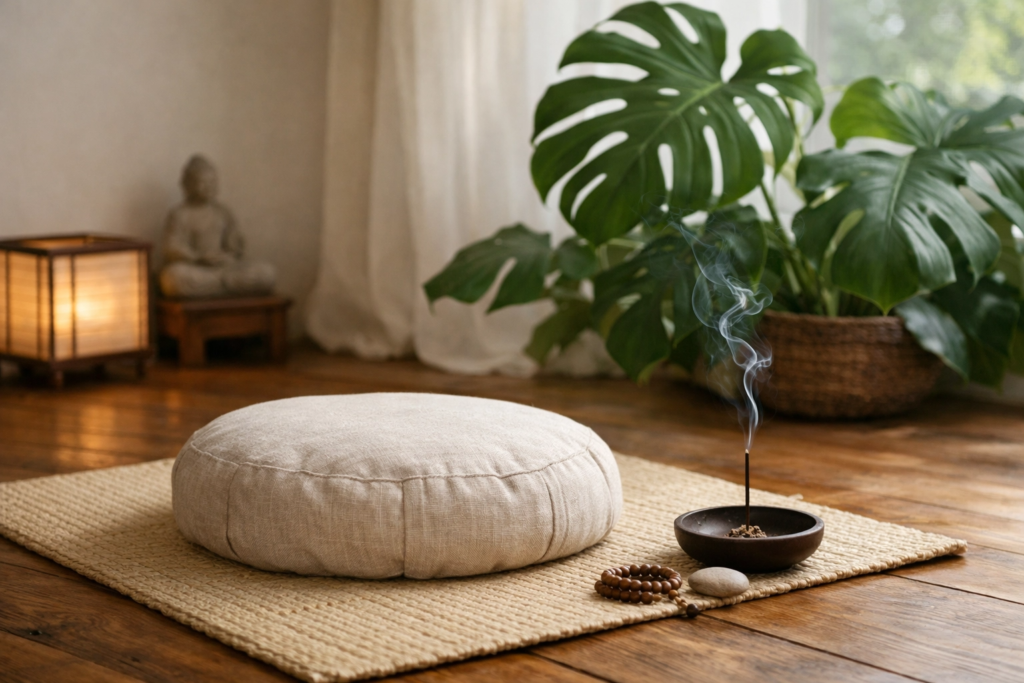
Moving Beyond “Living from the Neck Up”: The Power of Meditation
Holistic health is incomplete without addressing the mental state. Most of us live “from the neck up”—we are a head carrying a body around, lost in thoughts of the past or future. This mental “chaos” manifests physically as cortisol spikes, digestive issues, and a weakened immune system.
Daily meditation isn’t about “clearing your mind”; it’s about coming home to your body. It allows your nervous system to move from “Fight or Flight” into “Rest and Digest,” which is the only state where true healing occurs. You cannot live a non-toxic life if your thoughts are toxic. For those looking to incorporate more mindful moments into their day, consider these happiness hacks that boost well-being through small, proven changes.
2-Minute Holistic Grounding Exercise
Try this whenever you feel the “chaos” of life taking over:
- Sit comfortably and close your eyes.
- Take a deep breath in for 4 seconds, hold for 4, and exhale for 8.
- Focus on the sensation of your feet touching the floor.
- Mentally “scan” from your toes to your head, acknowledging any tension without trying to change it.
- Affirm: “I am safe in my body. I am grounded in this moment.”
FAQs: Everything You Need to Know About Holistic Living
Q: Is a non-toxic lifestyle expensive?
A: No. In fact, it often saves money. By making your own cleaners, using reusable cloths, and avoiding expensive consultations for minor issues, you’ll find that simplicity is much cheaper than the “wellness industrial complex.”
Q: What are the most toxic ingredients in skincare?
A: Look out for “Fragrance” (a loophole for thousands of chemicals), Parabens (methyl-, ethyl-, propyl-), Phthalates, and Sodium Lauryl Sulfate (SLS). If you can’t pronounce it, research it before you put it on your skin.
Q: How do I detox my home on a budget?
A: Start with the air. Open your windows daily to circulate fresh air. Swap your cleaning products for white vinegar and baking soda. These two ingredients can clean almost anything in your home safely and for pennies.
Q: Can meditation really affect my physical health?
A: Absolutely. Meditation lowers cortisol levels, reduces inflammation, and improves heart health. It shifts your body into the parasympathetic nervous system, which is essential for detoxing and healing.
Q: What is the first thing I should buy for a non-toxic kitchen?
A: A set of glass food storage containers. This prevents plastic from leaching into your leftovers and is the most impactful change you can make for your family’s daily food safety.