
Walking is undoubtedly one of the easiest, most accessible forms of exercise on the planet. But what if you could turn a simple walk into an effective workout without needing expensive gym equipment, a personal trainer, or complicated fitness routines? Many people view walking as a purely leisure activity—a slow stroll through the park—yet with a strategic approach, it can become a high-impact calorie burner that rivals more intense forms of cardio. If you’re looking for how to burn more calories when walking, you don’t need a treadmill or a membership; you just need to know how to maximize the effort of every single step you take.
As someone who enjoys working out and is always looking for fun, practical ways to get more steps in, I’ve learned that making daily movement count shouldn’t feel like a chore. I realized that while I love a good walk, there is a massive gap between a leisurely stroll and a calorie-burning workout. Understanding the everyday power of daily exercise has been key to my journey. By experimenting with hiking trails and adjusting my pace, I’ve seen how a few small changes can make a huge difference in my heart rate and energy levels. In this guide, I’ll share the 7 pillars I use to transform a standard walk into a more effective workout, backed by science and personal experience.
Table of Contents
- Pillar 1: Strategic Intensity (Interval Walking)
- Pillar 2: Vertical Terrain (Hills, Stairs, and Uneven Paths)
- Pillar 3: The “Power Moves” (Walking Lunges and Lateral Shuffles)
- Pillar 4: How to Burn More Calories When Walking With Proper Form
- Pillar 5: Adding Resistance (Weighted Vests and Light Weights)
- Pillar 6: The “Tempo” Trick (120-140 BPM Music)
- Pillar 7: The Golden Rule (Consistency and Making it Fun)
- Conclusion: Putting It All Together
- Frequently Asked Questions (FAQs) on How to Burn More Calories When Walking
Pillar 1: Strategic Intensity (Interval Walking)
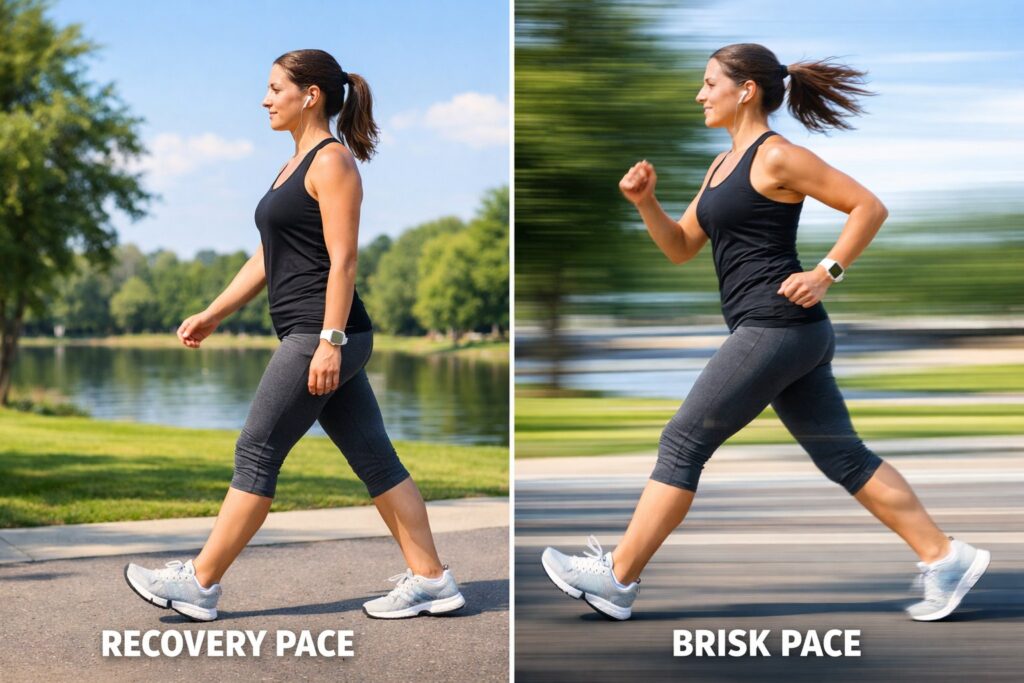
If you find yourself aimlessly walking for an hour without feeling tired, you’ve likely hit a plateau. Your body is incredibly efficient; it adapts to steady-state movement very quickly. Interval walking is the solution to “waking up” your metabolism. It’s a structured approach where you alternate between high-intensity bursts and recovery periods. This keeps your body from adapting to a steady pace, which can actually burn up to 20% more calories than walking at a constant speed [1].
The beauty of intervals is that they create a “post-burn” effect, where your metabolic rate remains slightly elevated even after you stop. If you’re looking to maximize these benefits, learning the benefits of morning exercise can help you decide when to schedule your high-intensity sessions for the best metabolic impact. For those of us with busy schedules, it’s about quality over quantity.
The 20-30 Minute Interval Routine:
Try this on your next walk: Walk at your maximum brisk pace (as if you’re late for a flight) for 1 to 2 minutes. Then, slow down to a comfortable, leisurely pace for 1 minute to catch your breath. Repeat this cycle for 20 to 30 minutes. You’ll find that you tire yourself out much more effectively than if you had walked for an hour at a slow, steady pace.
Pillar 2: Vertical Terrain (Hills, Stairs, and Uneven Paths)
One of the fastest ways to increase your energy expenditure is to stop walking on perfectly flat, paved surfaces. When you move to uneven terrain—like hiking trails, grassy paths, or sandy beaches—your body has to engage smaller stabilizer muscles in your ankles, knees, and core just to keep you upright. This “hidden” work adds up quickly and improves your functional strength.
However, the real “secret weapon” for anyone wanting to know how to burn more calories when walking is vertical movement. Incorporating hills or, even better, walking up stairs, dramatically shifts the workload to your glutes and hamstrings. Research indicates that incline walking (10% grade) can increase your metabolic cost by over 100% compared to flat ground [2]. If you don’t have a hill nearby, find a set of stadium stairs or a local park with a staircase. A few rounds of stair climbing during your walk will spike your heart rate and torch calories far faster than a mile on flat ground.

Calorie Burn Breakdown: Walking Intensity vs. Energy Expenditure
To give you a clearer picture of how these changes impact your results, here is a comparison of estimated calorie burn for a 150lb individual over 60 minutes. Note how intensity and terrain significantly shift the numbers [3].
| Walking Activity | Estimated Calories Burned (per hour) | Intensity Level |
|---|---|---|
| Leisurely Stroll (2.0 mph) | ~140 kcal | Low |
| Brisk Walk (3.5 mph) | ~260 kcal | Moderate |
| Interval Walking (Brisk/Leisurely mix) | ~310 kcal | High |
| Incline Walking (5-10% Grade) | ~450 kcal | Very High |
| Walking Lunges (Integrated) | ~500+ kcal | Extreme |
| Stair Climbing (Moderate Pace) | ~550+ kcal | Extreme |
Pillar 3: The “Power Moves” (Walking Lunges and Lateral Shuffles)
If you’re looking for unique ways to break through a plateau, these “power moves” are highly effective and often overlooked by most walkers. They separate a simple walk from a true fitness session:
The “Power Move”: Walking Lunges
Integrating walking lunges into your routine is a game-changer. By taking a large step forward and lowering your hips until both knees are bent at approximately a 90-degree angle, you engage your glutes, hamstrings, and quads in a way that regular walking simply cannot. This recruitment of large muscle groups sends your calorie burn through the roof. Try doing 10-20 lunges every 5 minutes of your walk to see an immediate difference in intensity.
The “Lateral Shift”: Side-Stepping or Shuffles
Most of our daily movement is forward-facing. By incorporating side-stepping or lateral shuffles for 30-60 seconds, you target the abductors and adductors (the inner and outer thigh muscles). This lateral movement requires more coordination and energy, and it’s a fantastic way to keep your body guessing while burning extra calories.
Pillar 4: How to Burn More Calories When Walking With Proper Form
Most people don’t think about “form” when they walk, but poor posture can actually decrease your calorie-burning potential and lead to unnecessary fatigue. Perfecting your stride is a foundational secret to how to burn more calories when walking without needing to increase your speed. To maximize your results, focus on these three pillars of walking form:
- The Arm Drive: Don’t let your arms hang loosely. Bend them at 90 degrees and swing them purposefully from the shoulder. The more you move your upper body, the more muscles you engage and the more calories you burn. It’s like a “pump” for your metabolism.
- Engage Your Core: Keep your belly button pulled slightly toward your spine. This supports your lower back and turns your walk into a subtle core workout, improving your balance and posture over time.
- Heel-to-Toe Strike: Focus on a smooth roll from your heel to the ball of your foot, pushing off with your toes. This active engagement of the calf muscles increases energy expenditure and protects your joints.
Pillar 5: Adding Resistance (Weighted Vests and Light Weights)
For those looking to add another layer of challenge, some people choose to incorporate light resistance. While not something I use every day, carrying light hand weights (1-2 lbs) or briefly trying a weighted vest can increase the total energy your body requires to move. These options force your cardiovascular system to work slightly harder, turning a standard walk into a more demanding physical effort without needing to increase your speed or distance. Even a small amount of extra weight can make your body work a bit harder with every step. If you do use a weighted vest, ensure it’s no more than 5-10% of your body weight to protect your joints.
Pillar 6: The “Tempo” Trick (120-140 BPM Music)
Science shows that humans naturally sync their movements to the rhythm of music. By listening to songs with a tempo of **120-140 Beats Per Minute (BPM)**, you are more likely to maintain a brisk, high-intensity pace without even realizing it. It turns your walk into a dance-like rhythm that keeps your energy high and prevents you from slowing down as you tire. It’s a low-effort, high-reward way to ensure you’re always hitting the right intensity.

Pillar 7: The Golden Rule (Consistency and Making it Fun)
My “Golden Rule” for fitness is simple: Consistency beats intensity every single time. You can have the most intense interval session in the world, but if you only do it once a month, you won’t see results. To stay consistent, I focus on making every walk something I actually look forward to. Following proven habits for incredible health can help you build the discipline needed to make walking a permanent part of your lifestyle.
I like to listen to my favorite podcasts or music while I’m walking, which creates a positive association with the workout. Whether it’s exploring a new park to change the scenery or inviting a friend to join you, making the experience enjoyable ensures you’ll actually show up tomorrow. When you find ways to make your walks fun, staying consistent becomes effortless. Remember, the “best” walk is the one you actually take.

Conclusion: Putting It All Together
Your Action Plan for Success
To truly master how to burn more calories when walking, you must move away from the “aimless stroll” mindset. By incorporating these 7 key pillars, you can transform your daily movement into a professional-grade workout:
- Pillar 1: Use interval walking (1-2 mins fast, 1 min slow) to keep your metabolism guessing.
- Pillar 2: Find hills, stairs, and uneven terrain to challenge your muscles.
- Pillar 3: Integrate walking lunges and lateral shuffles to engage more muscle groups.
- Pillar 4: Focus on your arm drive and core engagement to maximize every step.
- Pillar 5: Add light resistance with weights or a vest to increase the workload.
- Pillar 6: Use rhythmic music to naturally maintain a high-intensity pace.
- Pillar 7: Focus on making your walks fun and consistent for long-term health.
Stop worrying about hitting 10,000 slow steps and start focusing on the quality and intensity of your movement. Your body (and your fitness tracker) will thank you!
Frequently Asked Questions (FAQs) on How to Burn More Calories When Walking
Q: How many more calories do I burn walking up stairs vs. flat ground?
A: Walking up stairs can burn 2-3 times more calories than walking on a flat surface because you are lifting your entire body weight against gravity with every step. It is one of the most efficient “short-burst” exercises you can do.
Q: How often should I do these high-intensity walks?
A: For the best results, aim to incorporate these techniques 3 to 4 times a week. You don’t need to do an intense interval or hill walk every single day—mixing in a few focused sessions with your regular, more relaxed walks is a great way to build fitness without burning out.
Q: Can I lose weight just by walking?
A: Yes! By focusing on intensity (intervals and hills) and maintaining a consistent routine, walking is a highly effective tool for weight loss and cardiovascular health. However, combining it with a balanced diet will yield the fastest results.
Q: What is the best time of day to walk for maximum calorie burn?
A: The best time of day is the time when you are most likely to be consistent. While some research suggests that morning exercise may slightly increase fat oxidation, the most important factor is showing up and putting in the effort, regardless of the time on the clock.
Q: Are walking lunges safe for everyone?
A: Walking lunges are generally safe, but if you have knee issues, it’s important to use proper form and not lower yourself too far initially. Start with smaller steps and focus on keeping your front knee aligned over your ankle.
Q: Do I need special shoes for interval or hill walking?
A: While you don’t need “special” shoes, a supportive pair of walking or running shoes is essential. If you are walking on uneven terrain or hiking trails, shoes with better grip and ankle support will help prevent slips and injuries.