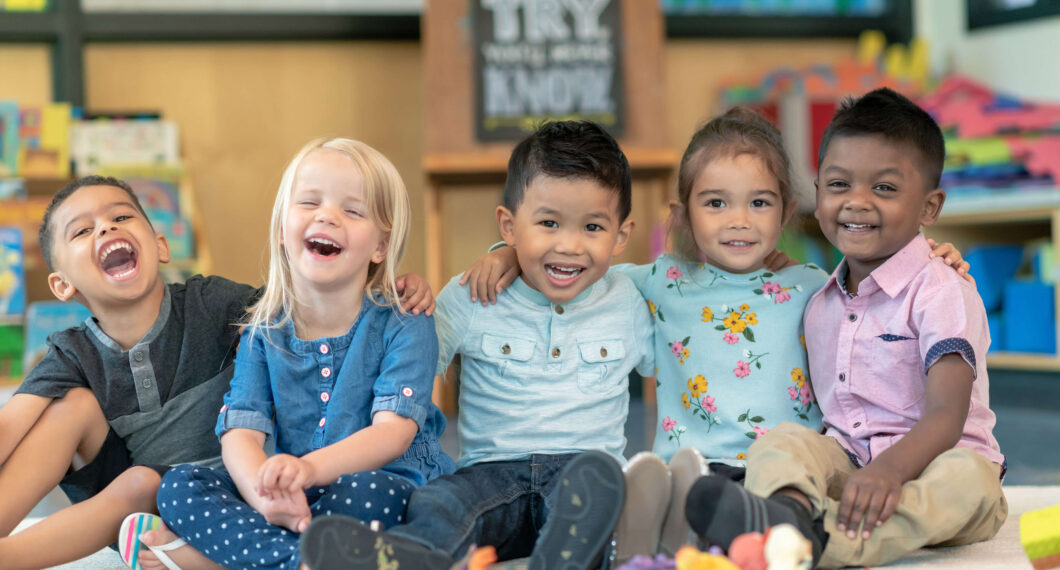
Education has evolved rapidly over the last few decades, and this change begins as early as preschool. I was blown away by the multiple approaches to early childhood learning (an idea that seems very basic, but I was surprised upon learning this) and that these learning styles are adopted in various schools.
Generally, schools follow the traditional education system in which academics was the prime focus. Currently, some schools are play-based, academic-based or a mixture of both. Schools are also categorized as per their learning styles: child-led learning or teacher-directed learning.
Whatever your choice, there is a preschool for you and your family. In this article, we will be looking into the four preschool teaching methods which are more prevalent in our current society. However, the preschool teaching methods are not limited to these four alone.
The preschool teaching methods we would be exploring are:
- The Traditional Education System
- The Montessori Philosophy
- The Reggio-Emilia approach and
- The Waldorf education
We will look into the core beliefs of each preschool teaching method, how they differ from one another, and some of their advantages.
Disclaimer: This article does not promote one preschool teaching method over the other. It aims to empower parents with information and guide them to make the appropriate choices for their children.
Table of Contents
Preschool Teaching Method 1: Traditional Education System

The traditional education system is the most common teaching method for education worldwide. Most public schools and a significant private school sector in the US follow this method.
It typically involves a teacher-centred approach to instruction, focusing on delivering content through a textbook and other materials. The emphasis is on acquiring knowledge and skills in academic subjects such as math, science, and language arts.
Preschool Teaching Method 2: The Montessori Method

A 2nd preschool teaching method which has gained popularity in recent times is The Montessori Method. As the name suggests, this Method was developed by Dr Maria Montessori in the early 1900s. It prioritizes individualized learning and self-directed exploration by the child.
“Follow the child” is the main philosophy observed here, with children given primary importance.
Montessori classrooms allow children to choose from a range of carefully designed activities to promote their development and learning. Teachers act as guides and facilitators rather than instructors, observing children closely to determine their needs and interests.
A key point to note in the Montessori Method is that schools combine kids of mixed ages in a single class. For example, 0 to 3-year-olds are grouped together, 4 to 6-year-olds are grouped together and more. The Montessori approach believes this would significantly enhance collaboration among children and empower young kids with leadership skills.

If you would like to learn more about the Montessori approach or follow it with your children at home, below are some websites, books and video recommendations that could help in your Montessori journey:
Website Recommendations:
Books Recommendations:
- The Montessori Method
- The Montessori Baby: A Parent’s Guide to Nurturing Your Baby with Love, Respect, and Understanding
- The Montessori Toddler: A Parent’s Guide to Raising a Curious and Responsible Human Being
Video Recommendations:
Preschool Teaching Method 3: The Reggio Emilia Approach
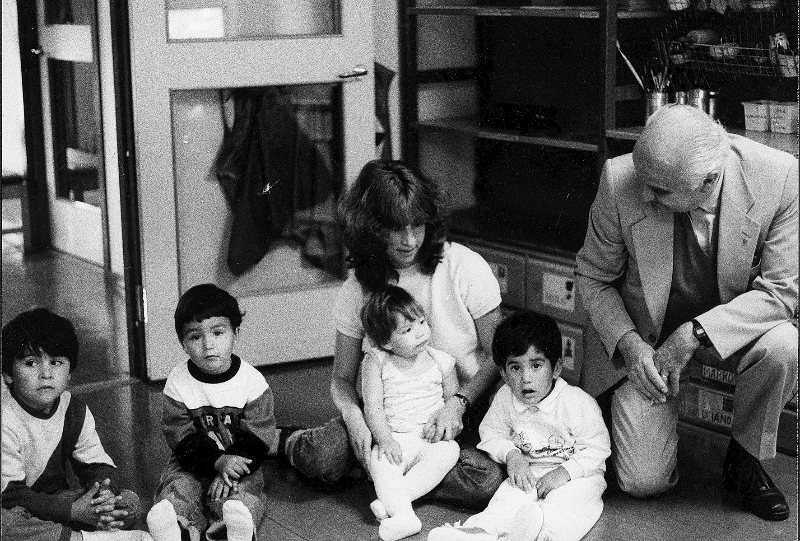
The Reggio Emilia approach is an educational philosophy that originated in the town of Reggio Emilia, Italy, after World War II. It was founded by Loris Malaguzzi.
Like the Montessori Method, the child is again the prime focus of this preschool teaching method. It strongly emphasizes child-led exploration, creativity, and social collaboration.
“100 languages of the children” is the central principle of the Reggio Emilia Approach. Loris Malaguzzi has penned down a poem on this in which he expresses his emotions that there are infinite ways that children can express, explore, and connect with their thoughts, feelings and imagination.
Loris Malaguzzi believed in the potential of a child’s ability to wonder. He has openly criticized the education approach, which does not allow room for self-exploration or creativity.
Teachers work closely with children to help them explore their interests and ideas and to document their learning experiences.

Below are some websites, books and video recommendations to learn more about the Reggio-Emilia approach:
Website Recommendations:
Book Recommendations:
- The Hundred Languages of Children: The Reggio Emilia Experience in Transformation
- Hundred Languages of Children: The Reggio Emilia Approach to Early Childhood Education
- Bringing Reggio Emilia Home: An Innovative Approach to Early Childhood Education
Video Recommendations:
- Getting Started with the Reggio Emilia Approach by Cultivating Confidence – Early Years Consultancy (There are not many channels dedicated to the Reggio Emilia Approach but this channel is a hidden gem.)
- Montessori vs Reggio Emilia by the Hapa Family (The Hapa Family primarily follows the Montessori Method, but the host has extensively explored the different preschool teaching methods in her videos. In this video, she highlights as to what is the Reggio Emilia Approach and the differences between educational methods.)
Preschool Teaching Method 4: The Waldorf Education

Austrian philosopher Rudolf Steiner developed the Waldorf Method and opened the 1st Waldorf school in Germany in 1919. It emphasizes holistic education by developing the whole child through three main aspects: intellectual, artistic, and practical.
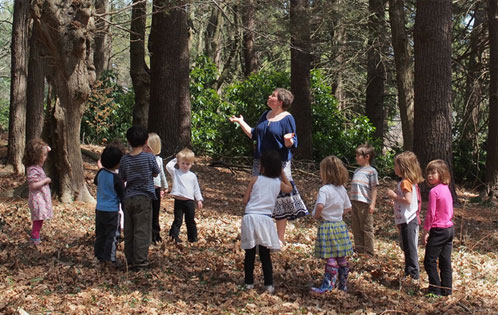
Waldorf schools prioritize the arts, including music, drama, and visual arts. They also often incorporate practical activities such as woodworking and gardening.
Waldorf’s prime focus is on cultivating young minds through play and imagination over academics. Academics only come into the picture much later. The Waldorf system does not advocate introducing academics at a young age, and they typically put off even reading till Grade 1.
Below are some websites, books and video recommendations to help you learn more about the Waldorf Education method:
Website Recommendations:
Book Recommendations:
Video Recommendations:
- Parenting the Waldorf Way by Sunday with Sarah (The host, Sarah, is a Waldorf educator and has fabulous content on bringing Waldorf practices to your home.
- Waldorf vs Montessori Education by Sunday with Sarah (Sarah has done a video on comparing the Montessori and Waldorf principles as well )
- Montessori vs Waldorf by the Hapa Family
Similarities among the Preschool Teaching Methods:
All four teaching methods aim to help children develop academically, socially, and emotionally. Each Method strives to provide a positive and supportive learning environment for children.
Differences within the Preschool Teaching Methods:
Below is a simple chart summarizing the main differences among the 4 preschool teaching methods explored in this article:

Conclusion:
In summary, all these different preschool teaching methods have various approaches to imparting knowledge to children with its own strengths and weaknesses. While there are similarities between these education systems, they have different approaches to teaching and learning that reflect their unique philosophies and goals. It’s important to consider these differences against your child’s specific needs and interests when deciding which system best fits your family.
From my personal experience, I find that current schools, regardless of being public or private, adopting the traditional education system versus another preschool teaching method all overlap in many of the principles advocated by these different methods.
Talking to the schools and teachers, observing the environment and more would help you determine the right fit for your family. Choose the route that makes your child comfortable, relaxed and ensures they are having fun at the same time.
P.S. I am a mom who came from the traditional schooling system and had no idea about these different educational philosophies. I was recommended by a friend to follow the Montessori Method to involve my son in some home activities that would enable me to spend time with him and get work done. This is where my journey began. My son is currently with a “Reggio-inspired preschool”, though we had no idea when we enrolled him. It has worked beautifully for him too. As he would be moving to Kindergarten soon, the search for schools continues, and that is when I realized many of the current schools offer a mixture of activities as discussed above. The article aims not to overwhelm you but to guide you to find out what works for you and your family. I hope you find this useful.