
- Identify the Narcissistic Abuse
- Educate Yourself on Narcissistic Abuse
- Express Your Emotions
- Seek Support From Family and Friends
- Seek Professional Help
- Place Importance on Patience and Self-Care
- Set Personal Boundaries
- Maintain No Contact
- Find a Support Group
- Do Things That Make You Happy
Recovering from narcissistic abuse may seem impossible to those impacted by it, but it is achievable and the first step is acknowledgment. Narcissistic abuse is much more common than most may believe. It encompasses both psychological and emotional manipulation, which can lead to PTSD and other mental health issues. Narcissistic abuse recovery is attainable with the implementation of effective strategies and support. This journey of healing requires patience, self-compassion, and a commitment to rebuilding your life. In this blog post, we will dive into ten tips on how to effectively help heal yourself from narcissistic abuse, beginning with identifying the abuse.
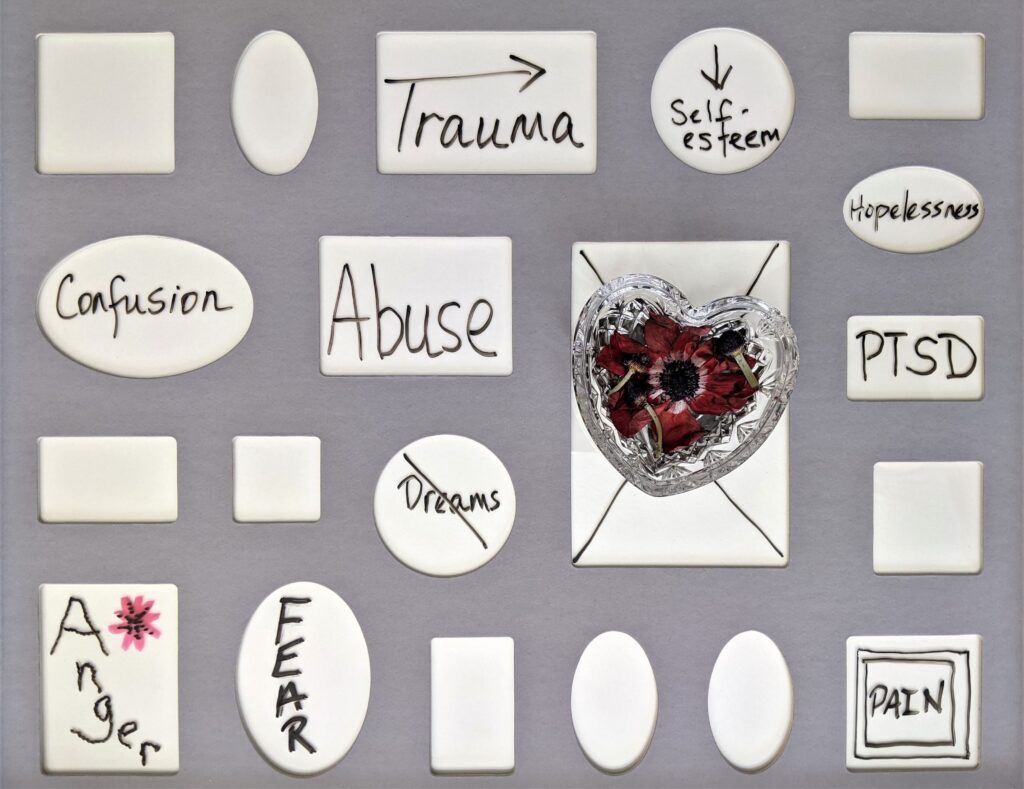
Tip 1: Identify the Narcissistic Abuse
The journey to narcissistic abuse recovery begins with the initial vital first step of identifying and acknowledging the abuse, which may also be the hardest step to take. One cannot start healing until the abuse is addressed and recognized as an issue. To do this, you must understand the traits, characteristics, and tactics of someone with narcissistic personality disorder or NPD. Common characteristics of a narcissist include love-bombing, manipulation, lack of empathy, gaslighting, constant criticism and need for attention, and a high sense of self, entitlement, and superiority. Narcissistic abuse is an extremely damaging form of psychological manipulation, leaving victims struggling with their self-esteem and mental health. The abuse is usually hidden from the public and can come in many forms such as emotional, mental, physical, financial, etc.
According to Psychology Today, some ways narcissists abuse their partners are initially showering them with love and affection rapidly and then eventually talking down to and belittling them, manipulating or blackmailing them into doing things they may not want to, gaslighting them to cause self-doubt, taking advantage of them for their own gain, neglecting things from them such as affection and money, ignoring their boundaries, destroying their valuables, etc. Psych Central outlines 11 symptoms that victims experience after this type of abuse, including dissociation from their environment such as self-isolating, the feeling of walking on eggshells worried they may say or do the wrong thing, mistrust in themselves as well as others around them, self-blame for the abuse they endured, and much more. Because of all the trauma experienced, narcissistic abuse recovery requires a lot of unlearning toxic patterns and behaviors, patience, self-compassion, and a commitment to rebuilding your life.
Tip 2: Educate Yourself on Narcissistic Abuse
Although we have looked at a few of the most common signs and patterns of narcissistic abuse, every situation is unique and may have different characteristics. Reading more intricate details on a larger variety of cases from professionals and experts in the field explaining the reasoning behind a narcissist’s behavior may help give you a deeper understanding or a sense of closure. It is crucial to keep educating yourself on the issue of narcissism and its abusive behaviors to help you gain clarity on the experiences you’ve endured. These insights also help you recognize the warning signs of a person with narcissistic personality disorder and narcissistic abuse or manipulation much earlier on to avoid being in a similar situation in the future. Knowledge is a powerful tool in your narcissistic abuse recovery journey and there are countless educational materials on narcissistic abuse from experts such as books, articles, online communities, and much more.
Tip 3: Express Your Emotions
Victims of narcissism tend to suppress their emotions for the duration of the relationship, leading to an even bigger emotional disconnect from both their partners and their own lives. Going through an experience as complex and serious as narcissistic abuse would be mentally challenging for anyone, especially if their feelings and emotions are stifled. It’s essential to find healthy outlets to express your pent-up feelings as you are dealing with a heavy load and processing several different emotions. A few helpful ways to express your emotions are to journal every day to write down your feelings, thoughts, dreams, etc to create a safe haven for your innermost reflections, to talk to friends, family, or a professional to have an empathetic space to release your truth, or creative expression to therapeutically convey your feelings. Finding a safe space for your emotions and validating your feelings is a significant step towards healing and feeling more liberated during your narcissistic abuse recovery.

Tip 4: Seek Support From Family and Friends
Many times, individuals who have been subjected to narcissistic abuse tend to conceal many aspects of their relationship from their loved ones. They may do this for several different reasons such as protecting their partner’s image by portraying a perfect relationship, shame and embarrassment of the situation, fear of judgment from others, being isolated from their loved ones, being manipulated or gaslit by their abuser, holding out hope for change or fear of further abuse by the narcissist. All of these factors can create a sense of isolation, making it harder to open up about one’s experience but going through this journey of narcissistic abuse recovery doesn’t have to be a solo one. Having a support network of those who genuinely care about your well-being can provide invaluable help during this challenging period.
First, you want to choose trusted friends and family that you can lean on who have shown empathy, understanding, and a non-judgmental attitude. Providing them with some information about narcissism and what narcissistic abuse is can help educate them on the issue as well as preface the conversation for a deeper understanding of your situation. Share your experiences and feelings with those who care about you, communicate your needs at your own pace, and allow them to provide emotional support, encouragement, and a nurturing space for emotional release in return. It may take them some time to process all of this new information but embracing and surrounding yourself with a compassionate and supportive network can make a significant difference in your recovery journey from narcissistic abuse.
Tip 5: Seek Professional Help
Therapy
Professional help can seem daunting and intimidating at first, but it doesn’t have to be and can greatly aid in your narcissistic abuse recovery process. Going to therapy is a great resource for anyone who has dealt with narcissistic abuse because it creates a safe, individualized, and supportive environment to process deep trauma and emotional wounds. A therapist who is an expert professional in trauma and abuse can validate your feelings, elaborate on a much deeper and personalized understanding of your pain and experiences, and provide the necessary guidance and coping strategies to help you overcome your situation. Working through your complex emotions with a licensed authority on the subject matter will help process and overcome your triggers, emotions, and anxiety, identify and break any unhealthy patterns, regain your self-worth and confidence as well and teach you how to navigate taking control of your life and future relationships.
The first step is to find a qualified therapist, specifically one who specializes in trauma and abuse and helps survivors of similar situations. You can either do research online for a mental health professional in your area or remotely, find someone through your insurance, or ask for recommendations from friends, family, or colleagues. After finding a therapist, book a consultation to voice your problems, concerns, and goals. You can also use this as an opportunity to get to know the therapist and their approaches to assess if they will be a good fit for your needs. If going to see someone in person is out of your comfort zone, there are online platforms with licensed professionals for remote sessions such as BetterHelp or TalkSpace. Once you have locked in a professional, try to stick to the process of going to therapy as the process may take some time, have patience, communicate effectively, and commit to the process to the best of your ability to aid in the recovery process from narcissistic abuse.
Domestic Violence Awareness
A lot of experiences with narcissistic abuse correlate with domestic violence, but many people are unaware that this is the case because they assume that domestic violence only means physical abuse, which is not the case at all. There is also a stigma associated with the word domestic violence that may cause refusal of belief and acceptance by victims of narcissism. If you feel unsafe in any way in your relationship, you may need to reach out for professional help if you are still in the situation. Luckily, there are many resources and education now available online to recognize the signs of abuse and help navigate this difficult situation. Through education and awareness of such issues, we can empower others to break their silence and share their experiences, reduce the stigma surrounding the issue, and advocate for change.
I’ve listed the most common warning signs of domestic abuse behavior in a partner according to the National Domestic Violence Hotline down below. If you are experiencing any of these in your current relationship, please feel free to reach out to the National Domestic Violence Hotline for a free, nonjudgmental consultation to discuss further by phone at 800-799-7233 or by SMS, texting START to 88788.
- Telling you that you never do anything right.
- Showing extreme jealousy of your friends or time spent away from them.
- Preventing or discouraging you from spending time with others, particularly friends, family members, or peers.
- Insulting, demeaning, or shaming you, especially in front of other people.
- Preventing you from making your own decisions, including about working or attending school.
- Controlling finances in the household without discussion, such as taking your money or refusing to provide money for necessary expenses.
- Pressuring you to have sex or perform sexual acts you’re not comfortable with.
- Pressuring you to use drugs or alcohol.
- Intimidating you through threatening looks or actions.
- Insulting your parenting or threatening to harm or take away your children or pets.
- Intimidating you with weapons like guns, knives, bats, or mace.
- Destroying your belongings or your home.

Tip 6: Place Importance on Patience and Self-Care
Narcissistic abuse recovery is not a linear process but a gradual one, often involving setbacks and difficult moments. Acknowledging that healing will take time and can’t be rushed emphasizes the importance of patience and self-compassion. Try not to feel discouraged during your journey if doesn’t go exactly as you had planned by realizing that every step you take towards recovery, no matter how small, is a remarkable achievement. Some ways to build patience during this period are practicing self-compassion, self-forgiveness, positive self-talk, self-love, and self-care. Engaging in these activities will increase confidence and emotional resilience, rebuild trust within yourself, help maintain a positive outlook on yourself and life, become more understanding that what you’re going through wasn’t your fault, and be able to celebrate the small victories and progress along the way.
Prioritizing self-care is one of the most important steps in one’s recovery journey after narcissistic abuse. Self-care practices help to nurture your physical and emotional well-being, manage stress, restore a sense of balance in your life, develop patience, and rebuild your self-esteem, confidence, and resilience. Some examples of self-care are meditation to increase mindfulness, exercise or sports to promote physical health and nutrition, going for a walk, resting, journaling, expressing gratitude, and engaging in activities that bring you joy and relaxation. Whether it’s through pursuing hobbies, practicing mindfulness, or immersing yourself in nature, focusing on taking care of yourself will allow you to heal quicker and lead to a healthier, more fulfilling life.
Tip 7: Set Personal Boundaries
One of the most beneficial practices you can implement for yourself after narcissistic abuse is to learn to set and enforce healthy boundaries. Narcissists often prey on individuals who lack firm boundaries to more easily give in to their demands, either from initial onset or slowly over time. Setting healthy boundaries allows you to be in control of what behavior is acceptable or not, preventing emotional manipulation and gaslighting. They also help to reinforce your self-worth, self-respect, and confidence, put a stop to further abuse by not tolerating mistreatment, and prioritize your well-being by reclaiming control of your life and making your own choices, which may have been undermined during the relationship.
Some ways to set personal boundaries are to establish what makes you comfortable vs. uncomfortable, put limits in place on what you’re willing to accept, learn to say no, communicate your needs assertively, stay consistent with these rules, and trust your intuition. Mastering the art of communicating and saying ‘no’ during narcissistic abuse recovery is a great example of establishing a personal boundary whether it’s a personal limit, you’re uncomfortable, etc. This may take practice, as it usually doesn’t come naturally for someone affected by narcissistic abuse, but it is an essential skill that will protect you from further abuse in the future, whether it be via a partner, friend, coworker, family, etc. This skill also enforces consequences to anyone who may not be respecting your limits. Upholding these boundaries, especially if you haven’t done so in the past, may make you feel guilty because you are prioritizing yourself, but it’s a very healthy way to form better quality relationships while maintaining your well-being and creating a safe and protective space for yourself.
Tip 8: Maintain No Contact
During narcissistic abuse recovery, it’s pivotal to cut off contact with the narcissist if you haven’t already done so to truly be able to heal. This means cutting off all forms of communication and interaction with the person responsible for the abuse, whether it be texting, calling, emailing, social media, or any other means of contact. Maintaining no contact is often one of the most challenging yet critical steps in one’s healing journey. To break free from the constant cycle of emotional abuse, manipulation, and control, it is important to resist the temptation to reconnect with the narcissist as hard as it may be. In the long run, you will be protecting your emotional health and stability, reclaiming your independence, and allowing yourself the proper space and time to focus on solely yourself without the toxicity and stress from the relationship and abuser.
Some tips to implement no contact after experiencing narcissistic abuse are to outright block the abuser from all communication outlets so they can’t reach out, keep your loved ones informed to hold yourself accountable, avoid anything that can trigger your memory of the narcissist such as people and places, establish clear boundaries and stay committed to no contact to foster healing. Unfortunately, there may be certain situations where going no contact is not completely possible such as coparenting a baby together or fear of safety reasons. If direct contact is unavoidable such as co-parenting, it is essential to establish clear boundaries in regards to communication being used strictly for necessary matters to limit interactions with the narcissist. If you are in a situation where you feel in danger should you cut off contact or are being threatened by doing so, then it may be necessary to seek legal assistance to enforce boundaries and get legal protection such as restraining orders or custody arrangements.
Tip 9: Find a Support Group
Navigating your narcissistic abuse recovery journey will be difficult but having a support system in place can help ease the process. Reaching out to friends and family can be a great solution, but not everyone has trusted people in their lives to lean on or feel that they can only understand or open up to a certain extent. A great alternative or supplement to this problem is finding a support group of individuals who have also experienced narcissistic abuse to get validation and a deeper understanding of your situation. Sharing your experiences, learning from others, and offering support and empathy for one another can provide you with a sense of camaraderie to help you feel less isolated and more empowered during your recovery.
Because most people in these support groups have experienced similar forms of abuse, it will help foster a safe space to share experiences and coping strategies, a sense of belonging, nonjudgmental support, and solidarity, and validate that your experiences were real. There are many ways to find these support groups such as researching online for forums, group chats, and social media communities like Reddit, Facebook, and local groups or organizations (ex. community centers, nonprofits, or counseling services). You can also ask your therapist or others going through something similar for referrals, hotlines and helplines, professional workshops, or any other supportive networks. Participating in these communities can help speed up healing and restoration.
Tip 10: Do Things That Make You Happy
Lastly, it’s crucial to rekindle your sense of joy and happiness during your recovery. Narcissistic abuse often deteriorates one’s sense of joy and pleasure due to the trauma, so rebuilding and reclaiming your happiness is ultimately the final goal of healing yourself from the abuse. Take this time to reconnect with interests and passions you may have had before the relationship or discover new outlets that you never had a chance to explore, embracing hobbies and goals that help with self-discovery. Engaging in activities that bring you genuine happiness can be powerful in cultivating new positive experiences and emotions without focusing on any negativity. Happiness may sometimes seem out of reach, but implementing small things into your routine, whether it be a hobby or something as simple as a self-care activity, can help you boost your self-esteem, rebuild your identity and perception, and gradually feel enjoyment and fulfillment out of life. Everyone only has one life to live, so it is important to prioritize your well-being, be patient with yourself, and rediscover the joy of living to try and live life to its fullest.
Narcissistic abuse recovery is a challenging but beautiful, transformative journey. By implementing all of these tips, you can rebuild your life in a positive light and rediscover your sense of self. Remember that healing takes time and is a gradual process, so being patient and having self-compassion is key. As you begin this path, know that you are not alone in your experience and there is a life free from the abuse waiting on the other side. Each step forward, no matter how small, brings you closer to your goal of healing from the trauma to lead a more fulfilling life and you have already taken the first step by being here. Your path to healing and happiness starts now, and it is one filled with growth, empowerment, self-discovery, and a healthy future.